
Flowers
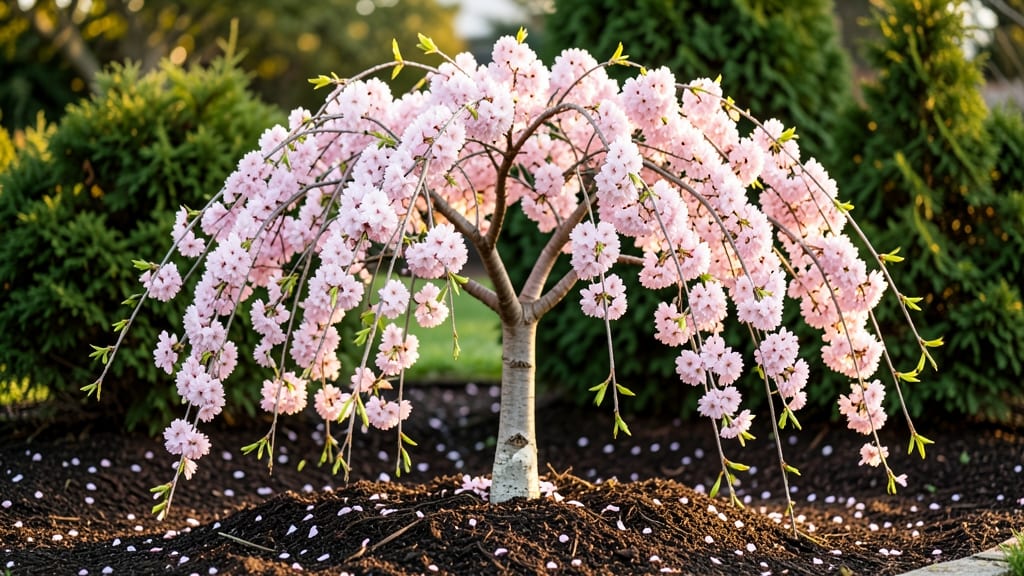
Pink blossoms that turn heads every spring—that’s the magic of a tree with little pink flowers like Eastern Redbud or Cherry Blossom. 🌸 I’ve watched neighbors stop mid-stride just to admire mine, and it’s not just the flowers: the heart-shaped leaves and seasonal color shifts make these trees the ultimate garden showstoppers.
These trees thrive as focal points in small yards or as borders that frame pathways. The Eastern Redbud blooms first, its pink flowers appearing before leaves, while Cherry Blossoms create a cloud-like canopy. Both pair beautifully with spring bulbs like daffodils or early perennials like bleeding heart for layered color.
With minimal maintenance—just occasional pruning to shape them—they reward you with seasonal interest from early spring through fall. The secret? Plant them where they’ll get morning sun and afternoon shade, and watch them become the centerpiece of your garden’s story.
Perfect for urban gardens, cottage-style landscapes, or even containers (dwarf varieties). Once established, they’re drought-tolerant and handle most soil types—just give them space to grow into their full, blossom-filled potential.
Behind the Pink Bloom Mystery
If you’ve ever spotted a tree with little pink flowers and wondered why it’s putting on such a cheerful show, the answer lies in a mix of biology, environmental cues, and the tree’s own survival strategies.
These delicate blooms aren’t just for show—they’re a carefully orchestrated response to nature’s signals. Let’s break down the science behind why your garden’s star performer is dressing up in pink.
Most flowering trees follow a strict seasonal schedule, and pink blooms are no exception. The timing of these flowers is tightly linked to temperature shifts, daylight hours, and moisture levels. Here’s how it works:
- Chilling Requirements: Many pink-flowering trees (like Cercis canadensis, or Eastern redbud) need a period of cold weather—often called dormancy—to "reset" their biological clocks. Without enough cold (below 45°F/7°C for 400–1,000 hours), buds may fail to open, leaving you staring at bare branches. Pro tip: If winters are mild in your area, consider planting cold-hardy varieties or using artificial chilling techniques for potted trees.
- Daylength Sensitivity: Some trees, like the Prunus serrulata (Japanese cherry), are photoperiodic, meaning they bloom in response to increasing daylight. As days lengthen in spring, the tree’s hormones shift from dormancy to growth, triggering flower production. Fun fact: This is why cherry blossoms in Washington, D.C., bloom in unison—it’s all about the light!
- Moisture Wake-Up Call: Dormant buds need moisture to "plump up" and break open. A dry spell after winter can leave flowers shriveling before they even unfurl. Actionable tip: Water the base of the tree deeply in late winter if your region has a dry spell, but avoid overwatering—soggy soil can rot buds.
💡 Did You Know? Some trees, like the Cornus florida (flowering dogwood), can bloom twice in a season if conditions are perfect—once in spring and again in late summer. This "repeat performance" happens when the tree senses ideal conditions after a mid-year heatwave.
The color pink in flowers isn’t random—it’s a evolutionary masterstroke designed to attract the right pollinators while fending off pests. Here’s the science:
| Pigment Type | Purpose | Example Trees |
|---|---|---|
| Anthocyanins | Protects flowers from UV damage and signals ripeness to pollinators (like bees and butterflies). The deeper the pink, the more nutrients the flower may contain. | Cercis canadensis (redbud), Prunus spp. (cherry/plum) |
| Flavonoids | Acts as a sunscreen and may deter herbivores. Lighter pinks often indicate flowers that rely on wind or insects for pollination. | Lagerstroemia (crape myrtle), Deutzia spp. |
| Carotenoids (rare in pink flowers) | Attracts specific pollinators like hummingbirds (e.g., Lonicera or honeysuckle, which can have pinkish tints). | Lonicera sempervirens (Coral honeysuckle) |
🎯 Pollinator Hack: Pink flowers often have UV patterns invisible to humans but visible to bees, guiding them straight to the nectar. Planting a mix of pink and purple flowers can create a "superhighway" for pollinators in your garden.
Where you live can dramatically alter when—and if—a tree with pink flowers will bloom. Here’s how climate plays a role:
- Temperature Zones: Trees like the Magnolia stellata (star magnolia) bloom earlier in Zone 4–8 but may struggle in Zone 9+ due to heat stress. Solution: Choose heat-tolerant varieties like Magnolia 'Jane' or plant in partial shade to protect buds.
- Urban Heat Islands: Cities can be 10°F (5.5°C) warmer than rural areas, tricking trees into blooming too early—right before a late frost. Mitigation: Use mulch and drip irrigation to buffer temperature swings around the tree.
- Altitude Effects: Higher elevations (like mountain gardens) may delay blooming due to cooler temps. Adjustment: Select high-altitude-adapted cultivars, such as Cercis canadensis 'Lavender Twist'.
✨ Pro Growth Tip: If your tree blooms late or not at all, it might be struggling with transplant shock. Young trees (under 5 years) often delay flowering while they establish roots. Give it time—or try root pruning in early spring to encourage deeper root growth.
Not all pink flowers are a sign of health—sometimes, they’re a distress call. If your tree is skipping blooms or producing sparse flowers, check for these red flags:
- Nutrient Deficiencies:
- Nitrogen (N) deficiency: Leads to pale pink flowers and yellowing leaves. Fix: Apply a balanced fertilizer (10-10-10) in early spring.
- Phosphorus (P) shortage: Stunted growth and weak blooms. Fix: Use bone meal or rock phosphate in the soil.
- Pruning Mistakes: Cutting back flowering wood (like last year’s growth on a cherry tree) removes next year’s blooms. Rule: Prune after flowering, and never remove more than 25% of the canopy at once.
- Pest or Disease Pressure:
- Scale insects or aphids sap nutrients, leading to weak flowers. Treatment: Spray with neem oil or introduce ladybugs.
- Fungal infections (like powdery mildew) can cause buds to drop. Prevention: Improve air circulation and avoid overhead watering.
- Over-Fertilizing: Too much nitrogen promotes leafy growth over flowers. Balance: Use a low-nitrogen, high-phosphorus fertilizer (e.g., 5-10-
Revive your blooming beauty
Reviving a tree adorned with delicate pink flowers—whether it’s a cherished weeping cherry, a fragrant crabapple, or a vibrant dogwood—can feel like bringing a garden back to life. The good news?
Most issues have simple, actionable fixes. Below, we’ll break down the most common problems and the easy, step-by-step solutions to restore your tree’s health and keep those charming pink blooms thriving.
If your tree’s pink flowers are sparse or leaves look pale, it’s likely starving for nutrients or struggling with compacted soil.
How to Fix It: ✅ Test Your Soil 🧪 Start with a DIY soil test kit (available at garden centers) to check pH and nutrient levels. Most flowering trees prefer slightly acidic soil (pH 6.0–7.0). If your soil is too alkaline (high pH), amend it with sulfur or peat moss to lower the pH gradually.
✅ Feed with the Right Fertilizer 🌿 Use a balanced, slow-release fertilizer (like 10-10-10) in early spring before blooming season. For nutrient-deficient trees, a bloom booster (high in phosphorus) can encourage more flowers. Avoid high-nitrogen fertilizers—they promote leafy growth at the expense of blooms!
✅ Improve Drainage 💧 If your tree sits in heavy clay soil, mix in compost or sand to loosen the earth. For container-grown trees, ensure pots have drainage holes and use a well-draining potting mix.
💡 Pro Tip: Mulch around the base (but keep it 3–4 inches away from the trunk) with wood chips or shredded bark to retain moisture and slowly release nutrients.
Pink-flowering trees often need the right balance of sun and shade—too much or too little can stunt blooms.
How to Fix It: 🔹 Move or Prune for Better Light 🌞
- Too much shade? Thin out nearby trees or shrubs to allow at least 4–6 hours of sunlight daily.
- Too much harsh sun? Provide afternoon shade with a lightweight shade cloth (30–50% coverage) during peak summer heat.
🔹 Adjust for Seasonal Changes 🌆 Some trees (like Japanese flowering cherries) bloom best in cool weather. If your tree flowers poorly in hot climates, consider planting it in a slightly sheltered spot (e.g., near a north-facing wall).
💡 Pro Tip: If relocating isn’t an option, prune lower branches to improve airflow and light penetration to the inner canopy.
Overwatering or underwatering can stress your tree, leading to dropped buds or weak blooms.
How to Fix It: 🚰 Check Moisture Levels 🌧️ Stick your finger 2–3 inches into the soil. If it’s dry, water deeply. If it’s soggy, hold off—root rot is a real threat!
🚰 Watering Schedule for Healthy Blooms 💦
- Young trees (1–3 years): Water 2–3 times per week (deep soak, not frequent shallow watering).
- Mature trees: Water once every 1–2 weeks (unless in extreme heat/drought).
- Mulch deeply (3–4 inches) to lock in moisture and reduce evaporation.
⚠️ Warning Signs of Overwatering:
- Yellowing leaves
- Mushy stems or bark
- Fungal growth at the base
💡 Pro Tip: Drip irrigation or soaker hoses deliver water directly to the roots, preventing waste and fungal issues.
Pests like aphids, scale insects, or borers can suck the life out of your tree, while diseases (like powdery mildew) can discolor leaves and reduce blooms.
How to Fix It: 🐛 Spot and Treat Pests Early 🦟
- Inspect leaves and bark regularly for sticky residue (aphids), white fluffy spots (mealybugs), or tiny holes (borers).
- Blast off pests with a strong spray of water (for aphids/scale).
- Use neem oil (a natural insecticide) or insecticidal soap for mild infestations.
- For severe borer damage, consult an arborist for systemic treatments.
🍄 Fight Fungal Diseases 🍄
- Prune infected branches (sterilize tools with rubbing alcohol between cuts).
- Improve airflow by thinning dense foliage.
- Apply fungicide (like copper fungicide) if powdery mildew or leaf spot appears.
💡 Pro Tip: Healthy trees resist pests better! Keep up with fertilizing, pruning, and proper watering to build natural defenses.
Poor pruning can weaken structure, reduce flowers, or invite disease. Done right, pruning encourages more vibrant pink blooms!
How to Fix It: ✂️ Best Time to Prune ⏰
- Late winter/early spring (just before buds swell) is ideal for flowering trees (like cherry or dogwood).
- Avoid pruning in fall—it can stimulate new growth that won’t harden off before winter.
✂️ Step-by-Step Pruning Guide 🌿 1. Remove Dead or Diseased Branches 🪦 (Cut at the branch collar.) 2. Thin Out Crowded Branches 🌳 (Aim for an open vase shape to improve airflow.)
- Shorten Overly Long Branches 📏 (Trim back by 1/3 to encourage bushier growth.)
- Avoid "Topping" ❌ (Cutting back to a stub harms the tree—always make clean cuts.)
💡 Pro Tip: Use sharp, clean pruners and seal larger cuts with pruning sealant to prevent disease entry.
Once your tree is back in bloom, keep it thriving with these easy maintenance habits:
🔹 Mulch Annually 🍂 (Replenish mulch in late winter to protect roots.) 🔹 Monitor for Stress 😬 (Wilting, discolored leaves, or early leaf drop = time to check water/pests.) 🔹 Fertilize Seasonally 🌱 (Spring for blooms, fall for root strength.) 🔹 Protect from Extreme Weather ❄️☀️ (Wrap young trees in burlap for winter protection; provide shade in summer heatwaves.)
With these simple, actionable steps, your pink-flowering tree will be bursting with blooms in no time! 🌸 Whether it’s a cherry, crabapple, or magnolia, a little care goes a long way in turning a struggling tree into a year-round garden showstopper.
Frequently asked questions
Which small pink-flowering trees thrive in containers?
Dwarf varieties like Japanese flowering cherry 'Shirotae' or Eastern redbud 'Tennessee Pink' grow beautifully in large containers. Use well-draining soil and ensure the pot is at least 18 inches wide for mature roots. These trees need 4-6 hours of sunlight daily and regular watering during dry spells.
Can I plant a pink-flowering tree near my patio?
Trees like crape myrtle or ornamental pear provide shade while showcasing stunning pink blooms. Plant them 10-15 feet away from seating areas to avoid overhanging branches. Choose varieties with non-invasive roots like 'Natchez' crape myrtle for patio-friendly growth.
Why are my pink flowers sparse this year?
Common causes include over-fertilizing with nitrogen (promotes leaves over flowers), late frost damage to buds, or insufficient sunlight. Check your tree's light exposure and prune back any dense growth blocking sunlight. Apply a low-nitrogen, high-phosphorus fertilizer in early spring to encourage blooming.
Do pink-flowering trees attract hummingbirds?
Some do! Trees like coral honeysuckle or magnolia 'Ann' produce tubular pink flowers that hummingbirds love. For maximum appeal, plant these trees near red or purple flowers to create a colorful pollinator haven. Avoid pesticides to keep these beneficial birds visiting your garden.
How long does it take for a pink-flowering tree to bloom?
Most trees take 3-5 years to reach full bloom after planting, though some like Eastern redbud may flower within 2 years in ideal conditions. Patience is key—young trees focus energy on root growth first. Provide consistent care (water, mulch, and proper sunlight) to encourage earlier flowering.