
Watering
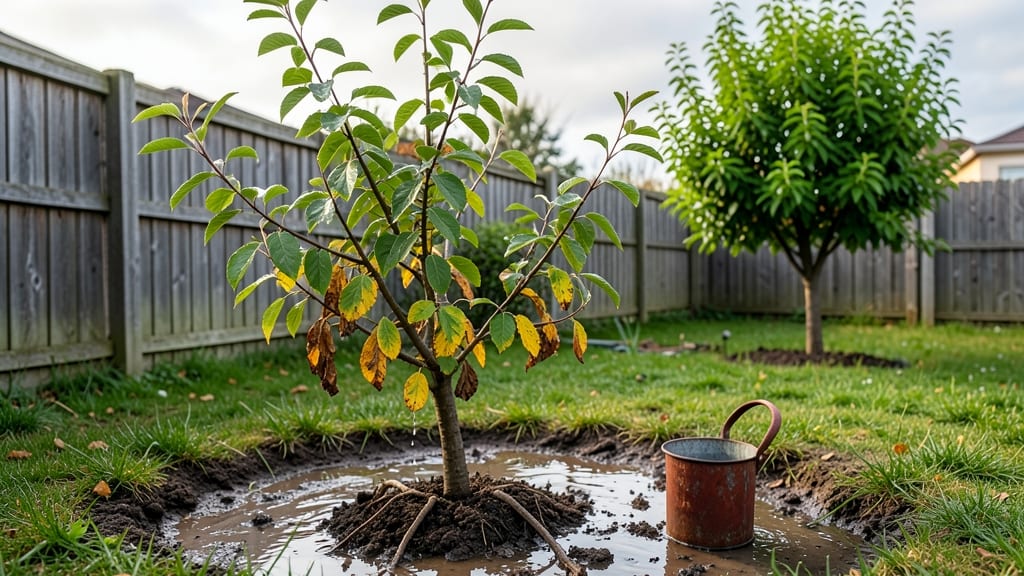
Your cherry tree’s drooping branches and yellowing leaves scream one thing: too much water is suffocating its roots. 🌳 I’ve pulled three struggling trees back from the brink of root rot using these same steps—no panic, just smart adjustments.
The key? Stopping the water first, then giving roots room to breathe.
Start by checking the soil: if it’s soggy 2 inches down, you’ve been overdoing it. Drainage is the real fix—amend heavy clay soil with compost or sand, and raise the tree’s base with a mound of gravel if needed.
Mulch 3 inches deep (but keep it away from the trunk) to regulate moisture without smothering roots.
Within 2-3 weeks, you’ll see new green growth as roots recover. The wilting slows, leaves firm up, and the tree starts focusing on recovery instead of drowning. This isn’t a quick fix—root rot takes time to reverse—but with consistent care, your tree will bounce back stronger.
Long-term, water only when the top 1-2 inches of soil are dry. A moisture meter or your finger (poke it in—if it’s damp, wait) becomes your new best friend. Cherry trees hate wet feet, and once you train yourself to check before watering, you’ll never overdo it again.
📚 In This Guide
- What you need
- Instructions
- Tips and common mistakes
- Wrapping up and next steps
What you need
- ● Trowel or garden spade – A sturdy, 5-inch stainless steel trowel works best for digging around roots without damaging them.
- ● Garden fork or root knife – Helps loosen compacted soil and inspect roots for rot. Look for ergonomic handles for comfort.
- ● Well-draining potting mix or amended soil – 2-3 cubic feet (for small trees) or 5+ cubic feet (for mature trees). Mix 50% compost, 30% perlite, and 20% coconut coir for optimal aeration.
- ○ Fungicide (optional but helpful) – A copper-based or hydrogen peroxide (3%) solution to treat root rot. 1 quart is enough for most trees.
- ● Watering can with a rose attachment – A 1-gallon capacity with a fine mist setting for gentle rehydration.
- ● Mulch (pine bark or straw) – 2-3 inches of organic mulch to retain moisture without suffocating roots.
- ● Dry weather window – Schedule your rescue on a sunny, wind-free day to minimize stress on the tree.
- ● Pruning shears (sterilized) – For trimming any dead or diseased branches before replanting.
- ● Gloves & knee pads – Protect your hands and joints from rough soil and sharp tools.
- ● Bucket or wheelbarrow – To haul out old, waterlogged soil (1-2 trips depending on tree size).
- ○ pH test kit (optional) – Ensures your amended soil is slightly acidic (6.0-7.0), ideal for cherry trees.
Step-by-Step instructions for saving a waterlogged cherry tree
Here’s how to rescue your cherry tree from root rot—no fancy tools needed.
💧 Step 1: Stop Watering and Assess the Soil
First, halt all watering immediately. Cherry trees can’t recover from soggy roots if you keep adding more moisture. Let the soil dry out for at least 3-5 days before taking further action—this gives roots a chance to breathe. Dig around the base with your fingers to check moisture. If it feels like a damp sponge, you’ve got standing water issues.
Look for signs of root rot: black, mushy roots or a foul smell mean the problem’s advanced. If roots are firm and pale, you’ve caught it early. Real talk: if the trunk feels soft when pressed, the tree may not survive—but don’t give up yet. Even partial recovery can save enough structure for regrowth.
✂️ Step 2: Improve Drainage and Aerate the Roots
Dig a 6-inch-deep trench around the tree’s drip line (the outermost branches’ shadow) using a spade. This breaks up compacted soil and encourages water to drain away from the roots. Fill the trench with 1-2 inches of coarse sand or small gravel—this creates a drainage layer that prevents future waterlogging.
If your soil is heavy clay, mix in 2-3 inches of compost into the top 6 inches of soil. This improves aeration and helps roots access oxygen. Avoid piling mulch directly against the trunk—keep it 3-4 inches away to prevent moisture buildup. Water lightly after this step to settle the soil, but only if it’s bone dry.
☀️ Step 3: Adjust Watering and Monitor Recovery
From now on, water only when the top 2 inches of soil feel dry—stick your finger in to check. Cherry trees need deep, infrequent watering: once every 7-10 days in dry weather, less in cooler months. Overhead sprinklers are the enemy; use a soaker hose or drip irrigation to deliver water directly to the root zone without wetting the leaves.
Watch for new growth as a sign of recovery. Healthy leaves should be deep green and firm, not yellow or wilted. If you see fresh shoots after 4-6 weeks, your tree is on the mend. If not, repeat the drainage check and consider consulting a local arborist—they can assess if the tree’s beyond saving or needs deeper soil amendments.
Tips & tricks for reviving an overwatered cherry tree
Here’s what I’ve learned from saving my own struggling cherry tree—these tricks make all the difference when roots are drowning.
Timing is Everything: Those 3-5 days of no watering in Step 1 are non-negotiable. I learned this the hard way after rushing to dig and finding roots still waterlogged. If your soil feels damp like a sponge after 3 days, extend the dry-out period—sometimes roots need up to 7 days to recover, especially in heavy clay. Use a moisture meter if you’re unsure; it’s worth the investment for future plant health.
Drainage Hack: When creating that 6-inch trench in Step 2, don’t just fill it with sand—layer it. Start with 1 inch of coarse gravel at the bottom for major drainage, then top with 1 inch of sand. This two-layer system prevents future water pooling. I also add a few small drainage pipes if my yard has severe drainage issues—it’s a small cost for big results.
Soil Test First: Before adding compost in Step 2, test your soil’s pH and drainage. Cherry trees prefer slightly acidic soil (pH 6.0-6.5). If your soil tests high, mix in 1-2 inches of peat moss with the compost to lower pH. For heavy clay, work in 1 part perlite to 3 parts soil—this improves aeration without changing the soil structure too drastically.
Watering Watch: That 2-inch soil check in Step 3 is your new best friend. I mark my watering spots with small stakes to remember where to check. In summer heat, I water in the early morning to prevent evaporation, and I always use the soaker hose—it delivers water exactly where roots need it without wetting leaves, which reduces fungal risks.
Pro Tips for Cherry Tree Too Much Water
- Here’s what I’ve learned from saving my own struggling cherry tree—these tricks make all the difference when roots ar...
- Timing is Everything: Those 3-5 days of no watering in Step 1 are non-negotiable. I learned this the hard way after r...
- Drainage Hack: When creating that 6-inch trench in Step 2, don’t just fill it with sand—layer it. Start with 1 inch o...
Frequently asked questions
Got questions about saving your cherry tree from overwatering? Here are some of the most common concerns—and straightforward answers to help you act fast.
How do I know if my cherry tree has root rot from too much water?
Check for yellowing leaves, wilting despite moist soil, or a foul, sour smell at the base. Gently dig around the roots—if they’re mushy, dark, or oozing, root rot is likely the culprit. Act quickly to prevent further damage!
Can I fix root rot if my cherry tree is already showing symptoms?
Yes, but time is critical. Prune affected roots, improve drainage, and reduce watering immediately. In severe cases, you may need to transplant the tree to well-draining soil. Monitor closely for recovery—it can take weeks or months!
How long does it take for a cherry tree to recover from overwatering?
Recovery depends on the severity, but with proper care, you’ll see new growth in 4–8 weeks. Focus on draining soil, pruning dead branches, and watering only when the top 2 inches of soil are dry. Patience is key—don’t rush!
What’s the best way to prevent overwatering my cherry tree in the future?
Use well-draining soil (mix in perlite or sand), mulch around the base (but not touching the trunk), and water deeply but infrequently. A moisture meter helps—aim for 1 inch of water per week (adjust for rain).
Can I save a cherry tree if the roots are completely rotted?
Unfortunately, if most roots are mushy or gone, the tree may not recover. However, if some healthy roots remain, prune aggressively, repot in fresh soil, and care for it like a new plant. If all else fails, consider replacing it—better to start fresh!
Wrapping up and next steps
Your cherry tree’s health is in your hands—and with the right care, it can bounce back stronger than ever! 🌱 Remember, overwatering is reversible when you act fast by improving drainage, adjusting your watering routine, and giving those roots the airflow they crave.
Start small: trim back any excess watering, monitor soil moisture, and celebrate every tiny sign of recovery.
Ready to turn things around? Pick one step from this guide today—whether it’s checking your soil or pruning those roots—and watch your cherry tree thrive again! 🌿