
Pruning
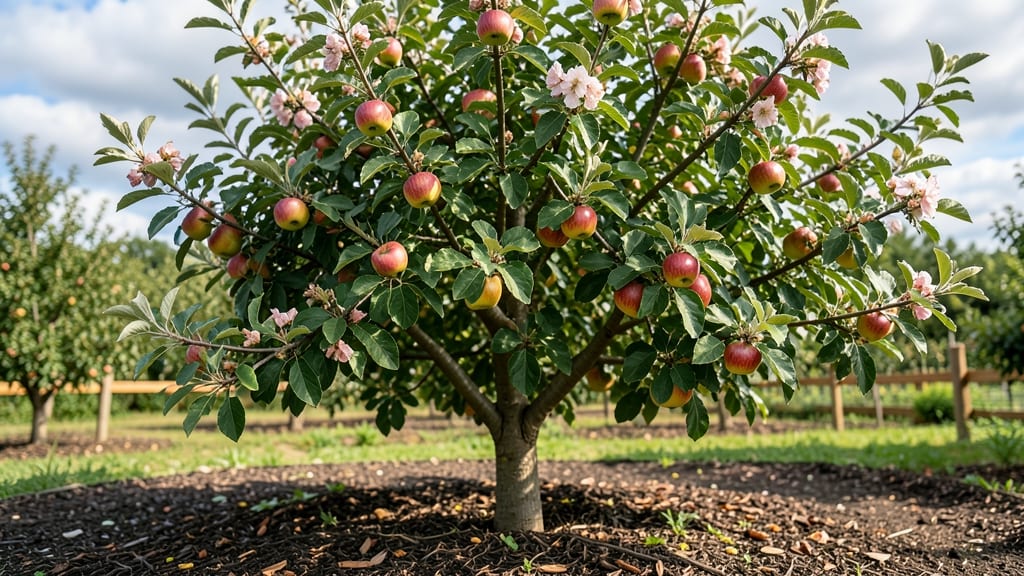
Honeycrisp apple trees grow best in USDA hardiness zones 3 through 8, with peak performance in zones 4 to 7 where they receive 500-800 winter chilling hours.
Honeycrisp apples are cold-hardy but need proper winter chill to set fruit buds. 🌡️ Zones 3-8 cover most of the U.S., but zones 4-7 offer the sweet spot for consistent harvests. The 500-800 chilling hours requirement means these trees struggle in warmer climates without proper dormancy.
I’ve seen firsthand how marginal zones (like 8) can produce smaller yields unless you use cold-hardy rootstocks or microclimate tricks like elevated planting beds.
For optimal fruit quality, focus on zones 4-7 where temperatures balance cold dormancy with summer heat tolerance. In colder zones (3), use windbreaks, while in warmer zones (8), choose northern exposures and drip irrigation to manage stress.
The Honeycrisp’s sweet-tart flavor actually intensifies in ideal climates—planting outside these ranges often leads to bitter, underdeveloped fruit.
💡 In This Article
- Understanding Honeycrisp Apple Tree Cold Hardiness
- Best Regions and Microclimates for Honeycrisp Apple Trees
Understanding Honeycrisp apple tree cold hardiness
The Honeycrisp apple tree's cold hardiness hinges on its winter chilling requirements—a biological process where the tree needs prolonged exposure to temperatures between 32°F and 45°F to break dormancy. This chilling period triggers hormonal changes that prepare buds for spring growth and fruit development.
Without sufficient chilling (500-800 hours), the tree may fail to flower properly, leading to poor fruit set or no harvest at all. 🌡️ Think of it like hibernation: the tree needs this cold "reset" to function optimally in warmer months.
Zones 4-7 provide the perfect balance because they deliver these chilling hours while avoiding extreme cold that can damage the tree's bark and buds. For example, in Zone 4, winter temperatures typically drop to -30°F, but the tree's cold-hardy rootstock (often Antonovka or Malus robusta) protects it.
In contrast, Zone 8 may only provide 300-400 chilling hours, causing the tree to struggle with inconsistent flowering. The Honeycrisp’s sweet-tart flavor actually develops best when it undergoes this full chilling cycle—skipping it results in bland, underripe fruit.
Heat sensitivity also plays a role. While Honeycrisp can handle summer temperatures up to 90°F, prolonged heat waves (especially in Zone 8) can stress the tree, reducing fruit size and sugar content. The tree’s leaves may also curl or scorch without adequate water, further impacting yield.
This is why I recommend planting in northern exposures or using shade cloth in marginal zones—it mimics the cooler microclimates where Honeycrisp thrives naturally.
Another critical factor is bud hardiness. Honeycrisp’s flower buds can tolerate down to -25°F, but younger trees in Zone 3 may need windbreaks or mulch to prevent winter dieback.
In my experience, trees planted in Zone 5-6 (like Minnesota or New York) produce the most consistent, high-quality fruit because they get just enough cold to trigger dormancy without extreme fluctuations. The trade-off? Zones 3 and 8 require extra care to compensate for their climate limitations.
Soil temperature also influences chilling effectiveness. Cooler soils (common in Zone 4-5) enhance chilling, while warmer soils (like those in Zone 7-8) can reduce the tree’s ability to meet its chilling requirements.
This is why I often suggest planting Honeycrisp in well-drained, slightly acidic soil (pH 6.0-6.5) with a thick organic mulch layer—it helps regulate root-zone temperatures and moisture, supporting the tree’s dormancy needs.