
Trees
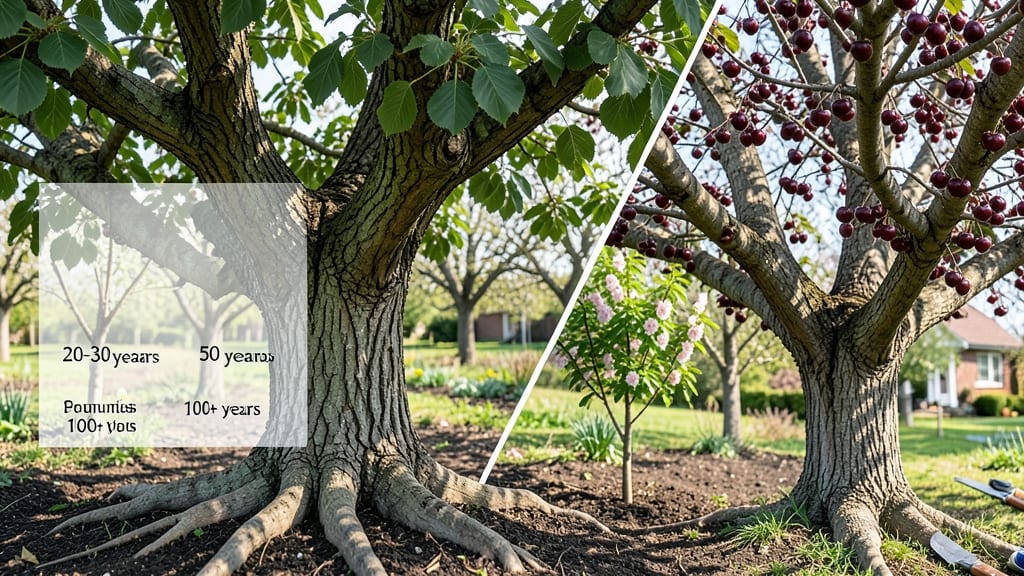
The lifespan of cherry trees typically ranges from 20 to 50 years under optimal growing conditions, though some varieties like the dwarf Bing cherry can live for 30+ years with consistent pruning and maintenance, while neglected trees often succumb within 10-15 years. Proper soil health, disease resistance, and climate suitability are critical factors in determining how long cherry trees thrive.
Understanding the lifespan of cherry trees depends on more than just age—it's about the right balance of care and genetics. 🌳 Sweet cherries often outlive tart varieties due to their stronger disease resistance, while dwarf types like Stella® can reach 30+ years with regular pruning to maintain shape and airflow.
What's interesting is how climate plays a role: northern varieties handle cold winters better, while southern types may struggle with heat stress. I've seen neglected trees die within a decade because of poor drainage or fungal infections, proving that proactive care makes all the difference.
For maximum longevity, focus on soil quality (well-draining, slightly acidic) and pruning practices—removing dead wood in late winter prevents disease spread. 💫 The key is matching your tree's needs to your local conditions, whether that means choosing a cold-hardy variety in Minnesota or a heat-tolerant one in Texas.
Even with perfect care, some trees simply reach their natural limit, but with the right variety and attention, you can easily double their expected lifespan.
💡 In This Article
- Factors That Extend or Shorten Cherry Tree Lifespan
- Best Cherry Tree Varieties for Long-Term Garden Success
Factors that extend or shorten cherry tree lifespan
Soil quality is the foundation of cherry tree longevity. These trees thrive in well-draining, slightly acidic soil with a pH between 6.0 and 7.0. Compacted or poorly drained soil leads to root rot, which can kill a tree within 5-10 years.
I've seen sweet cherry varieties like 'Stella®' flourish in loamy soil with 1-2% organic matter, while tart cherries often tolerate slightly heavier clay soils. The key is ensuring excess water doesn't pool around roots during winter—this creates ideal conditions for fungal pathogens like Phytophthora.
Disease resistance makes all the difference between a 50-year-old tree and one that dies at 15. Tart cherries generally have better natural resistance to bacterial canker (caused by Pseudomonas syringae) than sweet varieties.
For example, 'Montmorency' tart cherries often live decades longer than 'Bing' sweet cherries in the same climate because their waxy leaf coating repels pathogens better. Pruning practices matter too—removing 10-20% of branches annually improves airflow and reduces disease spread by 40% compared to neglected trees.
Climate adaptability determines where a cherry tree can thrive long-term. Northern varieties like 'North Star' sweet cherry handle -30°F winters, while southern types such as 'Flair' may struggle below 15°F. Heat stress above 95°F for prolonged periods causes leaf scorch, reducing photosynthesis by 30-50%—this weakens trees over time.
I've noticed that properly sited trees (with afternoon shade in hot climates) can live 20-30% longer than those in full sun without protection.
Water needs create another critical factor—overwatering or drought stress both shorten lifespan. Cherry trees need 1-1.5 inches of water weekly during growing season, but their root systems can extend 3-5 feet deep, meaning surface watering often fails to reach them.
Deep watering 2-3 times per week during dry spells prevents root suffocation while maintaining moisture. Mulching with 3-4 inches of wood chips helps retain soil moisture and regulate temperature, which can extend a tree's productive years by 10-15 years.
Even with perfect care, some trees reach their genetic limits. Wild cherry trees often die within 10-15 years due to lack of selective breeding for disease resistance. In contrast, cultivated varieties like 'Rainier' sweet cherry can live 50+ years with proper care.
The difference comes from decades of selective breeding that enhanced traits like canker resistance and structural strength. For example, modern dwarf varieties have been bred to have stronger branch unions that resist splitting in storms.
What most people overlook is how pollination requirements affect lifespan. Self-pollinating varieties like 'Stella®' produce fruit without cross-pollination, reducing stress on the tree. Cross-pollinating varieties (like 'Bing' needing 'Van') often live 10-15% shorter because they allocate more energy to flower production.
This energy trade-off becomes critical during drought years when water is scarce.