
Pruning
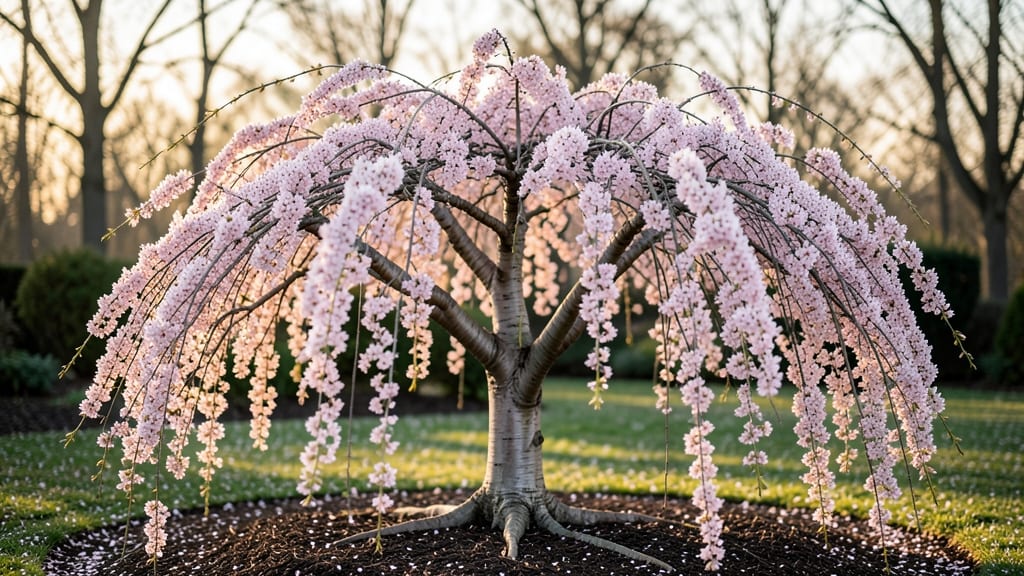
The Weeping Yoshino cherry tree size can reach 20–30 feet at maturity, creating a stunning, cascading canopy that’s perfect for focal points in your landscape.
Picture this: soft pink blossoms spilling over a patio or garden path, their delicate branches swaying in the breeze. But before you plant, knowing its mature dimensions is key to avoiding crowded spaces or pruning headaches down the road.
This tree’s growth habits vary—some stay on the shorter side (15 feet), while others stretch toward 30 feet—depending on soil, sunlight, and pruning.
I’ll break down how to plan for its spread, when to expect rapid growth, and how to keep it in check if your yard is on the smaller side.
Whether you’re dreaming of a springtime centerpiece or just want to avoid future trimming battles, this guide covers everything you need to know about spacing, pruning, and long-term care for your Weeping Yoshino cherry tree 🌸.


Weeping Yoshino cherry tree mature size: height, spread & growth rate variations
The Weeping Yoshino cherry tree (Prunus × yedoensis) is a stunning ornamental tree known for its arching branches and spring blossoms. But before planting, knowing its mature size is key to avoiding future headaches.
Most varieties reach 12–25 feet tall with a 15–30-foot spread, making it a medium-to-large tree that needs space to thrive. Your local climate and soil conditions can shift these numbers significantly—sometimes by 5+ feet—so let’s break down what to expect.
Growth rates vary widely: some trees grow just 6–12 inches per year, while others surge 2–3 feet annually in ideal conditions. Southern climates (USDA Zones 7–9) often see faster growth, while cooler northern zones (5–6) may slow development.
Understanding these variations helps you plan for pruning needs, spacing, and even container planting if space is limited.
🌱 Did You Know? The Taff’s Weeping cultivar is the most common weeping Yoshino, but even it can vary. Some nurseries sell "dwarf" versions, but true dwarf varieties don’t exist—just slow-growing selections that stay smaller with proper care.
If you’re planting near a house, fence, or driveway, aim for at least 15–20 feet of clearance. The spread is often wider than the height, so don’t underestimate how much space this tree will occupy.
In urban gardens, some growers use root restriction techniques (like buried pots) to limit spread, but this can stress the tree and reduce flowering.
For container growing, expect a 10–15% reduction in height over 10 years, but containers under 20 gallons will stunt growth dramatically. If you love the weeping habit but lack space, consider columnar cherry varieties like 'Skyrocket'—they stay narrower but still offer stunning blooms.
Soil quality plays a huge role. Well-draining, slightly acidic soil (pH 5.5–6.5) encourages faster growth, while clay-heavy or waterlogged soil can slow the tree by 30–50%. Amend your soil with compost or sand if your native soil is compacted.
I’ve seen Yoshino cherries in sandy loam hit 20 feet in 12 years, while those in heavy clay struggled to reach 10 feet in 15 years.
Light exposure also matters. Full sun (6+ hours daily) maximizes growth and flowering, but partial shade (4–6 hours) can reduce height by 2–3 feet while preserving the weeping form. If you’re in a shady yard, pair your Yoshino with sun-loving perennials like daylilies or coneflowers to brighten the space.
One common mistake? Assuming a young tree’s size will stay the same. A 3-foot nursery tree might look manageable, but by year 10, it could be 12+ feet tall.
Always check the nursery tag for estimated mature size—some sellers understate growth potential. For example, a tree labeled "15–20 ft" might actually hit 25 ft in a warm climate.
Pro tip: Take a before-and-after photo of your tree every spring. Comparing yearly growth helps you adjust pruning or fertilizing strategies. I track mine with a measuring tape at trunk level—it’s shocking how much a few inches add up over a decade!
🌳 For maximized blooms, prioritize balanced growth over aggressive height
Proper spacing & planting distance for Weeping Yoshino cherry trees
The Weeping Yoshino cherry tree needs thoughtful spacing to thrive. Plant it at least 15–25 feet from structures like houses or fences to prevent root conflicts and allow airflow. In urban settings, this distance ensures branches don’t scrape roofs or block walkways during storms.
For multiple trees, maintain 20–30 feet between specimens. This spacing prevents root competition and reduces disease risk from crowded canopies. In rural areas, you can push boundaries slightly, but never sacrifice airflow or sunlight access.
Soil prep is just as critical. Amend heavy clay with compost to improve drainage, and test pH (ideal range: 6.0–7.0). Poor soil leads to stunted growth or weak branches that can’t support the tree’s weight during blossoming season.
Pros & Cons of Proper Spacing
Pros
- ✅ Prevents root competition – Trees grow stronger with space
- ✅ Reduces disease risk – Better airflow minimizes fungal issues
- ✅ Avoids future pruning headaches – No need to trim branches near structures
- ✅ Maximizes blossom display – Unobstructed branches show off flowers
Cons
- ❌ Requires larger yard space – Not ideal for tiny urban lots
- ❌ Slower initial growth appearance – Takes years to fill out canopy
- ❌ Higher upfront planning – Must account for mature size from day one
If your space is limited, consider dwarf varieties (though true dwarf Weeping Yoshinos are rare). Alternatively, plant near a south-facing wall to leverage sunlight and reduce required spacing by 20%. Just ensure the wall can handle the tree’s weight as it matures.
For container planting, use oversized pots (3+ feet deep)** and prune roots annually. However, expect slower growth and reduced blossom production compared to in-ground planting. Always group containers to mimic natural spacing.
Remember: Proper spacing now saves pruning costs later. A well-placed Weeping Yoshino cherry tree will reward you with decades of effortless beauty—just give it the room it deserves from the start 🌸🌳.