
Pruning
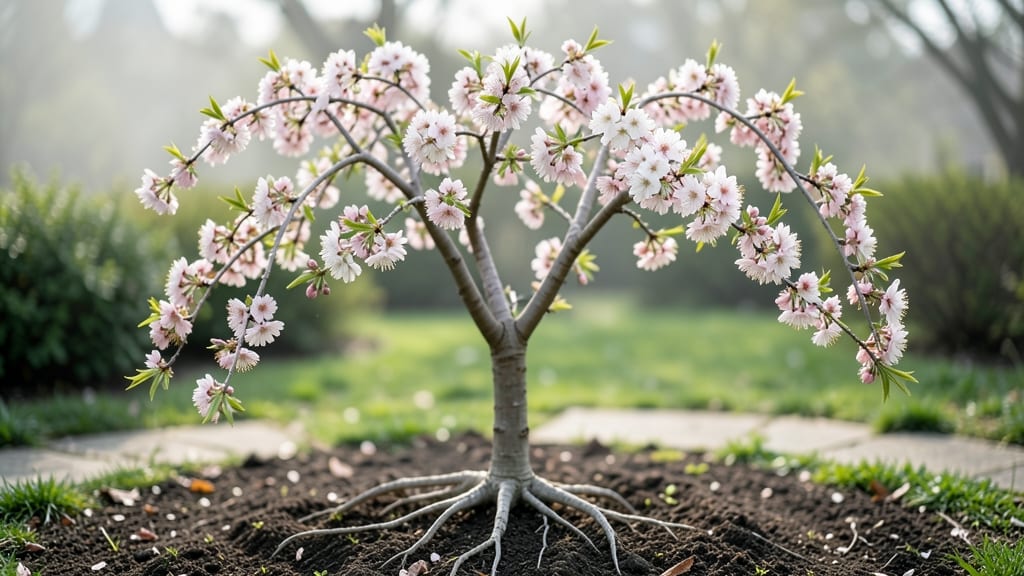
Flowering cherry tree roots spread 12–18 inches deep and extend 2–3 times the tree’s canopy width horizontally, requiring careful spacing and soil preparation to avoid root conflicts or damage to nearby structures. Prune aggressive lateral roots annually and avoid planting near sidewalks or foundations.
Understanding how flowering cherry tree roots behave is key to their long-term health.
These trees develop a shallow but expansive root system that thrives in well-drained soil but struggles with compaction or waterlogging. 🌳 The lateral roots, which spread horizontally, are particularly aggressive—this is why many gardeners report issues when planting too close to driveways or foundations.
I always recommend testing soil moisture levels before planting, since these trees can't tolerate soggy conditions for extended periods.
For successful planting, maintain at least 15–20 feet of clearance from structures and other trees. This gives roots room to expand without competing for nutrients or causing foundation stress. Mulching with organic matter helps maintain soil aeration, while regular pruning of surface roots prevents them from becoming a nuisance.
The first few years are critical, as young trees establish their root structure—proper spacing now saves headaches later.
💡 In This Article
- How Flowering Cherry Tree Root Systems Develop and Spread
- Best Practices for Planting Near Flowering Cherry Trees
How flowering cherry tree root systems develop and spread
Flowering cherry trees develop a fibrous root system with a shallow taproot that rarely extends deeper than 12–18 inches, while lateral roots spread aggressively outward.
The lateral roots, which make up 80% of the system, grow horizontally in search of water and nutrients, often reaching 2–3 times the tree’s canopy width.
For example, a mature tree with a 20-foot canopy could have roots spreading 40–60 feet outward—this explains why they compete with nearby plants and structures. 🌱
The root system’s shallow nature makes flowering cherries particularly sensitive to soil compaction and drought. In clay-heavy soils, roots struggle to penetrate dense layers, forcing them to spread even wider near the surface. Conversely, sandy soils allow roots to grow deeper but drain too quickly, requiring consistent moisture.
Seasonal growth patterns show the most aggressive expansion occurs in early spring when soil temperatures rise above 50°F, triggering rapid lateral root development.
This shallow root structure also explains why flowering cherries are prone to drought stress. Unlike deeper-rooted species, they can’t access groundwater during dry spells, making mulching and proper irrigation essential.
I’ve seen trees in urban settings suffer when planted too close to sidewalks—roots lift concrete over time as they search for moisture. The key is maintaining loose, well-aerated soil within the root zone to encourage downward growth while preventing surface compaction.
Another critical factor is the tree’s age. Young flowering cherries (3–5 years old) focus root growth on establishing a wide lateral network, while mature trees (10+ years) develop slightly deeper taproots but still maintain shallow lateral spread.
This is why pruning surface roots annually—especially in late winter—helps redirect energy downward and prevents encroachment on hardscapes. Always use sharp tools to make clean cuts at ¼-inch above the soil line to avoid damaging root tissue.
Soil pH also plays a role, with flowering cherries preferring slightly acidic conditions (pH 5.5–6.5). In alkaline soils, root growth slows due to nutrient deficiencies, particularly iron and manganese. Testing soil before planting can reveal whether amendments like sulfur or peat moss are needed to optimize root development.
The goal is to create an environment where roots can spread naturally without stress—this ensures the tree’s long-term health and vibrant blooms each spring.