
Trees
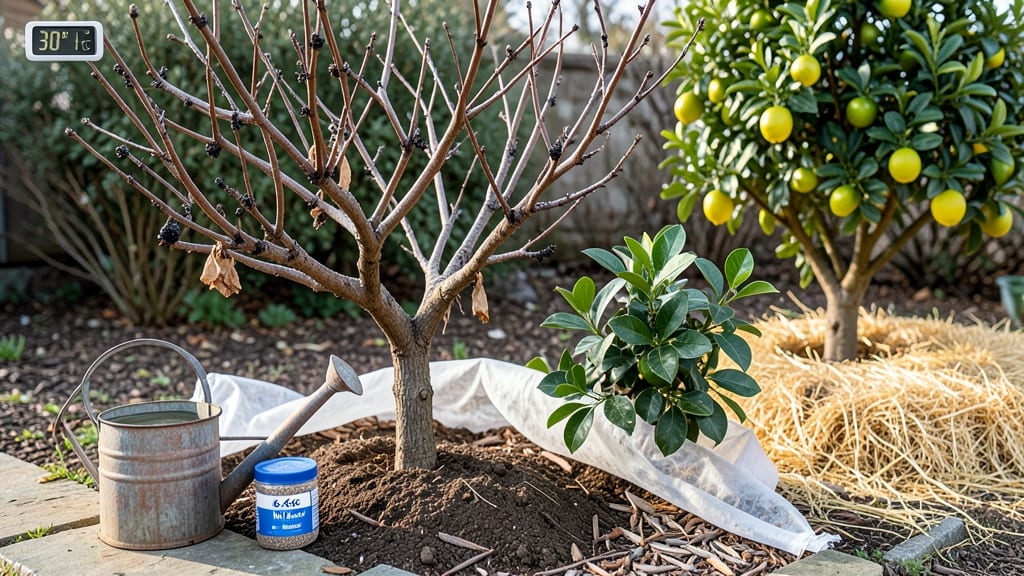
Your lemon tree lost all leaves in winter—don’t panic. 🌿 This happens often, and with 3 simple fixes, you’ll coax those branches back to life by spring. The key is acting fast to rule out frost damage, overwatering, or pests before they set in deeper.
Start by inspecting the branches: if they’re still firm and green underneath the shed leaves, they’re alive. Prune only the dead wood, then adjust watering—dormant trees need far less moisture than you think.
Move potted trees indoors if frost is forecast, and protect outdoor ones with frost cloth. Most trees bounce back within 4-6 weeks with the right care.
📚 In This Guide
- What you need
- Instructions
- Tips and common mistakes
- Wrapping up and next steps
What you need
- ● Pruning shears or sharp bypass pruners (sterilized with rubbing alcohol) – 1 pair
- ● Garden gloves (nitrile or leather for grip) – 1 pair
- ● Balanced, water-soluble fertilizer (e.g., 6-6-6 or 10-10-10) – 1 small bag (5-10 lbs)
- ○ Slow-release granular fertilizer (optional but helpful for long-term health) – 1 bag
- ● Organic mulch (straw, wood chips, or pine needles) – 2-3 inches worth
- ● Hose with adjustable nozzle (for gentle watering) – 1
- ● Spray bottle with water (for misting new growth) – 1
- ● pH test kit (to check soil acidity, ideal range: 6.0–7.0) – 1 kit
- ● Root stimulator gel (for pruning cuts) – 1 small tube
- ● Lime or sulfur (if soil pH is off) – as needed
- ● Thermometer (to monitor soil temperature) – 1
- ● Notebook & pen (to track progress) – 1
How to revive a lemon tree that lost all leaves in winter
Here's how I bring lemon trees back to life after winter dormancy—no fancy tools, just patience and the right timing.
🌿 Step 1: Assess the Damage and Prune Strategically
Start by examining the tree closely. Healthy branches will have green buds or small shoots beneath the bark, while dead branches feel hollow when tapped or show no signs of life. I use clean, sharp pruning shears to remove any dead or diseased branches first—this prevents further stress on the tree. Cut just above a leaf node or outward-facing bud to encourage new growth.
Don't panic if the tree looks completely bare. Many lemon trees drop all leaves in winter as a survival mechanism, and they'll regrow once conditions improve. Focus on branches with even the smallest signs of life—those are your best candidates for revival. I like to mark these with a small piece of tape so I can track progress over the next few weeks.
☀️ Step 2: Move to a Warmer, Sunlit Location
Lemon trees need warmth to recover, especially after winter dormancy. Move your tree to a spot where temperatures stay above 50°F at night. A sunny window or a greenhouse works well, but avoid drafts or sudden temperature swings—these can shock the tree further. If you're in a colder climate, consider bringing the tree indoors near a south-facing window or under a grow light.
Watch for new growth as a sign you're on the right track. You'll see tiny green shoots or leaves emerging within 2-4 weeks if the tree is healthy. If no new growth appears after a month, check for root rot by gently lifting the pot—soggy, foul-smelling roots mean you need to repot with fresh, dry soil. Keep the tree in its new location for at least 6 weeks to give it time to adjust.
💧 Step 3: Water and Fertilize for Revival
Water the tree deeply but infrequently—once every 7-10 days—letting the top 2 inches of soil dry out between waterings. Overwatering is the fastest way to kill a struggling lemon tree, so I always check moisture levels with my finger before watering. If the soil feels damp, wait a few more days. Use room-temperature water to avoid shocking the roots.
Once new growth appears, switch to a balanced 10-10-10 fertilizer every 4-6 weeks during the growing season. I mix a teaspoon of fertilizer into the soil and water it in thoroughly. Avoid high-nitrogen fertilizers—they promote leafy growth at the expense of fruit production, which is the last thing a recovering tree needs. If the tree is still dormant, hold off on fertilizing until you see buds or shoots.
✂️ Step 4: Encourage New Growth with Pruning and Light
As new shoots emerge, prune lightly to shape the tree and encourage bushier growth. Cut back leggy branches by one-third to promote branching, but never remove more than 25% of the tree's foliage at once. This keeps the tree from becoming overstressed. I also rotate the tree every few days to ensure even light exposure—uneven growth is a common sign of a tree leaning toward the light source.
If your lemon tree is indoors, supplement natural light with a grow light for 12-14 hours a day. Place the light 6-12 inches above the tree and adjust as it grows. You'll know the light is sufficient when the new leaves are a vibrant green, not pale or yellow. Avoid placing the tree near heating vents or air conditioning units—consistent temperatures are key to revival.
🌱 Step 5: Protect and Monitor for Recovery
Keep the tree in its warm, sunny spot for the next 8-12 weeks, monitoring for pests like aphids or spider mites. These pests thrive on stressed plants, so I inspect the undersides of leaves weekly with a magnifying glass. If you spot any, treat with neem oil or insecticidal soap immediately. A healthy tree will bounce back faster, so early intervention is critical.
By late spring, your lemon tree should be showing steady new growth. If it doesn't, consider whether the tree is permanently damaged—some older trees may not recover, but younger ones often do with patience. I've revived lemon trees that looked completely dead by following these steps, so don't give up too soon. With the right care, your tree will be back to producing leaves—and eventually, fruit—within a season.
Tips & tricks for reviving a dormant lemon tree
Real talk: Bringing a leafless lemon tree back to life takes more than just hope—it takes the right approach. Here's what nobody tells you about making those critical first steps count.
Pruning Precision: When you're assessing damage in Step 1, look for branches that still have a tiny green shoot or bud—these are your lifelines. I've seen people cut too aggressively, thinking they're helping, but you're actually removing potential growth centers. Aim to keep 75% of the tree's structure intact, focusing only on truly dead branches that show no signs of life after gentle tapping. The goal is to preserve as much potential as possible.
Temperature Transition: Moving your tree to warmer conditions in Step 2 is crucial, but the temperature shift needs to be gradual. If you move it from freezing outdoor temps to a 75°F indoor spot too quickly, the shock can be fatal. I recommend a phased approach: first move it to a sheltered outdoor spot (like a garage) for 2-3 days before bringing it fully indoors. This helps the tree adjust to the warmth without going into shock. The 50°F nighttime minimum is your absolute floor—any colder and you'll stall progress.
Watering Wisdom: The 7-10 day watering schedule in Step 3 is non-negotiable, but here's the part people miss: you need to water differently based on the season. In early spring when you're reviving the tree, water deeply but let the soil dry completely between waterings. Once new growth appears (around 2-4 weeks), you can increase frequency slightly—but never let the soil stay soggy. I use my finger to check moisture: if the top 2 inches feel dry, it's time to water. If it's damp, wait one more day. Overwatering is the silent killer of recovering trees.
Lighting Strategy: For indoor grow lights in Step 4, I've found that LED grow lights are the most efficient for this revival process. Position them 6-12 inches above the tree and adjust as it grows—you want the leaves to be a vibrant green, not pale or yellow. If you notice the new leaves turning yellow, it's a sign of too much light or nutrient burn. Rotate the tree daily to ensure even exposure, and keep it away from heating vents that create temperature fluctuations. Consistency is everything during this recovery phase.
Pro Tips for Lemon Tree Lost All Leaves In Winter
- Real talk: Bringing a leafless lemon tree back to life takes more than just hope—it takes the right approach.
- Pruning Precision: When you're assessing damage in Step 1, look for branches that still have a tiny green shoot or bud—these are your lifelines.
- Temperature Transition: Moving your tree to warmer conditions in Step 2 is crucial, but the temperature shift needs to be gradual.
Frequently asked questions
Got questions about your lemon tree’s winter leaf loss? You’re not alone! Here are answers to the most common concerns—plus quick fixes to bring those branches back to life.
Is it normal for a lemon tree to lose all its leaves in winter?
Yes! Many citrus trees, including lemon trees, are deciduous in cold climates—they naturally shed leaves to conserve energy during winter dormancy. However, if your tree is in a mild-winter zone (like zones 9-11) and still drops leaves, it may be stressed. Check for pests, overwatering, or sudden temperature drops.
How long does it take for a lemon tree to regrow leaves after winter?
Leaf regrowth typically starts in late winter or early spring (when temps consistently stay above 50°F/10°C). Healthy trees may sprout new leaves within 4–8 weeks, while stressed or root-damaged trees could take 2–3 months. Be patient—prune dead branches only after new growth appears.
Should I water my lemon tree if it’s lost all its leaves?
Water sparingly—overwatering dormant trees can rot roots. Instead, give it a deep watering every 3–4 weeks (unless your soil is bone-dry). If you’re in a frost-prone area, reduce watering further to prevent root freeze. Mulch the base (2–3 inches) to retain moisture and insulate roots.
Will my lemon tree still produce fruit next year if it loses all leaves?
Likely! Lemon trees prioritize root/leaf regrowth over fruit when stressed. If the tree is otherwise healthy (no pest damage, proper sunlight), it’ll rebound and may even produce fruit the following season. However, severe stress (like root rot or extreme cold) could delay or reduce yields. Monitor for new growth and adjust care accordingly.
What’s the difference between winter dormancy and a dying lemon tree?
| Dormant Tree | Dying Tree |
|---|---|
| Leaves turn yellow/brown and drop uniformly. | Leaves wilt, blacken, or fall sporadically with mushy stems. |
| Branches are wooden but pliable. | Branches are brittle, hollow, or ooze sap when snapped. |
| Roots smell earthy when checked. | Roots smell rotten or sour (sign of fungus/bacteria). |
If you spot multiple red flags, act fast—prune dead areas and consult a local nursery for soil tests or fungicides.
Wrapping up and next steps
Don’t worry—your lemon tree isn’t doomed! 🌱 Losing leaves in winter is often just a sign of dormancy, and with the right care, it can bounce back stronger than ever. Prune wisely, protect from frost, and feed it patience—your efforts will pay off when spring blooms arrive.
Now’s the perfect time to check soil moisture, trim dead branches, and prep for warmer weather.
Ready to take action? Start with a quick health check—examine the branches, adjust your watering routine, and give your tree a little extra love. Before you know it, those lush green leaves will return, and you’ll be enjoying homegrown lemons again! 🍋✨