
Flowers
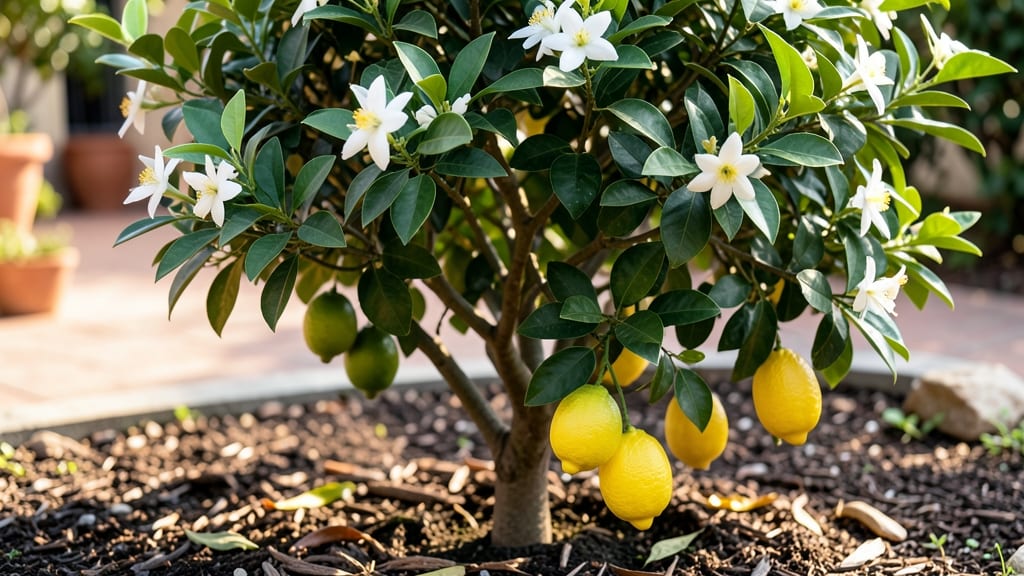
Your citrus tree’s fragrant blossoms aren’t just pretty—they’re the secret to a bountiful harvest. 🌸 I’ve watched my Meyer lemon tree go from sparse blooms to a snowfall of white flowers, and the difference in fruit production is night and day.
The key? Creating the perfect conditions for those delicate flowers to thrive and set fruit.
Citrus trees need full sun, well-draining soil, and consistent moisture—but not soggy roots. Prune in late winter to open the canopy, fertilize with citrus-specific food in early spring, and watch for pests like aphids that love to snack on new blooms.
Even a little stress (like drought or extreme heat) can cause flowers to drop before they pollinate.
When those blossoms appear, you’ll see bees and butterflies flocking to them—nature’s way of ensuring fruit sets. Protect them from frost (they need temps above 30°F to survive) and avoid overwatering, which can cause blossom end rot later.
With the right care, your tree will reward you with more fruit than you can peel.
This works for lemons, oranges, limes, and grapefruit—just adjust watering based on your climate. Whether you’re growing in pots or in the ground, these tips will turn your citrus tree into a fragrant, fruitful powerhouse. Let’s get those flowers blooming!
📚 In This Guide
- What you need
- Instructions
- Tips and common mistakes
- Wrapping up and next steps
What you need
- ● Citrus tree: Choose a healthy dwarf (4-6 ft), semi-dwarf (8-12 ft), or standard (15+ ft) variety (e.g., Meyer lemon, Calamondin orange, or Satsuma mandarin).
- ● Well-draining soil: Mix 60% native soil with 30% compost and 10% coarse sand or perlite (pH 6.0–7.0).
- ● Pot or planting area: Container growers: Use a 15–25-gallon pot with drainage holes (terracotta or fabric pots preferred).
- ● In-ground plantings: Dig a hole twice as wide as the root ball but no deeper.
- ● Fertilizer: Slow-release citrus fertilizer (e.g., 10-10-10 or 8-3-9 NPK ratio, 1 lb per 100 sq ft).
- ● Citric acid or iron chelate (if soil is alkaline).
- ● Watering tools: Drip irrigation system or soaker hose (for consistent moisture).
- ● Watering can with a rose attachment (for hand-watering).
- ● Pruning tools: Bypass pruners (for clean cuts on 1/4-inch stems).
- ● Loppers (for thicker branches, 3/4-inch diameter max).
- ● Sterilizing solution (70% isopropyl alcohol or bleach/water mix).
- ● Mulch: 2–3 inches of organic mulch (e.g., wood chips, straw, or pine bark).
- ● Pollinator-friendly plants: Nearby bee balm, lavender, or marigolds to attract bees and butterflies. 🐝
- ● Shade cloth (30–50%) for young trees in hot climates.
- ● Humidity tray or pebble tray (for indoor citrus trees).
- ● Citrus-specific pest control: Neem oil or horticultural oil (for aphids/mites).
- ● Grow lights (LED, full-spectrum) if indoors (12–14 hours/day).
How to encourage abundant citrus tree flowers for pollinators and fruit
Here's how I coax fragrant citrus blossoms that bring bees, butterflies, and a future harvest.
🌱 Step 1: Provide Proper Winter Chill Hours
Citrus trees need 200-600 chill hours below 45°F to break dormancy and flower. If you live in a warm climate, place your tree in a spot where it gets cool nights—even a few degrees cooler helps. I've seen trees in 50-60°F nighttime temps produce far more blooms than those kept in heated garages year-round.
For indoor trees, move them to a cooler room or basement during winter nights. You'll notice new growth starting in early spring—that's your signal the chill period worked. Without proper chill, you might get some flowers, but they'll be sparse and produce little fruit.
☀️ Step 2: Position for Maximum Sunlight
Citrus trees need 6-8 hours of direct sunlight daily to develop flower buds. Place your tree near a south-facing window or under grow lights if indoors. I've found that moving my Meyer lemon tree to a sunny patio in spring triggers heavy flowering within weeks.
Watch for these signs: leaves should be deep green, not pale or yellow. If your tree's leaves look stretched out and leggy, it's not getting enough light. Rotate the pot a quarter turn weekly so the tree grows evenly toward the light source.
💧 Step 3: Water and Fertilize Strategically
Water deeply when the top 2-3 inches of soil feel dry, but avoid soggy soil—citrus roots rot easily. I use a moisture meter to check, but you can also stick your finger in the soil. Fertilize with a balanced citrus fertilizer (like 6-6-6) every 4-6 weeks during growing season, but cut back in winter.
Here's the thing—too much nitrogen makes leafy growth but few flowers. I switch to a low-nitrogen, high-phosphorus fertilizer (like 2-4-2) in late winter to encourage blooming. You'll see tiny flower buds forming in 4-6 weeks if the tree is happy.
✂️ Step 4: Prune for Better Airflow and Light
Prune in late winter or early spring to remove dead, crossing, or overcrowded branches. I cut back about 1/3 of the new growth to encourage bushier growth and more flowering sites. Always use clean, sharp pruners to avoid damaging the tree.
Thin out dense areas so light and air circulate—this prevents fungal diseases and helps flowers develop. You'll see fresh green growth within weeks, and those new shoots will often bear flower clusters at their tips.
🐝 Step 5: Attract Pollinators Naturally
While citrus trees can self-pollinate, bees and butterflies dramatically increase fruit set. Plant nearby pollinator-friendly flowers like jasmine, bougainvillea, or marigolds. I also mist the blossoms lightly on warm mornings to attract bees—just enough to make the petals glisten.
If you're indoors, place the tree near an open window where pollinators can visit. Watch for bees visiting—it's magical! Even if you don't see them, the flowers will still set fruit, but pollinators ensure sweeter, larger fruit.
Tips & tricks for perfect citrus tree flowers
Here's what nobody tells you about getting those showstopping citrus blossoms—tricks that make all the difference between a few sad flowers and a tree bursting with fragrant blooms.
Chill Hours Hack: Don't just count the hours below 45°F—watch for those 50-60°F nighttime dips too. I've seen trees in heated garages with zero chill produce almost nothing, while identical trees on a covered patio with just those cooler nights bloomed like crazy. A simple thermometer in the tree's location for a few weeks will reveal if you're getting enough natural chill.
Sunlight Secret: Those 6-8 hours of direct sunlight need to be consistent, not just occasional bursts. If your tree is near a window, rotate it a quarter turn weekly so all sides get equal light. I notice my Meyer lemon's new growth is always toward the light source—if it's all on one side, that's your clue to rotate. For indoor trees, supplement with grow lights if natural light is weak.
Fertilizer Timing: The switch to low-nitrogen, high-phosphorus fertilizer in late winter is crucial—it's the difference between leafy growth and actual flowers. I start this around late February in my zone, but adjust based on your last frost date. Watch for tiny green buds forming after about 4-6 weeks—that's your confirmation the fertilizer is working.
Pruning Precision: When you cut back that 1/3 of new growth in Step 4, focus on removing branches that are rubbing against each other. These create wounds that can attract pests and diseases. I also look for branches growing straight up—these often produce more flowers than horizontal ones. Prune just above a leaf bud or outward-facing branch to encourage new growth in the right direction.
Pro Tips for Citrus Tree Flowers
- Here's what nobody tells you about getting those showstopping citrus blossoms—tricks that make all the difference between a few sad flowers and a tree bursting with fragrant blooms.
- Chill Hours Hack: Don't just count the hours below 45°F—watch for those 50-60°F nighttime dips too.
- Sunlight Secret: Those 6-8 hours of direct sunlight need to be consistent, not just occasional bursts.
Frequently asked questions
Got questions about nurturing those stunning citrus tree flowers? You’re not alone! Here are some of the most common queries—plus quick, practical answers to help you make the most of your blooms.
When do citrus tree flowers bloom, and how long do they last?
Citrus flowers typically bloom in late winter to early spring (February–April in most regions), though timing varies by variety. Each blossom lasts just 3–5 days, but trees produce waves of flowers over several weeks. For example, lemon and lime trees often bloom earlier than oranges or grapefruits. Pro tip: Cooler nights (50–60°F) trigger heavier flowering!
Why aren’t bees or other pollinators visiting my citrus flowers?
Citrus flowers are fragrant but sometimes struggle with pollinator visits due to cold snaps, lack of native bees, or pesticide use. To help:
- Plant bee-friendly flowers nearby (like lavender or sunflowers).
- Avoid spraying chemicals during bloom.
- Hand-pollinate with a soft brush if needed—gently transfer pollen between flowers.
Can citrus tree flowers survive a late frost?
Frost is the #1 enemy of citrus blooms! Flowers are extremely frost-sensitive—temperatures below 28°F can kill them instantly. Protect your tree with:
- Frost cloth or row covers (remove during the day).
- String lights or heat lamps for young trees.
- Watering roots before a freeze (insulates slightly).
Will citrus flowers turn into fruit, or do I need to do something special?
Most citrus flowers can become fruit, but only about 1–5% typically set fruit naturally due to pollination challenges. To improve success:
- Ensure cross-pollination (plant at least two compatible varieties).
- Thin fruit after harvest to avoid overburdening the tree.
- Fertilize with citrus-specific fertilizer (high in nitrogen pre-bloom, phosphorus during fruit set).
What can I do with fallen citrus flowers?
Don’t toss those petals! They’re packed with flavor and uses:
- Culinary: Infuse syrup, make floral honey, or garnish desserts (e.g., lemon blossom tea).
- DIY: Dry petals for potpourri or craft wreaths.
- Compost: Add to your compost pile (they break down quickly!).
Wrapping up and next steps
Citrus tree flowers aren’t just beautiful—they’re essential for pollinators and future harvests! From their fragrant blooms to their role in fruit production, these delicate flowers bring life to gardens and orchards alike.
Whether you’re a gardener or simply admire nature’s wonders, embracing these blossoms means supporting both pollinators and your citrus yield.
Ready to take the next step? Plant a citrus tree or tend to the ones you already have—your garden (and the bees!) will thank you. 🌸🐝