
Light Requirements
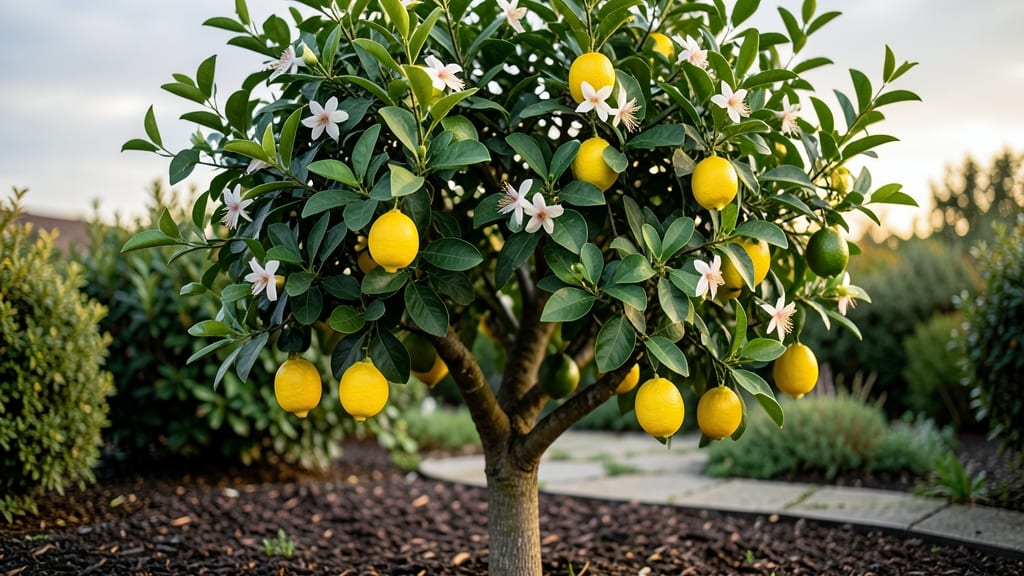
Your lemon tree needs full sun to produce the most fragrant, sweetest lemons—but too much direct heat can scorch leaves if you're not careful. 🌞 I've grown citrus in both in-ground beds and containers, and the key is balancing sun exposure with protection during peak afternoon heat.
The right soil mix and watering schedule make all the difference between a struggling plant and one loaded with fruit.
Start with well-draining soil that mimics the Mediterranean climate lemons love—think sandy loam with organic matter. In-ground trees need at least 6 hours of direct sun daily, while container-grown trees thrive with 8+ hours.
The trick is afternoon shade in scorching climates (like my Zone 9 garden), which prevents leaf burn while still maximizing fruit production. Mulch heavily to retain moisture and keep roots cool.
You'll know you're doing it right when new growth appears bright green and glossy, not yellow or crispy. Regular pruning after harvest removes dead wood and improves airflow, which means fewer pests and more energy for next year's fruit.
With the right balance, your tree can produce harvests year-round in mild climates—or at least two flushes annually where winters dip below freezing.
Container growers get an extra advantage: you can move pots to shadier spots during heatwaves or bring them indoors when temperatures drop. The secret to container success is larger pots (15-20 gallons)—smaller ones dry out too fast and stress the roots.
Whether planted in the ground or a pot, your lemon tree will reward you with bright yellow fruit and that unbeatable citrus scent within 2-3 years.
📚 In This Guide
- What you need
- Instructions
- Tips and common mistakes
- Wrapping up and next steps
What you need
- ● Lemon tree (citrus variety): Dwarf Meyer lemon (best for containers, 4–6 ft tall at maturity)
- ● Standard lemon tree (6–15 ft tall, for in-ground planting)
- ○ Optional: Grafted trees for disease resistance
- ● Container (if potted): Minimum 15–20 gallons (18–24" diameter) for dwarf varieties
- ● Material: Terracotta (breathable) or heavy plastic (retains moisture)
- ○ Optional: Self-watering pots for convenience
- ● Well-draining soil: 50% potting mix (citrus-specific or cactus/succulent blend)
- ● 30% perlite or pumice (for aeration)
- ● 20% coarse sand or gravel (prevents compaction)
- ● Fertilizer: Citrus-specific fertilizer (balanced NPK, e.g., 6-6-6 or 8-3-9)
- ○ Optional: Slow-release granules or organic options (fish emulsion, compost)
- ● Tools: Trowel or small shovel (for planting)
- ● Pruning shears (sterilized)
- ● Spray bottle (for misting young leaves)
- ○ Optional: Moisture meter, grow lights (for low-light winters)
- ● Location: 6–8+ hours of direct sunlight daily (south-facing windows or outdoor spots)
- ● Pro tip: Avoid harsh afternoon sun in hot climates (use shade cloth if needed)
- ● Climate considerations: Protect from frost (below 25°F/-4°C) with burlap wraps or move indoors
- ● Hardiness zones: 9–11 for outdoor planting; zones 8 or lower require containers
- ● Watering setup: Drip irrigation or watering can with spout (avoids leaf burn)
- ○ Optional: Mulch (straw or bark) to retain moisture
Step-by-step instructions for planting a lemon tree in full sun
Here's how I ensure my lemon trees thrive in full sun—with techniques that work year-round.
🪴 Step 1: Choose the Right Location and Container
Lemon trees demand 6-8 hours of direct sun daily, so pick a spot that gets unfiltered afternoon light. If growing in containers, use a 5-gallon pot minimum with drainage holes—smaller pots dry out too fast. I like glazed ceramic because it retains moisture while allowing roots to breathe.
Place the pot on a saucer or elevated stand to catch drainage. The key is positioning: if your tree gets afternoon shade, it’ll struggle to produce fruit. Watch how sunlight moves across your yard—full sun spots stay hot even in summer, which lemon trees tolerate better than partial shade.
🌱 Step 2: Plant With Well-Draining Soil and Support
Use a mix of 50% potting soil, 30% perlite, and 20% compost to prevent root rot. Lemon trees hate soggy feet. Amend heavy garden soil with sand or grit if planting outdoors. Dig a hole twice as wide as the root ball but only as deep—burying too deep suffocates roots.
Add a 6-inch bamboo stake at planting to support the tree as it grows. Tie the main stem loosely with soft garden twine, leaving room to grow. This prevents wind damage and encourages upright growth. Water deeply right after planting until moisture runs from the drainage holes—this settles the soil and removes air pockets.
☀️ Step 3: Water Deeply and Adjust for Seasonal Sun
Water when the top 2 inches of soil feel dry, but avoid wetting leaves to prevent fungal diseases. Lemon trees in full sun need 1-2 gallons of water weekly in summer, but cut back to every 10-14 days in winter when growth slows. Overwatering is the fastest way to kill a lemon tree.
In intense heat, mulch with 2 inches of wood chips to retain moisture and regulate soil temperature. Watch for leaf burn—if edges crisp in summer, provide afternoon shade temporarily. Mature trees develop thicker leaves that handle full sun better, but young trees need gradual acclimation.
✂️ Step 4: Prune for Airflow and Fruit Production
Prune in late winter or early spring to remove dead wood and shape the tree. Cut back 1/3 of new growth to encourage branching. I always prune just above a leaf node at a 45-degree angle to prevent water from pooling. This also improves airflow, reducing humidity-related diseases.
Remove suckers (shoots growing from the base) immediately—they drain energy from fruit production. Thin out crowded branches to let sunlight reach the center. You’ll know you’re doing it right when the tree has an open, vase-like shape with sunlight hitting all sides.
🍋 Step 5: Fertilize for Year-Round Citrus Success
Feed with a balanced citrus fertilizer (6-6-6) every 4-6 weeks during growing season. I switch to a low-nitrogen (3-1-2) blend in winter to promote flowering. Always water before fertilizing—this prevents root burn. Organic options like fish emulsion or seaweed extract work well too.
Watch for nutrient deficiencies: yellow leaves mean nitrogen deficiency, while purple stems signal phosphorus shortage. Adjust your fertilizer ratio accordingly. Mature trees in full sun produce more fruit, but young trees need patience—don’t expect lemons until they’re 3-5 years old.
Tips & tricks for perfect lemon tree growth in full sun
These proven strategies will help your lemon tree not just survive, but thrive in full sun conditions.
Sunlight Strategy: If your location gets intense afternoon sun, consider providing temporary shade during the hottest hours (12-3 PM) for young trees. I use a lightweight shade cloth that lets in 50% of sunlight—just enough to prevent leaf burn while still allowing photosynthesis. Remember, lemon trees in containers can overheat faster than in-ground trees, so monitor soil temperature with your hand before watering.
Soil Mix Secret: The 50-30-20 soil mix (potting soil, perlite, compost) is perfect, but for extra drainage, I add a handful of coarse sand to the mix. This prevents compaction and mimics the well-draining Mediterranean soil where lemon trees originate. If you're planting outdoors, test your native soil's drainage by doing the "squeeze test"—if it stays in a clump when squeezed, amend with sand or grit.
Watering Wisdom: The 1-2 gallons weekly in summer guideline works, but I've found that watering in the early morning (6-8 AM) reduces evaporation and fungal risks. For container-grown trees, I check moisture by sticking my finger 2 inches deep—if it feels dry, that's your cue. In winter, when trees go semi-dormant, I let the top 3 inches dry out completely between waterings to prevent root rot.
Pruning Precision: When cutting back that 1/3 of new growth in Step 4, focus on removing inward-facing branches first—these create shaded areas where humidity builds up. I also make sure to sterilize my pruning shears with rubbing alcohol between cuts to prevent spreading disease. The 45-degree angle cut isn't just for aesthetics; it helps water run off rather than pool at the cut site.
Pro Tips for Lemon Tree Full Sun
- These proven strategies will help your lemon tree not just survive, but thrive in full sun conditions.
- Sunlight Strategy: If your location gets intense afternoon sun, consider providing temporary shade during the hottest...
- Soil Mix Secret: The 50-30-20 soil mix (potting soil, perlite, compost) is perfect, but for extra drainage, I add a h...
Frequently asked questions
Got questions about growing your lemon tree in full sun?
You’re not alone! Here are answers to the most common queries—from sunlight needs to troubleshooting—so your citrus tree stays happy and productive.
How much full sun does a lemon tree really need daily?
A mature lemon tree thrives with 6–8+ hours of direct sunlight daily. Young trees need 4–6 hours to avoid stress. In extreme heat (over 90°F/32°C), provide afternoon shade to prevent leaf scorch. Monitor for pale or crispy leaves—signs of too much sun!
Can I grow a lemon tree in full sun indoors?
Indoors, full sun is tricky—even south-facing windows offer only 3–4 hours of direct light. For success, supplement with a grow light (12+ hours/day) or place near a sunroom. Dwarf varieties (like ‘Meyer’) adapt better than standard trees. Watch for leggy growth—this means more light is needed!
What if my lemon tree’s leaves turn yellow in full sun?
Yellowing leaves often signal sunburn or overwatering. First, check soil moisture—let the top 2 inches dry out between waterings. If leaves are crispy or brown-edged, move the tree to partial shade (morning sun only) for a week. If roots smell sour or soil stays soggy, repot in well-draining mix.
Are there lemon tree alternatives that tolerate full sun better?
If full sun proves too harsh, try these sun-loving citrus relatives:
- Lime trees (Key or Mexican lime): More heat-tolerant than lemons.
- Calamondin orange: Compact, fragrant, and thrives in full sun.
- Kumquat: Cold-hardy and drought-resistant.
Will full sun help my lemon tree survive winter?
Full sun doesn’t protect against frost—lemons need temperatures above 20°F (-6°C). In cold climates, move potted trees indoors or cover outdoor trees with frost cloth. Prune in late winter to remove dead wood and encourage new growth. Mulch outdoor trees with straw or bark to insulate roots.
Wrapping up and next steps
Growing a lemon tree in full sun is absolutely doable—and incredibly rewarding! 🌞 With the right soil, watering routine, and a little patience, you’ll enjoy a thriving citrus tree that produces juicy lemons year-round.
Whether you’re a beginner or a seasoned gardener, the key is consistency and attention to your tree’s needs.
Now that you’re armed with the secrets to success, why not take the next step? Start by selecting your ideal lemon tree variety and preparing your sunny spot.
Before you know it, you’ll be harvesting fresh lemons straight from your own backyard—how’s that for a taste of summer anytime?