
Pruning
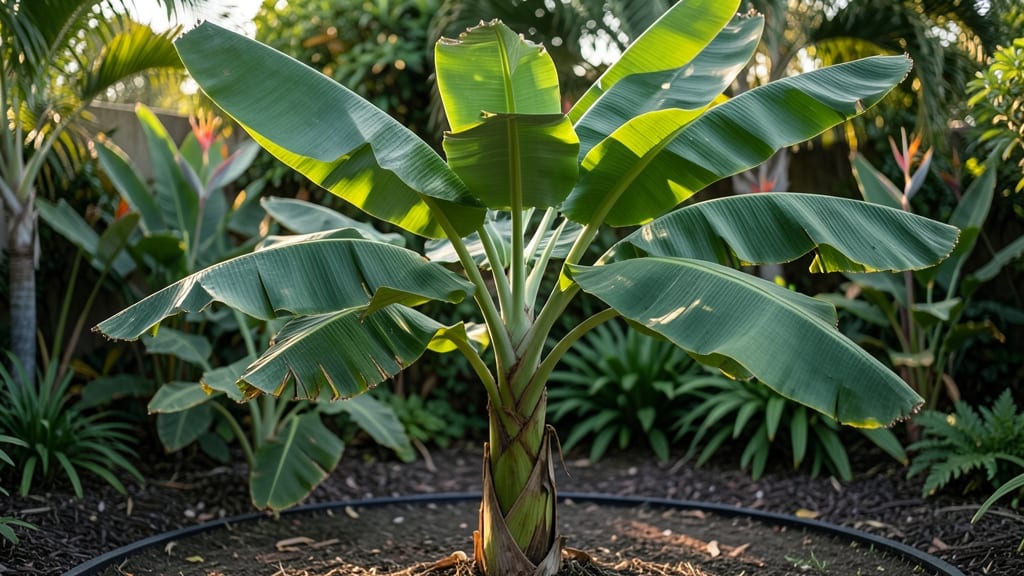
A banana tree is called a Musa plant, belonging to the genus Musa in the banana family (Musaceae), though it is technically a large herbaceous plant, not a true tree.
A banana tree is actually a giant herbaceous plant, not a true tree, because it lacks woody stems. 🌱 The Musa genus includes over 70 species, with Musa acuminata and Musa balbisiana being the most common ancestors of commercial bananas.
These plants grow from a pseudostem made of tightly packed leaf sheaths, which gives them the tree-like appearance. The term "banana tree" is a common misnomer that persists even among gardeners and botanists.
Understanding this distinction matters because it affects how you care for the plant. For example, pruning techniques differ significantly between true trees and banana plants. 🌿 The pseudostem's structure means you'll never need to worry about traditional tree pruning methods, which could damage the plant's growth system.
Instead, focus on removing old leaves and dead hands to encourage new growth and fruit production.
💡 In This Article
- Botanical Classification of Banana Plants
- Common Names for Banana Plants Around the World
Botanical classification of banana plants
The confusion around calling banana plants "trees" stems from their impressive height—some varieties like the Musa acuminata can reach 25-30 feet—but botanically, they're classified as herbaceous plants. Unlike true trees, banana plants lack a true woody stem.
Instead, their pseudostem is a tightly packed cylinder of leaf sheaths and vascular tissue that provides structural support but isn't woody.
This pseudostem can grow up to 2-3 feet in diameter and acts like a trunk, though it's more akin to a tightly bound bundle of straws than a tree's xylem.
The genus Musa contains over 70 species, but the two most commercially significant are Musa acuminata (wild banana) and Musa balbisiana (hardy banana). These species hybridize extensively—most commercial bananas are triploid hybrids (three sets of chromosomes) like the Cavendish variety, which combines traits from both species.
The Musa acuminata group typically produces smaller, sweeter fruit, while Musa balbisiana contributes hardier plants better suited to cooler climates. 🌱 This genetic diversity explains why bananas vary so widely in size, shape, and flavor.
What makes banana plants truly unique is their monocotyledonous structure—they're more closely related to lilies and grasses than to trees. Their leaves grow continuously from a central meristem, and the plant's entire "stem" is actually a series of overlapping leaf bases.
When you see a banana plant "flower," it's emerging from the center of the pseudostem, which is why the fruit bunch grows downward. This inverted growth pattern is another clue that banana plants operate by different biological rules than true trees.
Understanding this classification affects how you interact with banana plants. For instance, their lack of true wood means they don't develop bark or develop the same kind of structural defenses against pests.
The pseudostem's fibrous nature also makes it highly susceptible to rot if water pools at the base—a common issue in tropical climates where rainfall is heavy. This is why proper drainage becomes critical when growing banana plants, even in regions where they're commonly called "trees." 💧
Here's a quick comparison that highlights the key differences:
- True Trees: Develop woody stems with bark, branches, and true leaves with petioles and blades
- Banana Plants: Have pseudostems made of leaf sheaths, no true branches, and leaves that emerge directly from the meristem
- Growth Pattern: Trees grow upward from a central trunk; bananas grow from a central point with leaves radiating outward
- Lifespan: True trees can live for decades; banana plants typically produce fruit once before dying (though the rhizome can regrow)
The term "banana tree" persists because of this impressive stature and the tropical imagery it evokes, but botanically, it's one of those delightful misnomers—like calling a squash a "vegetable" when it's technically a fruit.
This distinction isn't just academic; it influences everything from how you prune the plant to how you understand its growth cycle and potential yield. 🌿