
Trees
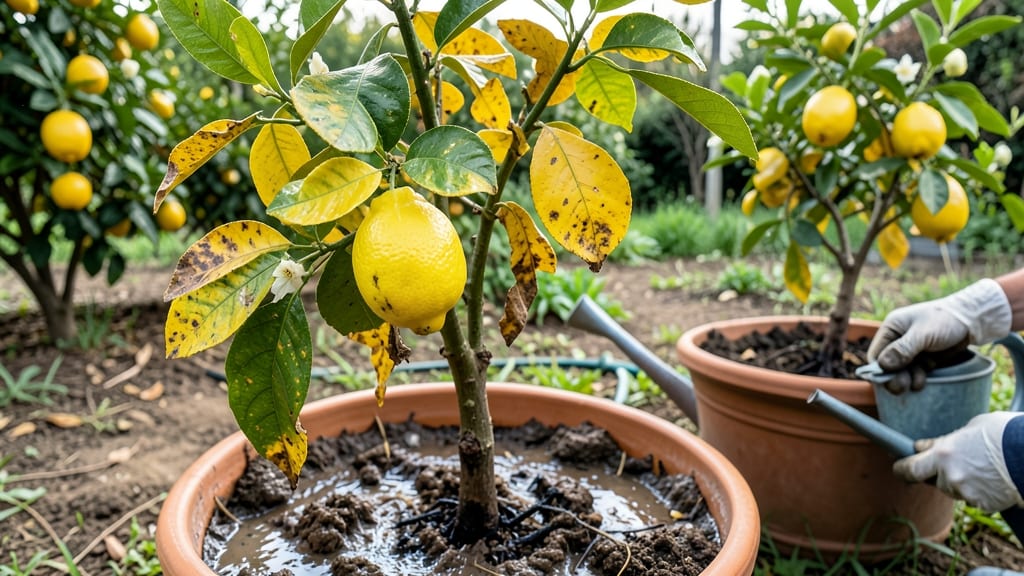
What does an overwatered lemon tree look like? Those drooping, mushy roots and yellowing leaves aren’t just sad—they’re screaming for help. 🌱 Overwatering turns vibrant citrus into a soggy mess, and the signs are harder to spot than you’d think.
Yellowing leaves, a musty soil smell, and roots that crumble at the touch? That’s your tree begging for a water break.
First, dig your finger into the soil—if it’s damp more than an inch down, you’ve been overdoing it. Roots should smell fresh, not sour, and look firm, not gray and squishy.
The leaves? They’ll feel limp, almost rubbery, and drop faster than a summer storm’s rain. This isn’t wilting from thirst—it’s drowning.
Fixing it starts with cutting back water to once every 10-14 days (yes, really), and amending the soil with sand or perlite to improve drainage. Within weeks, you’ll see new growth pushing through, and those roots will firm up again.
The key? Let the top 2-3 inches dry out before watering again.
This works for potted or in-ground trees, though containers need extra vigilance. The goal isn’t to turn your thumb green overnight—it’s to save your tree before the roots rot completely. Trust me, your future lemonade depends on it.
Why it happens
An overwatered lemon tree isn’t just a case of too much love—it’s a scientific imbalance that disrupts the tree’s delicate root and soil ecosystem. When water overwhelms the roots, it creates a cascade of problems that can stifle growth, invite pests, and even kill your citrus tree if left unchecked.
Here’s why it happens, broken down into the most common (and often preventable) causes.
Lemon trees thrive in well-draining soil, but many gardeners assume "more water = healthier tree." Unfortunately, this mindset leads to waterlogging, where roots sit in saturated soil for prolonged periods. Here’s the science:
- Oxygen Deprivation: Roots need oxygen to respire and absorb nutrients. When soil is waterlogged, oxygen is displaced by water, suffocating the roots. Within 24–48 hours of constant saturation, root cells begin to die from hypoxia (lack of oxygen).
- Nutrient Leaching: Overwatering flushes essential nutrients like nitrogen, phosphorus, and potassium out of the root zone. These nutrients are water-soluble, meaning they dissolve and drain away before the tree can use them.
- Fungal Invasion: Stagnant water creates the perfect breeding ground for Phytophthora and Pythium fungi, which rot roots and block water/nutrient uptake. These pathogens thrive in temperatures above 60°F (15°C)—common in lemon tree climates.
Actionable Fix: Water only when the top 2–3 inches of soil are dry. Use a moisture meter or the "finger test" to avoid guesswork.
Not all soil is created equal—and neither are containers. If your lemon tree’s roots can’t escape excess water, they’ll drown regardless of how "carefully" you water. Here’s how poor drainage sabotages growth:
- Compacted or Clay Soil: Clay holds water like a sponge, preventing it from draining. Lemon trees need soil with a 60% sand/sandy loam composition to allow excess water to escape within 6–12 hours of watering.
- Container Size Mismatch: Small pots or those without drainage holes trap water at the root level. Roots in containers have no escape route, leading to rapid rot. A general rule: 1 gallon of soil per 12–18 inches of tree height.
- Root-Bound Stress: When roots circle the pot (a sign of being root-bound), they compete for oxygen and water, exacerbating waterlogging. This is common in lemon trees kept in containers for years without repotting.
Actionable Fix:
- Amend clay soil with perlite, coarse sand, or pumice (20–30% by volume).
- Ensure containers have 4+ drainage holes and use a cache pot (a decorative outer pot with a saucer) to hide the functional inner pot.
- Repot every 2–3 years to refresh soil and prevent root-binding.
Drip systems, timers, and self-watering pots are incredibly convenient—until they’re not. Automated watering removes the human element of observation, leading to overwatering when:
- Rainfall Isn’t Accounted For: Many timers don’t adjust for natural precipitation. A 1-inch rainstorm can provide enough water for a lemon tree for 5–7 days, yet automatic systems may still run on schedule.
- Soil Sensor Malfunctions: Cheap or poorly placed soil moisture sensors can misread hydration levels, especially if placed in the dripline (where water pools) instead of the root zone.
- Clogged Emitters or Lines: Mineral buildup or debris in drip irrigation systems can cause uneven water distribution, leading to localized waterlogging while other areas dry out.
Actionable Fix:
- Install a rain sensor to pause irrigation during wet periods.
- Place soil moisture sensors 2–3 inches deep in the root zone, not near the surface.
- Inspect drip lines monthly for clogs and flush them with vinegar or hydrogen peroxide.
Lemon trees are tropical but not aquatic. High humidity or cool temperatures can trick growers into overwatering because the tree appears thirsty when it’s actually struggling to dry out. Here’s the breakdown:
- High Humidity Slowdown: In environments with 70%+ humidity, soil evaporates 30–50% slower. A lemon tree may look wilted not because it’s dry, but because its stomata (pores) close to conserve moisture—mimicking drought stress.
- Cool Night Temperatures: Temperatures below 50°F (10°C) reduce root activity and evaporation rates. Watering on a warm day but keeping the tree in a cool, shaded spot can lead to permanent waterlogging.
- Indoor vs. Outdoor Shock: Moving a lemon tree from a humid indoor space to a dry outdoor patio without adjusting watering can cause overwatering. The sudden change in evaporation rates throws the root zone into chaos.
Actionable Fix:
- Reduce watering by 30–50% in high-humidity climates or during cool seasons.
- Use a hygrometer to monitor humidity; aim for 40–60% for optimal root health.
- If moving a tree indoors/outdoors, acclimate it gradually over 7–10 days before adjusting watering.
How to Fix an Overwatered Lemon Tree
Reviving an overwatered lemon tree starts with quick action—don’t panic, but act fast! The good news? Most cases are reversible if you catch them early. Below, we’ll map out cause-specific fixes, step-by-step solutions, and prevention tips to keep your citrus thriving.
Let’s turn that soggy mess into a healthy, fruit-bearing beauty!
Cause: Excess water suffocates roots, starving leaves of oxygen. Fix:
- Step 1: Stop Watering Immediately 🚰 Let the top 2–3 inches of soil dry out completely before watering again. Stick your finger in the soil—if it’s damp past your first knuckle, wait.
- Step 2: Improve Drainage 🏗️
- For potted trees: Repot into a container with drainage holes (if missing) and add a layer of gravel or perlite at the bottom.
- For in-ground trees: Amend the soil with compost or sand to loosen compacted areas. Consider a French drain (a trench filled with gravel) around the base to redirect excess water.
- Step 3: Prune Damaged Foliage ✂️ Snip off yellow, mushy, or blackened leaves with clean shears to redirect energy to healthy growth. Avoid pruning more than 20% at once.
💡 Pro Tip: If leaves are yellow with brown edges, it’s often overwatering + nutrient deficiency. Flush the soil with water to leach out excess salts, then fertilize lightly with a balanced citrus fertilizer (like 6-6-6) once roots recover.
Cause: Root rot from prolonged soggy conditions. Fix:
- Step 1: Inspect the Roots 👀 Gently remove the tree from its pot (or dig around the base) and rinse the roots with water. Healthy roots are firm and white; rotten roots are brown, mushy, or smell like mildew.
- Step 2: Trim the Damage ⚔️ Use sterilized pruning shears to cut away all blackened, mushy roots. Leave only firm, white roots—they’ll regrow!
- Step 3: Repot in Fresh Soil 🌱
- Choose a well-draining potting mix (e.g., 60% citrus soil + 30% perlite + 10% compost).
- If in-ground, raise the tree’s base by mounding soil around it to improve airflow and prevent future water pooling.
- Step 4: Adjust Watering Routine 💧 Water only when the top 1–2 inches of soil are bone-dry. Use the "finger test" daily during hot months.
⚠️ Warning: If >50% of roots are rotten, the tree may not recover. Start fresh with a cutting or propagate from a healthy branch.
Cause: Overwatering weakens the tree’s ability to absorb nutrients. Fix:
- Step 1: Test Soil pH & Nutrients 🧪 Use a soil test kit (available at garden centers). Lemon trees prefer slightly acidic soil (pH 6.0–7.0). If deficient, amend with:
- Iron chelate (for yellow leaves between veins).
- Citrus-specific fertilizer (high in nitrogen for regrowth).
- Step 2: Boost Airflow 🌬️
- Potted trees: Move to a sunny, breezy spot (e.g., a porch or patio with afternoon shade).
- In-ground trees: Thin nearby plants or trim branches to improve circulation.
- Step 3: Mulch Strategically 🍂 Apply 2–3 inches of organic mulch (like pine bark) around the base, but keep it 6 inches away from the trunk to prevent rot.
🌡️ Pro Tip: Overwatering + cold stress? If temps drop below 50°F (10°C), reduce watering further—lemons hate wet feet in cool weather!
- Water Like a Pro 💧
- Potted trees: Water every 7–10 days (less in winter).
- In-ground trees: Water deeply 1–2 times per week (use a soaker hose to avoid wetting foliage).
- Rule of thumb: Water until it runs out the drainage holes (for pots) or the soil is moist 12 inches deep (for in-ground).
- Upgrade Your Pot (If Applicable) 🏺
- Ensure pots have drainage holes and are no larger than 12 inches in diameter (big pots hold too much water).
- Terracotta pots dry out faster than plastic—great for warm climates.
- Monitor Weather & Adjust ☀️🌧️
- Rainy season? Reduce watering by half and move pots to a covered area.
- Drought? Water more frequently but shallowly to encourage root growth near the surface.
- Fertilize Smartly 🌿
- Use a slow-release citrus fertilizer every 2 months in growing season (spring–fall).
- Avoid over-fertilizing—it burns roots and worsens water retention issues.
- Check for Pests 🐜
- Overwatered trees attract fungal gnats and root mealybugs. Treat with neem oil or hydrogen peroxide spray (1 tbsp per quart of water).
Final Thought: An overwatered lemon tree is a fixable crisis, not a death sentence. By addressing the root cause (literally!) and adjusting your care routine, your tree will bounce back stronger—and next season, you’ll be picking juicy, homegrown lemons instead of dealing with droopy leaves. 🍋✨
Frequently asked questions
How do I tell if my lemon tree is overwatered vs. underwatered?
Check the soil first—if it's damp more than 2 inches down, you're likely overwatering. Overwatered leaves feel mushy and yellow, while underwatered leaves feel crispy and brown at the edges. Roots should be firm and white; if they're gray, mushy, or smell sour, that's overwatering. Underwatered roots will be dry and brittle.
Can an overwatered lemon tree recover if the roots are rotting?
Yes, but you must act fast! Trim away all mushy, black roots with clean shears, then repot in fresh, well-draining soil. Water only when the top 1-2 inches are completely dry. If over 50% of roots are rotted, recovery is unlikely—start fresh with a cutting instead.
Why do my lemon tree leaves turn yellow but stay attached?
This classic overwatering sign happens when roots can't absorb nutrients due to waterlogged soil. The yellowing starts between veins first. Check for other clues: brown spots on leaves (fungus), wilting despite damp soil, or a musty smell at the base. Prune yellow leaves to help the tree focus energy on healthy growth.
How often should I water my potted lemon tree?
Water when the top 2-3 inches of soil are bone-dry—typically every 7-10 days in summer, less in winter. Terracotta pots dry faster than plastic. The key is consistency: let excess water drain completely before adding more. Never let your tree sit in saucer water longer than 15 minutes.
What's the fastest way to fix drainage issues in my lemon tree's pot?
Add a 1-inch layer of perlite or coarse sand to the bottom before repotting. For immediate fixes, create drainage holes with a heated nail if none exist. If your tree is already planted, consider moving it to a raised bed or container with better drainage. Always use a potting mix formulated for citrus trees.