
Pruning
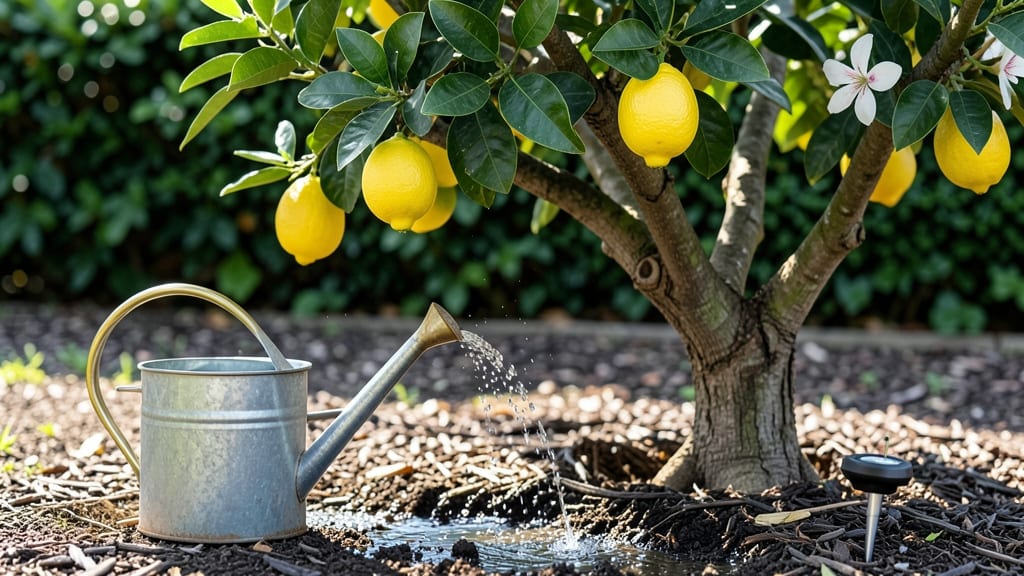
Proper citrus tree irrigation means balancing deep watering with drought tolerance to keep roots healthy and fruit production strong 🍊.
Did you know that improper watering can reduce your citrus tree’s fruit yield by up to 50%? Mastering the science behind citrus tree irrigation isn’t just about timing—it’s about understanding root depth, seasonal shifts, and drought tolerance to grow trees that thrive year-round.
In Zone 9b, where citrus trees love to grow, the key is deep but infrequent watering—think 1–2 gallons per watering for mature trees, delivered early in the morning to cut down on evaporation.
Too little water stresses the tree, while too much drowns the roots, and both lead to stunted growth or fruit drop.
Below, I’ll break down the exact watering schedule by season, how to spot overwatering or underwatering, and the best irrigation methods to save time and water without sacrificing flavor or yield.
Optimal citrus tree watering schedule by season and root depth
Citrus trees thrive on a consistent yet strategic watering routine that adapts to their root zone depth and seasonal demands. Unlike many plants, citrus trees hate soggy soil but can't tolerate drought either.
The key lies in understanding how deep their roots grow and how quickly soil dries in your climate. For example, a 5-year-old lemon tree with roots extending 3–4 feet deep needs far less frequent watering than a potted Meyer lemon in a 10-gallon container.
Root depth is your best friend when scheduling waterings. Shallow-rooted citrus varieties like dwarf grapefruit (roots <12 inches deep) dry out faster than standard Valencia oranges (roots 3–5 feet deep).
In my Zone 9b garden, I’ve found that deep watering every 7–14 days during summer keeps my mature trees thriving, while potted citrus may need watering every 3–5 days in peak heat.
Seasonal evaporation rates change everything. During spring and fall, when temperatures are moderate, citrus trees need 1–2 gallons of water per week for every inch of trunk diameter. But in summer’s brutal heat, that jumps to 3–5 gallons weekly—or even daily for young trees.
My Meyer lemon in a pot wilts dramatically if I skip watering for just 4 days in July, while my in-ground Navel orange holds out for 10–12 days between deep waterings.
Here’s the golden rule: Always water deeply and slowly to encourage roots to grow downward. A quick sprinkle barely scratches the surface. I use a soaker hose or drip irrigation to deliver water directly to the root zone, avoiding wet foliage that invites fungal diseases.
For container-grown citrus, I bottom-water by placing the pot in a tray of water for 15–20 minutes—this prevents overwatering while ensuring roots get hydrated.
Let’s break down the optimal watering schedule by citrus variety, root depth, and season. The table below shows how to adjust your routine based on these factors, plus pro tips to avoid common pitfalls like root rot or fruit drop.
| Citrus Variety | Root Depth | Spring Watering | Summer Watering | Fall Watering | Winter Watering | Pro Tip |
|---|---|---|---|---|---|---|
| Lemon (Meyer) | 12–18" (potted) / 2–3' (in-ground) | Weekly (1–2 gal) | Every 3–5 days (2–3 gal) | Bi-weekly (1 gal) | Monthly (0.5 gal) | Use bottom-watering for pots to prevent overwatering. |
| Orange (Navel/Valencia) | 3–5 feet | Every 10–14 days (3–5 gal) | Every 7–10 days (5–7 gal) | Every 2–3 weeks (2–3 gal) | Monthly (1–2 gal) | Mulch with wood chips to retain moisture and regulate soil temp. |
| Grapefruit (Ruby Red) | 2–4 feet | Every 10–14 days (4–6 gal) | Every 7–10 days (6–8 gal) | Every 3 weeks (3 gal) | Bi-monthly (1 gal) | Avoid overhead watering—use drip lines to keep foliage dry. |
| Lime (Key) | 18–24" (potted) / 2–3' (in-ground) | Weekly (1–1.5 gal) | Every 4–6 days (2 gal) | Bi-weekly (1 gal) | Monthly (0.5 gal) | Limes
5 Signs your citrus tree is Overwatered or underwatered (and how to fix it)Citrus trees thrive on balance—too much water drowns their roots, while too little stunts growth and drops fruit. The key is consistent moisture without soggy soil. I’ve seen firsthand how yellowing leaves or drooping branches can signal trouble, but these issues often start below the surface. Understanding the subtle signs of water stress can save your tree and its harvest. Let’s break down the 5 critical symptoms and how to correct them before it’s too late. Start by checking your soil moisture—stick your finger 2–3 inches deep. If it’s damp, you’re likely overwatering; if dry, it’s time to hydrate. Citrus trees prefer well-draining soil and deep watering every 7–14 days, depending on heat and maturity. The goal is to mimic natural rainfall: slow and thorough, not frequent shallow drinks. Now, let’s dive into the warning signs your tree is sending you. 📌 5 Critical Signs & Fixes
💡 Fix It: Adjust watering immediately—reduce frequency for overwatered trees or deep-soak weekly for underwatered ones.
If your citrus tree shows yellowing leaves with mushy stems, act fast. Root rot spreads quickly, and once established, it’s nearly impossible to reverse. Stop watering immediately and let the top 2–3 inches of soil dry out completely. For severe cases, dig around the roots to check for black, smelly areas—this is a red flag. If you find rot, prune affected roots with sterilized shears and repot in fresh, well-draining soil. On the flip side, dull yellow leaves with crispy edges mean your tree is thirsty. Water deeply until it drains from the bottom of the pot (or seeps 6–8 inches into the ground for in-ground trees). Morning watering is ideal—it gives roots time to absorb moisture before evening evaporation. For potted citrus, ensure drainage holes are clear and consider a self-watering pot to maintain consistency. Fruit drop is another clear sign of water stress. Whether your citrus is falling due to overwatering or underwatering, the solution is the same: balance. For underwatered trees, increase watering gradually over 2 weeks to avoid shocking the roots. For overwatered trees, reduce frequency and improve drainage by adding perlite or sand to the soil mix. Mulch around the base (but not touching the trunk) to retain moisture and regulate soil temperature. Don’t ignore fungal growth—it’s your tree’s SOS signal. Overwatering creates the perfect breeding ground for mold and bacteria. If you spot white fuzz, remove affected leaves and treat the soil with copper fungicide or a baking soda spray (1 tsp baking soda + 1 quart water). For prevention, water at the base of the tree (not overhead) and avoid wet foliage. A fan for airflow can also help dry leaves faster. Finally, trust your soil’s texture and smell. Healthy citrus soil should smell earthy and feel slightly damp 2 inches down. If it smells like a swamp or feels like wet clay, cut back on water. If it’s bone-dry, it’s time to hydrate. Use a moisture meter for accuracy—aim for 40–60% moisture in the root zone. With these adjustments, your citrus tree will bounce back in 4–6 weeks, and you’ll be back to harvesting juicy, flavorful fruit in no time. |