
Plants
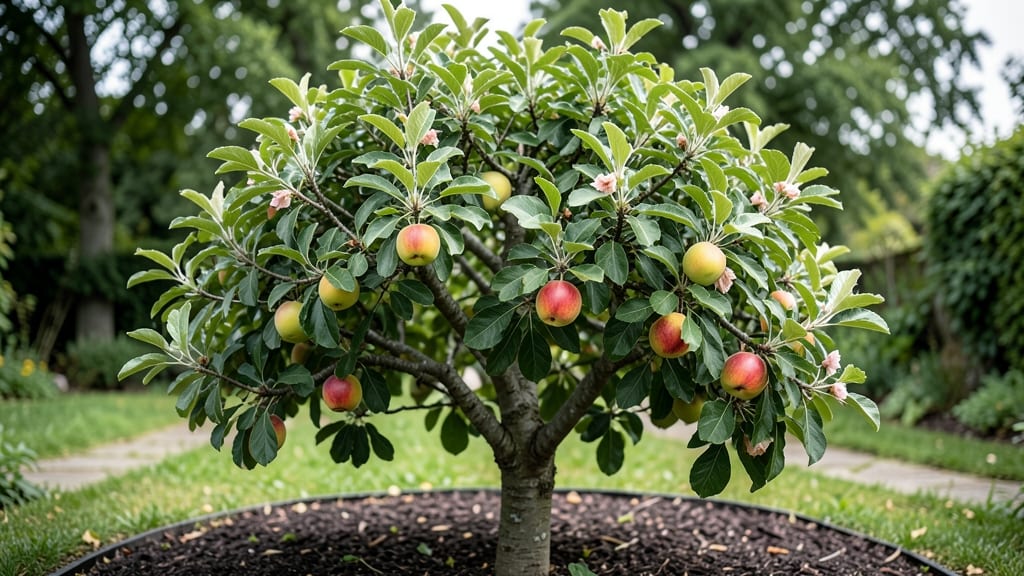
A nectarine tree looks like a peach tree with smooth, fuzzy-free skin and slightly smaller fruit. Its glossy green leaves are oval with serrated edges, while the bark is grayish-brown and scaly, with young branches often showing reddish hues.
A nectarine tree's most striking feature is its fruit—smooth as a peach but without the fuzz, making it instantly recognizable. 🌿 The leaves are a vibrant green, slightly narrower than peach leaves, and their serrated edges catch light beautifully in sunlight.
What really sets it apart is the bark: it develops a distinctive rough, scaly pattern as it matures, while young branches often have that telltale reddish tint that fades with age. I've found that spotting these details helps distinguish nectarine trees from peach trees even when they're not in fruit.
One thing that often surprises people is how the fruit's size and shape can vary—nectarines tend to be slightly smaller and more oval than peaches, with a slightly more rounded bottom.
The skin color also shifts beautifully from green to pinkish-red as they ripen, which is a great visual cue when identifying trees in orchards or home gardens.
💡 In This Article
- Distinguishing Nectarine Tree Bark, Leaves, and Branches
- Nectarine Fruit vs Peach Tree Fruit: Key Visual Differences
Distinguishing nectarine tree bark, leaves, and branches
The bark of a mature nectarine tree develops a distinctive rough, scaly texture that resembles alligator skin. These scales form as the tree ages, typically between 3-5 years old, and range in size from 1/4 to 1/2 inch wide.
The color shifts from a silvery-gray when young to a deeper brownish-gray as it matures, often with subtle vertical ridges that add to its character. 🌳 This pattern helps distinguish it from peach trees, whose bark tends to be smoother with fewer pronounced scales.
Young branches reveal another key identifier: their reddish-brown hue that gradually fades to gray as they mature. These branches often have a slightly zigzag pattern where leaves attach, creating a distinctive silhouette against the sky.
The 1/4 to 1/2 inch long buds appear oval-shaped and slightly pointed, clustered in groups of 2-3 along the branches. In spring, these buds swell dramatically, signaling the tree's transition from dormancy—a process that occurs about 4-6 weeks before flowering.
The leaves are where many gardeners first spot the difference between nectarine and peach trees. Nectarine leaves are typically 2-4 inches long and 1-2 inches wide, with a glossy green surface that reflects light beautifully.
Their serrated edges have 15-25 sharp teeth per inch, creating a saw-like appearance when viewed closely. Unlike peach leaves, which often have a slightly duller finish, nectarine leaves maintain their vibrant sheen throughout the growing season.
Seasonal color changes provide additional clues. In autumn, nectarine leaves turn a brilliant yellow or orange before dropping, often 2-3 weeks earlier than peach leaves. This early leaf fall is due to the tree's genetic predisposition to conserve energy for fruit production.
The contrast between the tree's smooth, fuzzy-free fruit and its vibrant foliage makes identification straightforward once you know what to look for.
What most people overlook is the tree's growth habit. Nectarine trees typically grow at a moderate rate, reaching 15-20 feet tall with a spread of 12-15 feet at maturity.
The branches tend to form a more open, vase-like shape compared to peach trees, which often develop a more rounded canopy. This growth pattern affects how sunlight reaches the fruit, influencing ripening times and color development.
For those identifying trees in winter, look for the distinctive 1/2 inch long, oval-shaped leaf scars where leaves once attached. These scars are surrounded by a series of small, raised dots that mark where bundle scars were located.
This pattern is more pronounced in nectarine trees than in their peach counterparts, providing another winter identification clue.