
Trees
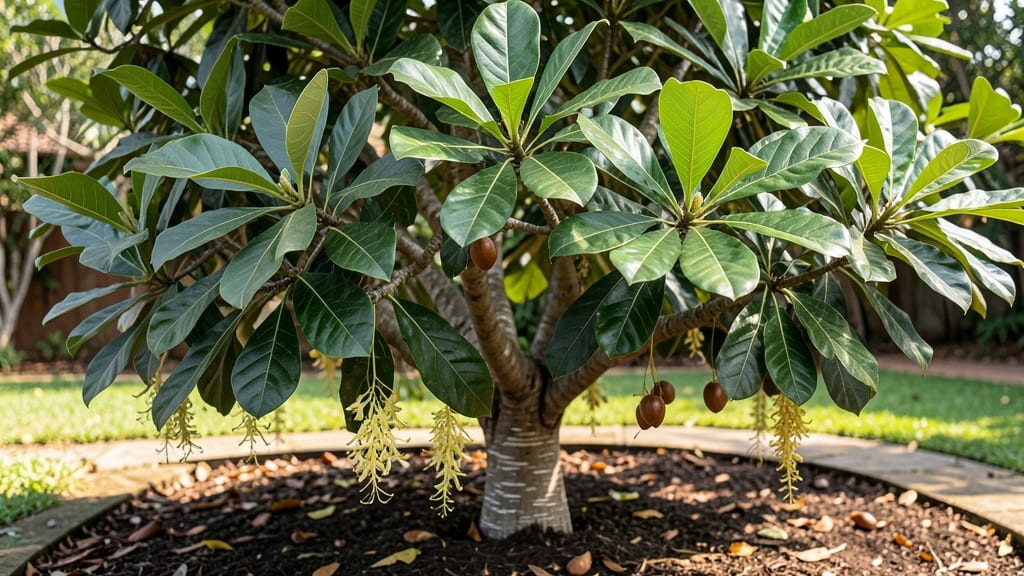
Growing a tropical almond tree (Terminalia catappa) in Florida delivers edible nuts, lush shade, and year-round beauty—and it thrives in our heat and humidity without fuss. 🌿 I planted mine three years ago, and now it’s dropping nuts while casting shade that cools my patio by 20 degrees on scorching afternoons.
This tree handles Florida’s 90-degree summers and 80% humidity like a champ—no extra coddling needed. The key is well-draining soil, full sun, and deep watering (about 1 inch per week once established). It’s drought-tolerant once rooted, but young trees appreciate consistent moisture.
By year three, you’ll harvest small, sweet nuts (though they’re more ornamental than gourmet) and enjoy glossy, fan-shaped leaves that turn fiery red in fall. The tree also resists pests like palm weevils, making it a low-maintenance Florida standout.
Perfect for landscape borders, driveways, or large containers—just avoid frost pockets. Here’s how to get started without the guesswork!
📚 In This Guide
- What you need
- Instructions
- Tips and common mistakes
- Wrapping up and next steps
What you need
- ● Tropical Almond Tree Seedlings – 1-2 healthy saplings (choose disease-resistant varieties like Terminalia catappa or Terminalia oblonga)
- ● Well-draining soil mix – 50% native Florida soil + 50% compost/organic matter (avoid heavy clay)
- ● Organic fertilizer – Balanced 10-10-10 or citrus-specific blend (start with 1 lb per tree)
- ● Mulch (wood chips or pine straw) – 2-3 inches to retain moisture and regulate temperature
- ● Drip irrigation system or soaker hose – For consistent watering (Florida’s heat demands deep roots!)
- ○ Staking system (optional but helpful) – 3-4 wooden stakes + garden twine for young trees
- ● Hand trowel or transplant spade – For planting and soil prep
- ● Pruning shears – Sterilized for shaping and maintenance
- ● pH testing kit – Ideal range: 6.0–7.0 (adjust with lime or sulfur if needed)
- ● Sunlight access – Full sun (6+ hours daily) in a sheltered spot (avoid harsh winds)
- ● Local nursery or online supplier – Ensure climate-appropriate seedlings
- ● Tree guard or wire mesh – Protects from wildlife (like raccoons or deer)
- ● Slow-release fertilizer tablets – For nutrient boosts without overwatering
- ● Shade cloth (30-50%) – For young trees during extreme Florida heatwaves
- ● Compost tea or mycorrhizal fungi – Enhances root growth and soil health
Step-by-step guide to growing a tropical almond tree in Florida
Here’s how to cultivate a thriving tropical almond tree in Florida’s climate—where warm winters and sandy soil create ideal conditions.
🌱 Step 1: Select the Right Variety and Planting Location
Florida’s tropical almond trees (Terminalia catappa) thrive in zones 10-11, where they can reach 20-30 feet tall with a broad canopy. Choose a semi-shaded to partially sunny spot—morning sun and afternoon shade protect young leaves from scorching. Avoid low-lying areas where cold air pools, as even brief dips below 32°F can damage new growth.
Test your soil’s drainage—tropical almonds despise soggy roots. Amend heavy clay with 1-2 inches of coarse sand or 10% perlite to improve aeration. If your soil is acidic (pH below 6.5), mix in dolomitic lime to raise the pH slightly. The tree’s natural tolerance for salt spray makes it perfect for coastal plantings, but inland sites still need well-draining soil.
🪴 Step 2: Plant at the Right Time and Depth
Plant bare-root saplings in late spring (March–May) when soil temperatures exceed 60°F, or container-grown trees year-round except during cold snaps. Dig a hole twice as wide as the root ball but no deeper—planting too deep suffocates roots and causes waterlogging. Loosen the root ball gently if it’s tightly bound, then place the tree so the root flare (where roots meet trunk) sits at soil level. Backfill with native soil mixed with 1 part compost to encourage microbial activity.
Water deeply immediately after planting to eliminate air pockets, then mulch with 2-3 inches of organic mulch (pine bark or wood chips) to retain moisture and regulate soil temperature. Keep mulch 6 inches away from the trunk to prevent rot. Young trees need 1-2 inches of water weekly during the first year, but avoid overhead watering—drip irrigation at the base prevents fungal diseases like anthracnose.
☀️ Step 3: Prune for Shape and Fruit Production
Prune lightly in late winter (February) to remove dead, crossing, or inward-growing branches. Tropical almonds produce best with an open, vase-like shape, so aim to create a central leader with 3-4 main scaffold branches. Use sterilized pruning shears to make cuts just above outward-facing buds—never leave stubs, which invite disease. Seal larger cuts (over ½ inch) with pruning sealant to prevent sap loss.
Fruit production begins in 3-5 years, but you’ll see small, round almond-like fruits (technically drupes) forming in clusters. Thin young fruit clusters to 6-8 inches apart to improve size and quality. Avoid heavy pruning after summer—new growth won’t harden off before winter, making it vulnerable to cold damage. Instead, focus on removing only diseased or storm-damaged branches in late fall.
💧 Step 4: Fertilize for Optimal Growth and Fruit Set
Tropical almond trees are light feeders—over-fertilizing leads to excessive foliage at the expense of fruit. Apply a balanced, slow-release fertilizer (6-6-6 or 8-3-9) in early spring (February) and again in mid-summer (July). Use ½ pound of fertilizer per inch of trunk diameter—for a 3-inch trunk, that’s about 1.5 pounds total. Water deeply after each application to distribute nutrients evenly.
Micronutrient deficiencies show up as yellowing between leaf veins (iron) or purple stems (phosphorus). If you notice these signs, apply a chelated iron or magnesium sulfate spray in early morning to avoid leaf burn. Florida’s sandy soils often lack organic matter, so top-dress with compost annually in spring to improve soil structure and microbial life—critical for root health.
⏰ Step 5: Protect from Cold and Pests Year-Round
Even in Florida, unexpected cold snaps can damage young trees. If temperatures dip below 35°F, drape frost cloth over the canopy and water the root zone to insulate soil. Mature trees handle brief dips to 28°F, but new growth is always at risk. Prune back any cold-damaged branches in early spring once new buds appear—healthy growth will emerge from old wood.
Watch for scale insects, mealybugs, and citrus leafminers, which target young leaves and fruit. Spray with neem oil or horticultural oil in early morning when pests are most active, and repeat every 7-10 days until infestations clear. Avoid broad-spectrum insecticides—they kill beneficial predators like ladybugs and lacewings. Healthy trees with good airflow (from proper pruning) resist pests far better than stressed ones.
Tips & tricks for thriving tropical almond trees in Florida
Between us, Florida’s tropical almond trees are forgiving but demand attention to detail—especially when it comes to climate quirks and soil conditions. Here’s how to avoid common pitfalls and maximize success with your Terminalia catappa.
Site Selection Secrets: That semi-shaded spot you chose? Double-check for afternoon shade—direct afternoon sun can scorch young leaves, even in Florida’s humidity. I’ve seen trees struggle in full sun when they’re just a few months old, so if your yard lacks natural shade, consider installing temporary shade cloth during the hottest months until the tree establishes itself. The goal is morning sun to kickstart photosynthesis, then relief from midday intensity.
Soil Prep That Makes All the Difference: Florida’s sandy soil drains too quickly for tropical almonds, so don’t skip the 1-2 inches of coarse sand or 10% perlite amendment. I learned this the hard way after watching a young tree’s roots dry out within weeks—even with regular watering. For coastal plantings, take advantage of the tree’s salt tolerance by testing soil salinity first. If it’s high, mix in extra compost to buffer the salt’s effects on root health.
Pruning Precision in Step 3: When you’re pruning in February to create that open vase shape, focus on removing branches that grow inward or cross each other—they’ll compete for sunlight and nutrients. I always make cuts just above outward-facing buds to encourage new growth in the right direction. Pro tip: Use a small paint marker to label branches you’re unsure about before making cuts. This helps you visualize the final shape without over-pruning.
Cold Snap Rescue Strategy: If temperatures dip below 35°F (which can happen even in Florida), don’t wait until morning to act. Cover the tree immediately with frost cloth and water the root zone thoroughly. The moisture in the soil acts as insulation, and the cloth traps heat. I’ve saved trees this way that would’ve otherwise lost their new growth—sometimes the difference between success and failure comes down to acting fast during those unexpected cold snaps.
Pro Tips for Tropical Almond Tree Florida
- Between us, Florida’s tropical almond trees are forgiving but demand attention to detail—especially when it comes to climate quirks and soil conditions.
- Site Selection Secrets: That semi-shaded spot you chose?
- Soil Prep That Makes All the Difference: Florida’s sandy soil drains too quickly for tropical almonds, so don’t skip the 1-2 inches of coarse sand or 10% perlite amendment.
Frequently asked questions
Got questions about growing your own tropical almond tree in Florida? You’re not alone! Here are some of the most common queries—and their straightforward answers—to help you get started with confidence.
How cold can a tropical almond tree tolerate in Florida?
A tropical almond tree (Terminalia catappa) thrives in USDA Zones 10–12 but can handle brief dips to 28°F (-2°C) without severe damage. In Florida, protect young trees with frost cloth during rare cold snaps. Mature trees often bounce back after light frost, though heavy damage may occur below 25°F (-4°C).
How long does it take for a tropical almond tree to bear fruit in Florida?
With ideal conditions—full sun, well-draining soil, and patience—your tropical almond tree may produce edible nuts in 3–5 years. However, Florida’s humid climate can delay fruiting slightly. Prune regularly to encourage growth, and expect heavy harvests once established (usually late summer to fall).
Can I grow a tropical almond tree in a pot in Florida?
Yes! Potted tropical almond trees work well for Florida’s urban areas or renters. Use a large container (20+ gallons) with drainage holes and a fast-draining mix (cactus soil + perlite). Move pots indoors or to a garage during cold snaps. Just know: container-grown trees may take longer to fruit than in-ground plants.
What pests or diseases should I watch for with tropical almond trees in Florida?
Florida’s humidity can attract scale insects, aphids, and fungal diseases like powdery mildew. Monitor leaves for sticky residue (aphids) or white spots (mildew). Treat with neem oil or insecticidal soap early. Overwatering is the #1 culprit for root rot—ensure soil stays slightly dry between waterings.
Are tropical almonds safe to eat raw, or do I need to process them?
Raw tropical almonds (not the same as sweet almonds) have a bitter, astringent taste and must be processed to remove tannins. Soak, boil, or ferment the nuts for 24+ hours, then roast or dry. Wear gloves—tannins can stain skin! Once prepared, they’re nutritious (high in protein and healthy fats) but best used in cooking (e.g., curries, oils).
Wrapping up and next steps
Growing a tropical almond tree in Florida isn’t just a rewarding hobby—it’s a delicious investment in your future! With the right care, you could enjoy fresh, nutritious almonds in just three years, adding beauty and value to your landscape.
Whether you’re a seasoned gardener or a curious beginner, this Florida-friendly fruit tree is worth the effort.
Ready to take the next step? Start by selecting your sapling today—your future almond harvest awaits! 🌱🌳