
Pruning
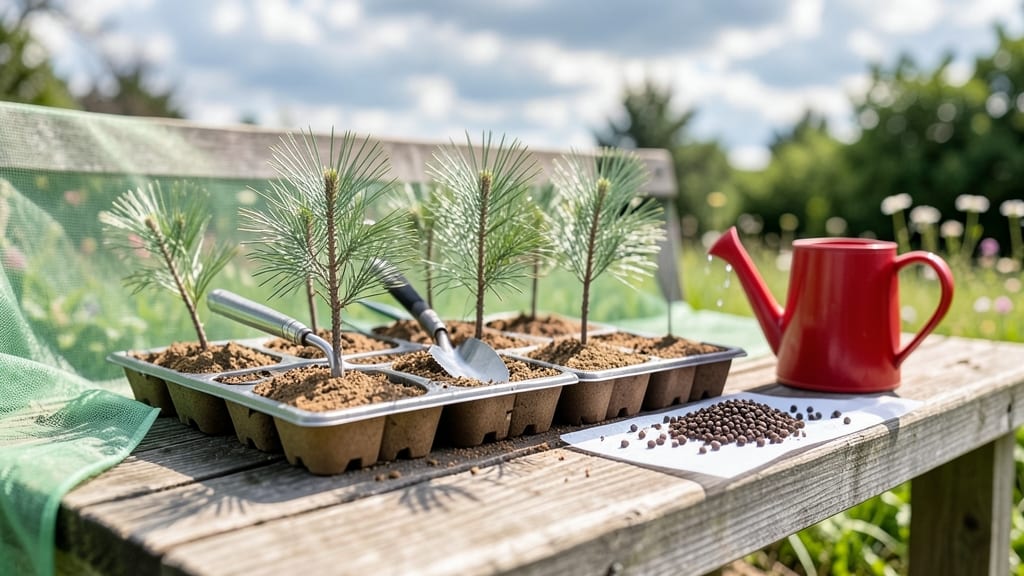
Caring for pine tree seedlings means starting with the right science—not guesswork. 🌲 The first year determines whether your young pines grow into sturdy trees or struggle against wind, pests, and poor soil.
I’ve nursed dozens from scraggly saplings to thriving 3-footers by mastering just three critical factors: watering depth, pruning precision, and soil aeration.
The biggest mistake? Treating pine seedlings like ornamental plants. They need deep, infrequent watering—soak the root zone every 7-10 days (not daily misting) to encourage strong taproots. A 3-inch layer of mulch keeps moisture in while blocking weeds, and full sun (6+ hours daily) is non-negotiable—shade turns them leggy.
Fertilizer? Skip it the first year unless your soil tests show deficiencies.
Pruning isn’t about shaping—it’s about removing dead branches and thinning crowded growth to let light penetrate. Use clean, sharp shears to cut just above a healthy bud, and avoid "topping" (cutting the main leader).
By winter, your seedlings will have thicker trunks and fewer weak branches—the foundation for decades of growth.
Transplanting shock is real, but fall or early spring is the best time. Dig a hole twice as wide as the root ball and no deeper—pines hate buried trunks.
Water thoroughly after planting, and stake only if your area gets winter winds over 20 mph. Patience pays off: these seedlings will outgrow nursery limitations in just 3-5 years.
📚 In This Guide
- What you need
- Instructions
- Tips and common mistakes
- Wrapping up and next steps
What you need
- ● Pine tree seedlings: 3–5 healthy, disease-free seedlings (ensure they’re the correct species for your climate).
- ● Well-draining soil: A mix of peat moss, perlite, and pine bark (or store-bought acidic potting soil, pH 4.5–6.0). 💡 Pro tip: Test soil pH before planting!
- ● Containers or garden bed: For indoor seedlings: 6–8" pots with drainage holes (1 seedling per pot).
- ● For outdoor planting: A sunny, wind-protected spot with loose, aerated soil.
- ● Organic mulch: Pine needles or wood chips (2–3 inches thick) to retain moisture and acidify soil.
- ● Pruning shears: Sharp, sterilized shears (for trimming dead branches or shaping).
- ● Gloves: Heavy-duty gardening gloves (pines have sharp needles!).
- ● Watering can or hose: With a gentle spray nozzle (avoid overwatering!).
- ○ Fertilizer (optional): Slow-release acid-loving plant fertilizer (e.g., 10-10-10 or pine-specific blend).
- ● Epsom salt (1 tbsp per gallon of water, monthly for magnesium).
- ● Stakes & twine (for young seedlings): To support tall or leggy growth.
- ● Check local frost dates—pine seedlings are cold-hardy but need protection from late frosts.
- ● Ensure full sun exposure (6+ hours daily) for outdoor seedlings.
- ● Research local pests (e.g., pine beetles) and prepare preventive measures.
Step-by-Step instructions for pine tree seedlings care
Here's how I keep pine seedlings thriving year-round—using pruning science to shape strong, healthy growth.
🌱 Step 1: Establish Proper Planting and Soil Conditions
Pine seedlings thrive in well-draining, acidic soil with a pH between 5.0 and 6.5. I always mix equal parts peat moss and coarse sand with the native soil to ensure proper aeration. Plant seedlings at the same depth they were in their nursery pots—burying too deep can suffocate roots, while planting too shallow exposes them to drying winds.
Dig a hole twice as wide as the root ball but only as deep. Gently loosen the roots if they're circling the pot, then place the seedling in and backfill with soil, pressing lightly to eliminate air pockets. Water deeply immediately after planting to settle the soil and encourage root contact. You'll know it's right when water drains freely from the bottom of the hole.
☀️ Step 2: Position for Optimal Light and Airflow
Pine seedlings need full sun exposure (6+ hours daily) to develop strong, disease-resistant wood. I plant mine in locations where they receive morning sun and afternoon shade during their first year to prevent leaf scorch. Young seedlings are particularly sensitive to intense afternoon rays, which can cause permanent damage.
Space seedlings 8-12 feet apart depending on the mature size of the species. Proper spacing ensures airflow, which is critical for preventing fungal diseases like needle blight. You'll notice healthier growth when new needles emerge a vibrant green rather than yellowing or browning at the tips.
💧 Step 3: Water Deeply and Consistently
Pine seedlings establish best with deep, infrequent watering rather than shallow, frequent sessions. Water once a week during the first year, providing 1-2 gallons per plant each time. Check soil moisture by sticking your finger 2-3 inches deep—if it feels dry, it's time to water. Overwatering is the fastest way to suffocate roots and invite root rot.
Mulch around the base with 2-3 inches of pine needles or wood chips, keeping mulch 6 inches away from the trunk to prevent moisture buildup. This mimics their natural forest floor environment while reducing evaporation. You'll see stronger growth when the soil stays consistently moist but never soggy.
✂️ Step 4: Prune for Structure and Health
Pruning young pines isn't about shaping but removing dead, diseased, or crossing branches to encourage strong structure. Use clean, sharp pruners to make cuts just outside the branch collar—the swollen area where the branch meets the trunk. Never leave stubs, as they invite decay and pests.
Remove no more than 20% of the foliage in a single session to avoid stressing the seedling. Focus on branches growing inward or rubbing against others—these compete for sunlight and nutrients. You'll know your pruning is effective when new growth emerges uniformly around the seedling, rather than just on one side.
⏰ Step 5: Seasonal Care Adjustments
In spring, fertilize lightly with a balanced 10-10-10 fertilizer at half strength to encourage new growth. Apply it 6 inches away from the trunk to avoid burning roots. Summer care focuses on monitoring for pests like spider mites or pine bark beetles—spray with neem oil at the first sign of infestation.
Fall is the best time to prune for winter preparation, removing any weak growth that might not survive cold snaps. In winter, protect young seedlings from harsh winds by placing a burlap windbreak on the north side. You'll see the difference in spring when seedlings burst with fresh, vibrant needles instead of struggling with winter damage.
Tips & tricks for perfect pine tree seedlings care
These science-backed strategies will help you nurture resilient seedlings that thrive through every season—no green thumb required.
Soil Science: The pH test is your first line of defense—if your soil isn't between 5.0 and 6.5, amend with sulfur to lower pH or lime to raise it gradually. I test my soil annually in spring because pine roots are sensitive to even slight pH shifts. For container seedlings, use a mix of 50% peat moss, 30% pine bark fines, and 20% perlite to maintain that perfect acidic environment.
Light Strategy: That morning sun/afternoon shade rule in Step 2 is non-negotiable for young seedlings. I've seen permanent leaf scorch after just two weeks of unprotected afternoon sun—trust me, it's not worth the risk. For container seedlings, rotate them weekly so all sides receive equal light exposure, preventing lopsided growth toward the sun.
Pruning Precision: When removing those crossing branches in Step 4, think of it like surgery—not just cutting, but creating clean wounds. Sterilize your pruners between cuts with rubbing alcohol, and always cut at a 45-degree angle just outside the branch collar. The goal is to leave a smooth surface that heals properly, not a jagged edge that invites pests. I mark my pruning spots with a permanent marker before cutting to visualize the perfect angle.
Seasonal Transition: Fall pruning in Step 5 is your chance to prepare seedlings for winter dormancy. Remove any weak growth that couldn't handle summer heat—these are the branches that would freeze first in winter. I time my fall pruning for early October when daytime temps drop below 70°F but before the first hard frost. This gives seedlings just enough time to recover before winter sets in.
Pro Tips for Pine Tree Seedlings Care
- These science-backed strategies will help you nurture resilient seedlings that thrive through every season—no green t...
- Soil Science: The pH test is your first line of defense—if your soil isn't between 5.0 and 6.5, amend with sulfur to ...
- Light Strategy: That morning sun/afternoon shade rule in Step 2 is non-negotiable for young seedlings. I've seen perm...
Frequently asked questions
Got questions about nurturing your pine tree seedlings? You’re not alone—here are some of the most common concerns, answered clearly and simply!
How often should I water pine tree seedlings?
Water pine seedlings deeply but infrequently—typically 1-2 times per week (adjust based on soil dryness). Overwatering is worse than underwatering; let the top 1-2 inches of soil dry out between waterings. Mulch helps retain moisture while preventing root rot.
When is the best time to plant pine seedlings?
Plant early spring or fall for ideal results. Avoid extreme heat or frost, which stress young roots. If planting in summer, do it in early morning or late evening to reduce transplant shock. Container-grown seedlings can be planted year-round in mild climates.
Do pine tree seedlings need pruning?
Yes! Prune only to remove dead, diseased, or crossing branches—never for shape. Avoid heavy pruning in the first 2-3 years; focus on health over aesthetics. Use sterilized tools and make cuts just outside the branch collar for clean healing.
What pests or diseases should I watch for?
Common threats include pine bark beetles, spider mites, and fungal diseases (like needle blight). Inspect seedlings weekly for signs like yellowing needles, sawdust-like frass, or sticky sap. Treat early with neem oil or insecticidal soap; improve airflow to prevent fungal issues.
Can I grow pine seedlings indoors?
Most pine seedlings thrive outdoors, but dwarf varieties (like Pinus mugo) can grow indoors near bright, indirect light. Use a well-draining pot and monitor humidity—pine trees hate soggy roots. Expect slower growth indoors; transplant outdoors after 1-2 years if possible.
Wrapping up and next steps
Caring for pine tree seedlings is all about patience, precision, and a little green thumb love—but the rewards are worth it! 🌲 With the right tools, timing, and techniques (like strategic pruning and proper watering), your young pines will grow into healthy, majestic trees.
Remember, consistency is key, whether you're trimming in spring or protecting them in winter.
Ready to take the next step? Start small: Pick one seedling to practice your skills on, then expand as you gain confidence. Happy growing—your future forest starts with these tiny roots! 🌱✨