
Watering
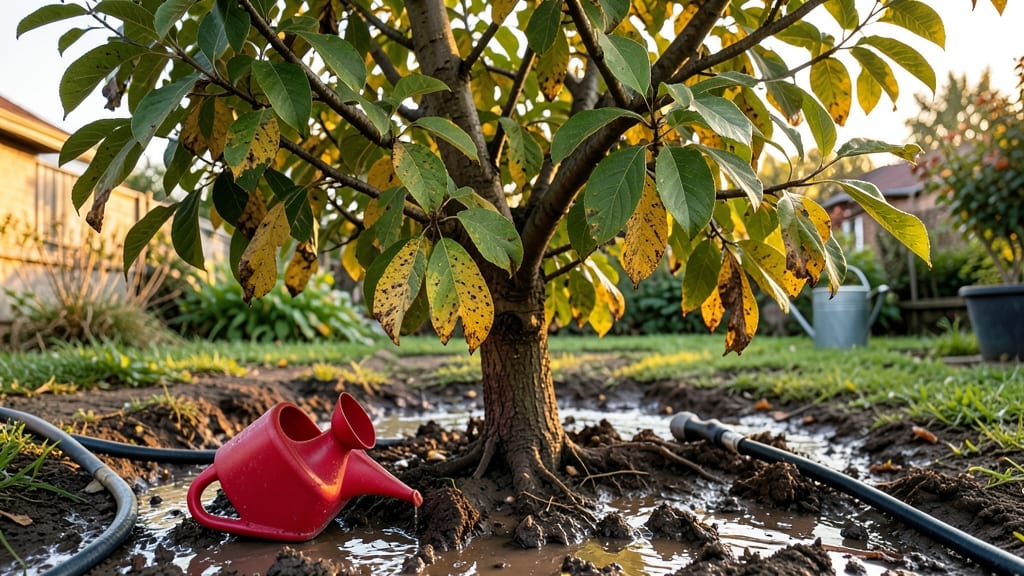
Your overwatered peach tree’s drooping leaves scream "I'm drowning!"—and the fix is simpler than you think. 🌿 After years of watching trees struggle with soggy roots, I've narrowed down the three simple fixes that turn yellow, limp foliage back into vibrant green within weeks.
The key? Stopping the water torture and giving roots room to breathe.
Overwatering happens when peach trees sit in wet soil for days, cutting off oxygen to roots. You'll spot the damage: yellowing leaves, wilting branches, and a mushy soil smell when you dig an inch down.
My first mistake? Ignoring the signs until the tree was already stressed. Now I check soil moisture with my finger before watering—if it's damp, I wait.
Here's the game-changer: adjust your watering schedule to once a week (or less in rainy seasons), improve drainage with compost or sand, and prune any mushy, blackened roots.
Within 2-3 weeks, you'll see new growth pushing through—proof the tree is healing. The best part? This method works for any fruit tree struggling with soggy soil.
For severe cases, consult an arborist—but most overwatered peach trees bounce back faster than you'd expect. The secret? Patience and consistent care. Your tree's revival starts with just three adjustments, and before you know it, those branches will be heavy with peaches again.
Root Causes Of Leaf Stress
When your peach tree’s leaves start looking sad—yellowing, wilting, or drooping—it’s often a cry for help from the roots. Overwatering may seem counterintuitive, but it’s one of the most common (and sneaky) reasons peach trees struggle. Let’s break down the science behind why too much water stresses your tree’s foliage.
Peach trees thrive in well-draining soil that allows oxygen to reach their roots. When you overwater, excess moisture fills the soil pores, displacing oxygen and creating an anaerobic (oxygen-deprived) environment. Roots, like all plant cells, rely on aerobic respiration—a process that requires oxygen to convert sugars into energy.
- What happens: Without oxygen, roots can’t absorb nutrients efficiently, leading to nutrient starvation in the leaves.
- Visual clues: Leaves turn yellow (chlorosis) or develop brown, crispy edges due to poor nutrient uptake.
- Soil test tip: Press your finger 2 inches into the soil—if it feels soggy for more than a day after watering, drainage is the issue.
Overwatered soil becomes a breeding ground for pathogenic fungi, particularly Phytophthora and Pythium, which attack root systems. These fungi thrive in waterlogged conditions and block the tree’s vascular system, preventing water and nutrient transport to the leaves.
- What happens: Leaves wilt suddenly (even when soil is moist) or develop dark, water-soaked spots.
- Fungal red flags: Mushy, discolored roots or a foul odor near the base of the tree.
- Prevention: Avoid watering at dusk or when rain is forecasted—fungi love humidity.
Peach trees need a balanced diet of nitrogen (N), phosphorus (P), and potassium (K). Overwatering washes away essential nutrients through a process called leaching, where water dissolves and carries away soil minerals. Additionally, excess moisture alters soil pH, making nutrients like iron and manganese unavailable to the tree.
| Nutrient | Symptom of Deficiency | Overwatering’s Role |
|---|---|---|
| Nitrogen (N) | Pale yellow leaves (starting with older foliage) | Leached from soil; roots can’t absorb it efficiently |
| Iron (Fe) | Interveinal chlorosis (yellowing between leaf veins) | Becomes insoluble in waterlogged, alkaline soils |
| Potassium (K) | Brown leaf edges or weak stems | Washed away; critical for drought resistance |
Pro tip: Test your soil’s pH (ideal: 6.0–7.0 for peach trees). If it’s above 7.0, amend with sulfur to prevent nutrient lockout.
Peach tree roots are sensitive to prolonged saturation. When soil stays soggy for days, roots suffocate and develop root rot, caused by fungi like Armillaria or bacteria such as Erwinia.
Healthy roots grow fine, hair-like structures called root hairs, which absorb 90% of the tree’s water and nutrients. Overwatering drowns these hairs, reducing the tree’s ability to sustain itself.
- What happens: Leaves droop even when the tree is watered (a sign roots can’t supply moisture).
- Root rot warning: Roots turn black, mushy, or smell like rotting fruit.
- Emergency fix: If root rot is suspected, prune affected roots with sterilized tools and improve drainage immediately.
Revive Your Tree With These Fixes
Overwatered peach tree leaves can feel like a slow-motion disaster—wilting, yellowing, or even dropping—but the good news is that recovery is totally possible. The key is acting fast, adjusting your watering habits, and giving your tree the right care to bounce back.
Below are practical, step-by-step solutions tailored to the root causes of overwatering, plus pro tips to keep your peach tree thriving long-term.
If your peach tree’s leaves are drooping or turning yellow due to soggy roots, cut back on water right away. Overwatering smothers roots by cutting off oxygen, leading to rot and stress.
How to Do It:
🔥 Stop Watering for 3–5 Days
- Let the soil dry out completely before watering again. Stick your finger 2–3 inches deep—if it’s damp, wait longer.
🍳 Water Deeply but Less Often
- When you do water, soak the root zone (about 12–18 inches deep) instead of shallow sprinkles. Use a soaker hose or drip irrigation to deliver water slowly.
👨🍳 Check Drainage
- Ensure your tree isn’t sitting in a saucer of water. If planted in a container, add drainage holes if missing. For in-ground trees, amend heavy clay soil with compost or sand to improve drainage.
⏰ Water in the Morning
- Watering early allows excess moisture to evaporate during the day, reducing fungal risks.
Compacted or waterlogged soil suffocates roots. Loosen the soil and encourage airflow to help roots recover.
How to Do It:
🔪 Aerate the Soil Gently
- Use a hand trowel or garden fork to loosen the top 6–8 inches of soil around the tree’s drip line (the area where branches extend). Avoid damaging roots—work 2–3 inches away from the trunk.
🌡️ Add Organic Matter
- Mix in 2–3 inches of compost or well-rotted manure to improve soil structure and water retention without compacting it. Avoid fresh manure—it can burn roots.
🎯 Mulch Correctly
- Apply 2–4 inches of mulch (wood chips, straw, or pine bark) 3–4 inches away from the trunk. This helps regulate soil temperature and moisture while preventing crusting.
While you can’t revive dead leaves, pruning stressed or diseased foliage helps the tree redirect energy to healthy growth.
How to Do It:
✂️ Remove Only the Worst Leaves
- Snip off yellow, brown, or mushy leaves with clean pruners (sterilize with rubbing alcohol). Focus on lower branches first, as they’re more prone to rot.
💪 Fertilize Lightly (If Needed)
- If your tree looks severely weakened, apply a balanced, slow-release fertilizer (10-10-10) in early spring. Avoid high-nitrogen fertilizers—they encourage leafy growth but worsen waterlogging issues.
🌱 Support with Epsom Salt (Optional)
- For magnesium deficiency (common in overwatered trees), mix 1 tablespoon of Epsom salt per gallon of water and spray on leaves every 2 weeks until recovery.
Once your tree recovers, lock in healthy habits to prevent future overwatering:
💡 Test Soil Moisture Regularly
- Use a moisture meter or the finger test (push your finger 2–3 inches deep). Water only when the soil is dry to the touch.
🌡️ Monitor Weather & Adjust
- Water less in rain or humidity—peach trees are drought-tolerant once established! Aim for 1–1.5 inches of water per week (including rain).
✨ Choose the Right Spot
- Plant peach trees in full sun (6+ hours/day) with well-draining soil. Avoid low spots where water pools.
🎯 Upgrade Your Irrigation
- If using sprinklers, switch to drip irrigation or soaker hoses to deliver water directly to roots without wetting leaves (which promotes disease).
With proper care, you should see improvement in 2–4 weeks:
- Week 1–2: New growth emerges, yellowing slows.
- Week 3–4: Leaves firm up, drooping stops.
- Month 2+: Tree regains vigor if soil and watering are corrected.
Pro Tip: 🌱 If your tree doesn’t improve after 4 weeks, check for root rot (black, mushy roots) or pests (like aphids). In severe cases, consult a local arborist.
By following these steps, your peach tree will shake off the overwatering shock and get back to producing luscious fruit. Stay patient—trees are resilient, and with the right care, they’ll thank you with juicy peaches next season! 🍑
Frequently asked questions
Why do peach tree leaves turn yellow when overwatered?
Yellowing leaves (chlorosis) happen because overwatering cuts off oxygen to roots, preventing them from absorbing nutrients like nitrogen and iron. The tree can't transport these essential minerals to the leaves, causing them to lose their green color. Check soil moisture—if it stays damp for more than a day, you're likely overwatering.
How often should I water a peach tree after fixing overwatering damage?
Once recovered, water your peach tree deeply once a week (or less in rainy seasons). Use the finger test: push your finger 2-3 inches deep—if dry, water thoroughly. Morning watering prevents fungal growth, and drip irrigation delivers water directly to roots without wetting leaves.
Can I save my peach tree if the roots are mushy and black?
If roots are mushy and black, you're likely dealing with root rot—a serious condition caused by prolonged waterlogging. Prune all affected roots with sterilized tools, improve drainage immediately, and avoid watering until soil dries completely. In severe cases, consult an arborist, as recovery may require professional intervention.
What's the best way to check if my peach tree is overwatered?
Use the soil squeeze test: grab a handful of soil from the root zone. If it crumbles easily, it's dry enough. If it stays compacted or leaves water marks, you're overwatering. Also check for wilting leaves that don't perk up after watering—this is a classic overwatering sign.
Will my peach tree produce fruit next season after recovering from overwatering?
Yes! With proper care, your tree should bounce back and produce fruit next season. The key is consistent recovery: maintain proper watering, improve soil drainage, and avoid stress factors. Peach trees are resilient—once roots regain health, they'll focus energy on both recovery and fruit production.