
Pruning
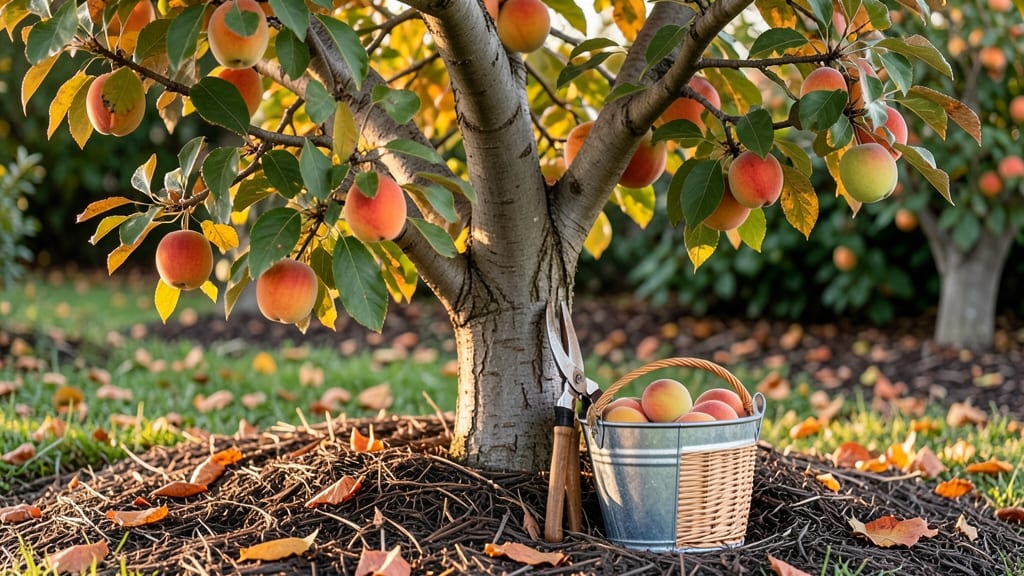
Pruning peach trees in fall is essential for winter preparation—target the period after leaves fall but before hard frost sets in—to remove dead, crossing, or diseased branches while promoting airflow. Limit cuts to avoid stressing the tree, and always sterilize tools between cuts to prevent fungal infections. The goal is to shape the tree for better sunlight penetration and future fruit production.
Fall pruning isn't just about trimming branches—it's about setting your peach tree up for a strong spring. 🌳 The key is working during the tree's dormant phase, when it's less vulnerable to stress and disease.
I recommend scheduling your pruning after the first frost but before temperatures drop below 30°F, as this gives the tree time to heal before winter. This timing also helps prevent silver leaf disease, a common fungal issue that thrives in open wounds during cold months.
When you're ready to prune, focus on three critical areas: removing any branches that are dead, diseased, or rubbing against others, cutting back water sprouts (those vertical shoots growing straight up), and thinning the canopy to improve light penetration.
Use sharp, sterilized tools to make clean cuts just outside the branch collar—this minimizes damage and speeds up healing. For larger branches, consider using a three-cut method to prevent tearing the bark.
💡 In This Article
- Optimal Fall Pruning Timeline for Peach Trees
- Step-by-Step Fall Pruning Guide for Healthy Peach Trees
Optimal fall pruning timeline for peach trees
Fall pruning works because peach trees enter a natural dormancy phase when temperatures drop, reducing their vulnerability to stress and disease. This period—typically between late November and early December in most U.S. growing zones (5-8)—allows the tree to heal wounds before winter's harsh conditions.
The ideal window is after leaf drop but before hard frost (28°F or below), as frost can damage exposed cambium tissue, the tree's growth layer just beneath the bark.
The science behind this timing involves the tree's physiological response. During dormancy, peach trees reduce sap flow, which minimizes bleeding from pruning wounds—a major concern in spring when sap is active.
Additionally, pruning too early (before leaf drop) removes the tree's natural protection against sun scald, while pruning too late (after frost) risks exposing fresh cuts to freezing temperatures. In colder climates (zones 3-4), wait until mid-to-late December when soil temperatures consistently stay below 40°F.
Assessing branch health is critical before cutting. Look for branches with brown, brittle wood (dead), blackened or oozing bark (diseased), or those growing at 90-degree angles (weak crotches). Healthy branches should have smooth bark and respond slightly when gently bent.
Use a sterilized pocket knife to scrape a small section of bark—green underneath means it's alive, while brown indicates death. This step prevents accidentally cutting into live tissue that could spread disease.
Regional climate variations require adjustments. In Southern California (zone 9-10), where winters are mild, prune by late January to avoid summer heat stress. Meanwhile, in New England (zone 3-4), focus on early November pruning to complete work before the first snowfall.
The key is always to prune when the tree is dormant but before prolonged cold snaps, which can stress newly cut branches.
Temperature plays a subtle but crucial role in wound healing. Research shows peach tree wounds heal fastest at 50-60°F—the typical range during late fall. Colder temperatures (32°F) slow cell division, delaying the formation of protective callus tissue.
That's why pruning just before a cold snap can leave wounds vulnerable to fungal infections like silver leaf disease, which thrives in damp, chilled conditions.
What most gardeners overlook is how pruning affects the tree's energy reserves. Removing too many branches (more than 20-25% of the canopy) depletes stored carbohydrates, weakening the tree's ability to survive winter.
This is especially critical for young peach trees (3-5 years old), which have limited energy reserves. Always prioritize structural health over aggressive thinning—aim to open the canopy by 20-30% to improve airflow and sunlight penetration.
Pro tip: Mark your calendar based on your local hardiness zone and average first frost date. For example, in zone 7 (e.g., Virginia, Missouri), target mid-November, while in zone 8 (e.g., Texas, Georgia), aim for late December.
Timing this precisely ensures your peach tree enters winter in peak condition, ready to burst with blossoms in spring. 🌱