
Propagation
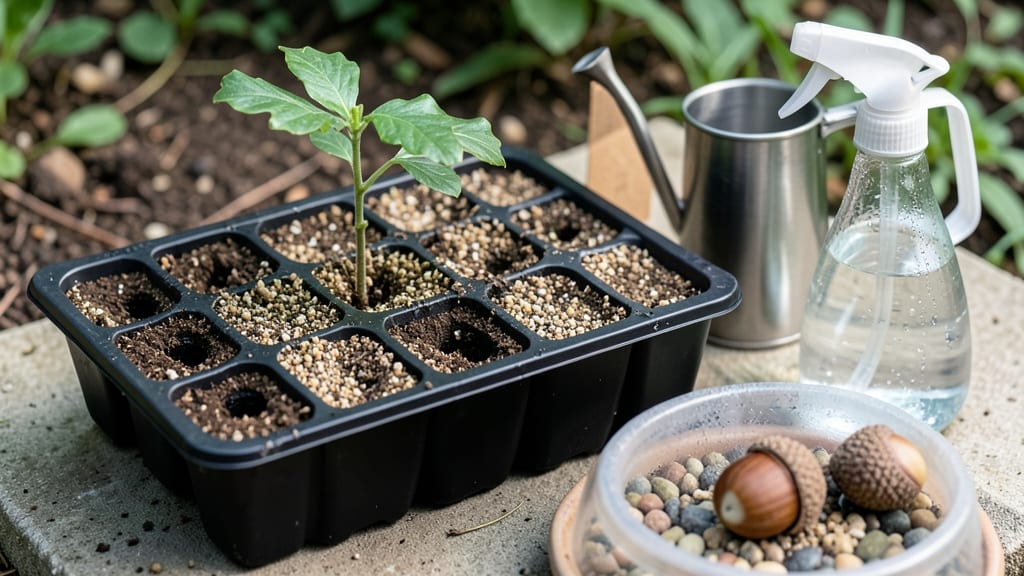
Oak tree seed germination starts with a trick most gardeners miss—cold stratification breaks the stubborn dormancy that keeps acorns from sprouting. 🌰 I’ve struggled with acorns sitting in warm soil for months, only to finally crack the code by mimicking winter’s chill.
Without this step, even healthy acorns might never break through.
The process is simpler than it sounds: gather fresh acorns in fall, soak them overnight, then mix with damp sand in a sealed container for 90 days in your fridge.
This mimics the natural winter period oak seeds need to trigger growth. Most gardeners skip this, and that’s why their acorns fail—it’s not about luck, it’s about science.
After stratification, plant the acorns 2 inches deep in well-draining soil, keeping it consistently moist but never soggy. You’ll see sprouts in 4-12 weeks, depending on the oak species. The first leaves might look strange, but don’t panic—this is normal as the seedling establishes itself.
Troubleshooting is key: mold means too much moisture, while slow sprouting often signals insufficient stratification. Patience is your best tool—oak trees grow slowly, but the reward is a century-old tree starting from your own backyard. Here’s how to avoid the most common pitfalls.
📚 In This Guide
- What you need
- Instructions
- Tips and common mistakes
- Wrapping up and next steps
What you need
- ● Oak acorns: Fresh, mature acorns (preferably from white oak or red oak varieties). Aim for at least 10-20 seeds to account for potential losses.
- ● Cold stratification setup: Ziplock bags or airtight containers (2-4, depending on seed quantity)
- ● Moistened peat moss or coconut coir (enough to fully submerge seeds)
- ○ Optional: Vermiculite (for better moisture retention)
- ● Refrigerator: A standard fridge set to 35–40°F (2–4°C) for stratification.
- ● Planting pots or seed trays: Small pots (3–4 inches deep) or trays with drainage holes. Use at least 5-10 pots for better success rates.
- ● Well-draining potting mix: A blend of 50% peat moss, 30% perlite, and 20% sand (or a pre-mixed seed-starting mix).
- ● Spray bottle: For gentle watering to avoid disturbing seeds.
- ○ Heat mat (optional but helpful): A seedling heat mat (70–75°F / 21–24°C) to speed up germination after stratification.
- ● Grow lights: LED or fluorescent lights for seedlings if natural light is insufficient.
- ● Humidity dome: To maintain moisture levels during early germination.
- ● pH testing kit: Ensures your potting mix is slightly acidic (pH 5.5–6.5, ideal for oak seeds).
- ● Seedling labels: To track varieties and planting dates.
- ● Fungicide (mild): Like hydrogen peroxide (3%) or mycorrhizal inoculant to prevent mold.
Step-by-step oak tree seed germination using cold stratification
Here’s how to break dormancy and coax stubborn acorns into sprouts with this proven cold stratification method.
🌱 Step 1: Collect and Prepare Acorns for Stratification
Gather fresh acorns from mature oak trees in fall, ensuring they’re plump and free of cracks or insect holes. I store them in a mesh bag inside my refrigerator’s crisper drawer—this mimics natural winter conditions without freezing. The key is moisture: place a damp paper towel in a sealed plastic bag with the acorns, then refrigerate for 90-120 days. Check monthly to refresh moisture if the towel dries out.
Cold stratification tricks acorns into thinking winter has passed. You’ll know it’s working when tiny roots (radicles) emerge from the base—this usually happens after 6-8 weeks. Don’t rush this step; premature planting leads to weak seedlings that rot in warm soil.
💧 Step 2: Plant Stratified Acorns in Moisture-Controlled Containers
Fill 4-inch deep pots with a mix of 50% sterile potting soil and 50% perlite—this prevents compaction and improves drainage. Plant acorns 1 inch deep, spacing them 2 inches apart to avoid overcrowding. Water gently until the soil surface feels damp but not soggy. I use a spray bottle for precision; acorns hate soggy bottoms.
Place pots in a shady spot (indirect light only) and maintain 60-65°F soil temperatures. Cover each pot with clear plastic wrap to retain humidity, but prop it open slightly for airflow. Condensation on the wrap means you’ve got the moisture right—no need to water again until it disappears.
☀️ Step 3: Transition to Light and Gradually Harden Off Seedlings
Once cotyledons (the first true leaves) appear—usually 4-6 weeks after planting—remove the plastic wrap immediately. Move pots to bright, indirect light for 1 week, then introduce 2-3 hours of morning sun daily. Oak seedlings are sensitive to harsh light; sudden exposure scorches delicate leaves.
After 8 weeks of growth, begin hardening off by placing pots outside in partial shade for 2 hours daily. Increase exposure by 1 hour weekly until seedlings tolerate full sun for 6+ hours. You’ll see stronger stems and deeper green leaves—signs they’re ready for transplanting.
⏰ Step 4: Transplant Young Seedlings to Permanent Locations
Choose a site with well-draining soil and full sun (oaks need 6+ hours daily). Dig holes twice as wide as the root ball but only as deep—planting too deep suffocates the stem. Water deeply before and after transplanting to reduce shock. I mulch with 2 inches of wood chips to retain moisture and suppress weeds.
Oak seedlings grow slowly—expect 12 inches of height gain per year in ideal conditions. Keep soil consistently moist but never waterlogged; young roots rot easily. After 2 years, you can thin seedlings to 6 feet apart for mature spacing. Patience is key—oaks take 10-20 years to reach full height, but the wait is worth it.
Tips & tricks for perfect oak tree seed germination
A few strategic adjustments can dramatically improve your acorn germination success rate. Here's what I've learned from years of trial and error in my own garden.
Cold Stratification Precision: The 90-120 day refrigeration period is non-negotiable for breaking dormancy, but timing matters within that window. I've found that starting acorns in early November gives them exactly 120 days of cold exposure by early March—perfect for spring planting. Use a small thermometer in your fridge to confirm temperatures stay between 35-40°F; many fridges cycle too warm. If your kitchen is particularly warm, consider a dedicated seed fridge or a cool basement location.
Moisture Management: The damp paper towel method works wonders, but here's the secret: don't let the towel become completely dry between checks. I wrap the bag with acorns in a second plastic bag with a tiny hole for airflow—this creates a mini greenhouse effect that maintains consistent moisture without risking mold. After the 6-8 week mark when radicles appear, I switch to a slightly drier towel to prevent rot during the final weeks of stratification.
Light Transition Strategy: When you move seedlings from indirect light to 2-3 hours of morning sun in Step 3, start with just 1 hour on the first day. Oak seedlings are extremely sensitive to light shock, and sudden exposure can cause leaf scorch that stunts growth. Gradually increase by 30 minutes every 3-4 days until you reach the full 2-3 hours. This slow acclimation period builds their resilience for the eventual full sun transition.
Soil Temperature Monitoring: While the instructions mention maintaining 60-65°F soil temperatures, here's what nobody tells you: use a soil thermometer to verify this, especially if your home has radiant heating. I've seen pots sitting on heated floors reach 70°F+—too warm for optimal germination. If your soil runs hot, move pots to a cooler location or use a heat sink like a ceramic pot that dissipates warmth more slowly.
Pro Tips for Oak Tree Seed Germination
- A few strategic adjustments can dramatically improve your acorn germination success rate.
- Cold Stratification Precision: The 90-120 day refrigeration period is non-negotiable for breaking dormancy, but timing matters within that window.
- Moisture Management: The damp paper towel method works wonders, but here's the secret: don't let the towel become completely dry between checks.
Frequently asked questions
Got questions about growing oak tree seeds? You’re not alone—germination can feel tricky! Here are answers to the most common queries to help you succeed with your oak tree project.
How long does oak seed cold stratification take?
Cold stratification for oak seeds typically requires 60–90 days in moist, cold conditions (like a fridge or outdoor winter). Some varieties may need up to 120 days—patience is key! Monitor moisture levels to avoid mold. Pro tip: Label your seeds and track the timeline for consistency.
Can I speed up oak seed germination?
While cold stratification is non-negotiable for breaking dormancy, you can shorten the process slightly by using a stratification mix (peat moss + sand) and storing seeds at 34–40°F (1–4°C). Avoid heat or warm water—oak seeds hate rushing! For stubborn seeds, try a second stratification cycle after drying them for 2 weeks.
What if my oak seeds won’t sprout after stratification?
Don’t panic! Oak seeds can be finicky. First, check for rot (slimy texture = discard). If seeds look healthy but dormant, try scarification (lightly nicking the seed coat with sandpaper) or a second cold treatment. Some oaks (like white oak) may take 1–2 years to sprout—persistence pays off!
Can I grow an oak tree from a grocery store acorn?
Yes, but store-bought acorns may be treated to prevent sprouting (common in packaged nuts). If unsure, test by floating the acorn—if it sinks, it’s viable! For best results, source acorns directly from mature oak trees (fall is ideal). Avoid black oak acorns—they contain tannins that can be toxic if consumed.
How deep should I plant stratified oak seeds?
Plant stratified oak seeds 1–2 inches deep in well-draining soil, spaced 6–12 inches apart. Use a mix of sand, peat, and compost to mimic natural conditions. Keep soil moist but not soggy—oaks despise waterlogged roots. Thin seedlings to 3–4 feet apart once they’re 6 inches tall for healthy growth.
Are there easier trees to grow from seed?
If oak germination feels overwhelming, try fast-growing alternatives like:
- Redbud (sprouts in weeks, cold-hardy)
- Hawthorn (drought-tolerant, easy stratification)
- Black walnut (slower but manageable)
Wrapping up and next steps
Growing oak trees from seed is a rewarding journey that blends patience with nature’s magic! 🌱 By mastering cold stratification, you’ve unlocked the secret to reliable sprouts—just remember to stay consistent with moisture, warmth, and a watchful eye.
Whether you’re a seasoned gardener or a curious beginner, every tiny root and shoot is a step toward a future canopy.
Your next adventure? Transplant those sprouts into pots or directly into the ground once they’re sturdy enough. Share your progress, ask questions, and watch your oak tree grow—one seed at a time! 🌳