
How To
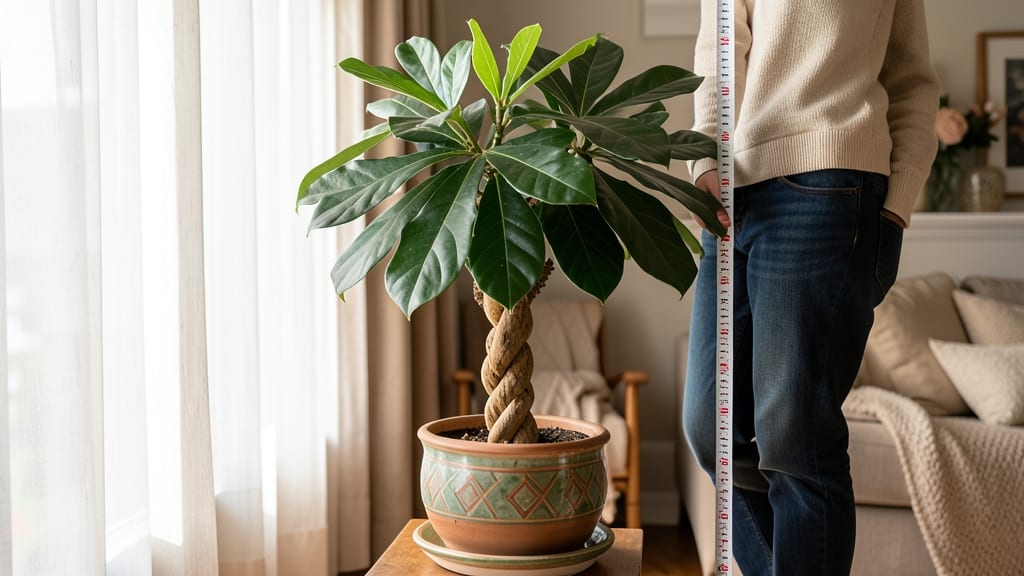
A money tree can grow anywhere from 3 to 10 feet tall indoors—and yes, that includes reaching your ceiling if you don’t prune it.
Picture this: your 🌿 Pachira aquatica starts as a small potted plant but, with the right care, shoots up faster than you expect. Whether you’re aiming for a statement piece or keeping it compact, understanding its growth habits is the key to controlling its height.
Indoor money trees thrive in bright, indirect light and can grow 1-2 feet per year if given enough space. Outdoors, in warmer climates, they can even surpass 20 feet—but that’s a different story.
The good news? With simple adjustments like pruning and repotting, you can steer its growth in the direction you want.
Below, I’ll break down how sunlight, container size, and trimming techniques all play a role in determining whether your money tree stays at a manageable 3 feet or stretches toward the sky.


Indoor money tree height limits: how fast and tall it grows inside
If you've ever admired a lush money tree (Pachira aquatica) and wondered whether it'll soon tower over your living room, you're not alone. Under ideal indoor conditions, this tropical plant typically reaches 3 to 10 feet tall, but its growth speed depends heavily on care and environment.
With proper attention, you can encourage faster growth—or gently control its height to keep it manageable.
The key to understanding your money tree's height potential lies in its natural growth habits. In the wild, this plant thrives in tropical climates and can grow much taller, but indoors, its growth slows significantly.
With bright indirect light, consistent watering, and occasional pruning, you'll see steady growth of 1 to 2 feet per year. However, neglecting its needs can stunt its growth entirely.
| Factor | Indoor Growth Range | Growth Rate |
|---|---|---|
| Mature Height | 3–10 feet | Slow to moderate |
| First Year Growth | 1–2 feet | 12–24 inches |
| Annual Growth | 6–12 inches | With proper care |
| Light Needs | Bright indirect | Slower growth in low light |
| Pruning Impact | 3–6 feet (pruned) | Encourages bushiness |
One of the most critical factors influencing your money tree's height is the amount of light it receives. Place it near an east or west-facing window where it can get 4 to 6 hours of bright, indirect sunlight daily.
If your home lacks natural light, supplement with a grow light to maintain steady growth. Without enough light, your money tree may grow slowly or develop long, leggy stems, which can make it appear taller than it actually is.
Pot size also plays a surprising role in controlling height. Money trees thrive in slightly root-bound conditions, so choose a container that's only 1 to 2 inches larger in diameter than the plant's current root ball.
When roots fill the pot, it signals the plant to focus on leaf and branch growth rather than stretching upward. Repot every 2 to 3 years or when you see roots circling the drainage holes.
If your money tree starts to outgrow its space, don't worry—pruning is your best friend. Regular pruning not only controls height but also encourages a fuller, bushier appearance. Trim back overly long branches in early spring using clean, sharp pruning shears.
Cut just above a leaf node or joint to promote new growth. With consistent pruning, you can keep your money tree at a manageable 3 to 5 feet while still enjoying its lush foliage.
Another way to influence growth is through fertilization. During the growing season (spring and summer), feed your money tree with a balanced liquid fertilizer (like 10-10-10) every 4 to 6 weeks. This provides the nutrients it needs to grow stronger and taller.
However, avoid fertilizing in fall and winter when growth naturally slows. Over-fertilizing can lead to salt buildup in the soil, which may harm your plant.
Temperature and humidity also affect how tall your money tree grows. These tropical plants prefer warmth between 65°F and 80°F and thrive in moderate to high humidity. If your home is dry, especially in winter, consider using a humidifier or placing the pot on a pebble tray with water.
Low humidity can cause the tips of leaves to brown, slowing overall growth and making the plant more susceptible to pests.
For those wondering if their money tree will ever stop growing, the answer is yes—but it depends on your goals. If left completely unpruned and given ideal conditions, a money tree can reach its maximum indoor height of 10 feet over several years.
However, with regular pruning and proper care, you can maintain it at a compact 3 to 5 feet, perfect for most indoor spaces. The choice is yours!
Remember, every money tree grows at its own pace. Pay attention to its leaf color and growth patterns—healthy leaves should be deep green and glossy. If you notice yellowing or dropping leaves, it may be a sign of overwatering, underwatering, or poor light conditions.
Adjust your care routine accordingly to keep your money tree thriving and growing at its best.
With the right balance of light, water, and pruning, your money tree will not only reach its full height potential but also become a stunning centerpiece in your home.
Whether you prefer a towering statement plant or a compact, bushy companion, this versatile houseplant can adapt to your needs—just give it the love and attention it deserves! 🌿
Outdoor money tree growth: can it surpass 20 feet in the right climate?
When your money tree (Pachira aquatica) outgrows its indoor home, moving it outdoors can unlock its true growth potential. In tropical or subtropical climates—like USDA zones 10-12—this plant can reach 10 to 20+ feet tall when grown outside.
The key difference? Outdoor conditions provide year-round warmth, higher humidity, and unlimited space for roots to expand, accelerating growth compared to indoor pots.
Native to South America's swampy regions, money trees thrive in 60-80°F temperatures and 60%+ humidity. Without frost risk, they grow 2-3 feet per year, eventually forming a small tree with multiple trunks.
However, transitioning from indoors requires careful planning—sudden climate changes can shock your plant. Start with acclimation periods and choose a protected outdoor spot before full exposure.
| Growth Factor | Indoor (Potted) | Outdoor (Grounded) |
|---|---|---|
| Max Height Potential | 3–10 feet | 10–20+ feet |
| Growth Rate (Annual) | 6–12 inches | 2–3 feet |
| Ideal Climate | Controlled temps (65–75°F) | Tropical/subtropical (60–80°F) |
| Root Space | Limited by pot size | Unlimited in garden beds |
| Humidity Needs | 40–50% (supplemental misting) | 60%+ (natural in tropics) |
To transition your potted money tree outdoors, begin by placing it in dappled shade for 1–2 weeks to adjust to sunlight. Avoid direct sun initially, as it can cause leaf scorch.
Once acclimated, choose a well-draining soil spot with partial sunlight (3–6 hours daily). Amend garden soil with compost to mimic its swampy native habitat, ensuring moisture retention without waterlogging.
Pruning plays a crucial role in managing outdoor growth. If you want to control height, prune 1/3 of new growth in late spring to encourage bushier growth. For a taller specimen, avoid heavy pruning and let it grow naturally.
Remember, outdoor money trees develop thicker trunks over time, making them more stable and resilient—ideal for landscape accents in warm climates.
One common mistake is assuming all outdoor climates suit money trees. In cooler zones (below 6a), even brief frost exposure will kill the plant. If you live in a temperate zone, grow it in large containers and winterize by moving it indoors before 50°F temperatures.
Mulching around the base in marginal zones can provide extra insulation during mild winters.
With the right conditions, your outdoor money tree can become a stunning focal point in your garden, rivaling small trees like olive or citrus.
Start small with a young, healthy specimen, and within 3–5 years, you’ll have a lush, 10-foot tropical beauty—all while embracing the plant’s symbolic connection to prosperity and growth.