
Container Gardens
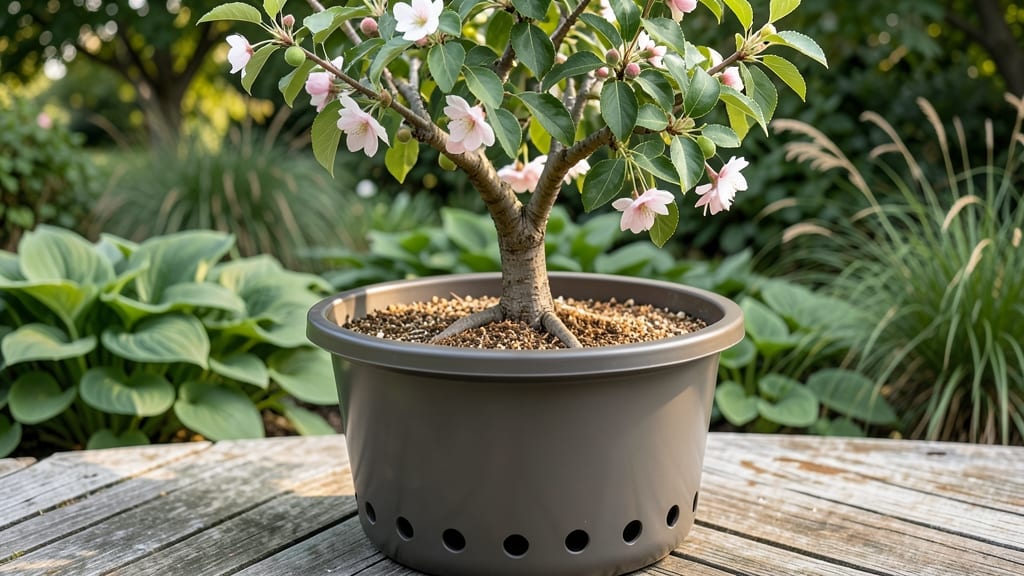
Growing a peach tree in a container starts with the right tree container size—at least 30 gallons for mature dwarf varieties, or you’ll watch roots circle and stunt growth. 🌱 I’ve learned the hard way that cramped containers mean smaller fruit, if any at all.
The key isn’t just size, but also material: fabric pots breathe better than plastic, preventing root rot in summer’s heat.
Most gardeners underestimate how fast peach roots spread—even dwarf varieties need 18-24 inches of depth by maturity. Wooden barrels work well for aesthetics, but they require extra drainage holes. Fabric grow bags are my go-to: they’re lightweight, durable, and let roots expand without binding.
With the right container, you’ll see floral buds by spring and fruit within 2-3 years. The trick is consistent watering—containers dry out fast—and pruning to keep the tree’s shape compact. Even in tight spaces, a well-chosen pot turns peach growing from impossible to productive.
For balconies or small patios, Bonanza or Redhaven dwarf varieties thrive in containers. Just avoid cheap plastic pots—they crack under root pressure and trap moisture. Invest in quality, and you’ll enjoy homegrown peaches without a yard.
📚 In This Guide
- What you need
- Instructions
- Tips and common mistakes
- Wrapping up and next steps
What you need
- ● Container: A dwarf or semi-dwarf peach tree variety (like ‘Bonanza’ or ‘Redhaven’) needs a minimum 15-gallon pot (18”+ diameter, 24”+ depth) for mature trees. For bush-type peaches (e.g., ‘Bonanza’), a 10-gallon pot (16” diameter, 18” depth) works well.
- ● High-quality potting mix: 10–15 gallons of a well-draining, slightly acidic mix (pH 6.0–7.0). Avoid garden soil—it compacts and suffocates roots!
- ● Slow-release fertilizer: 1–2 cups of a balanced, organic fertilizer (10-10-10 or 5-5-5) mixed into the soil at planting.
- ● Support stake or trellis: A 5–6 ft tall metal or wooden stake (or a small A-frame trellis for bush types) to stabilize the tree as it grows.
- ● Drainage: 2–4 layers of landscape fabric or broken pottery at the container’s bottom to prevent clogging.
- ● Garden trowel or spade for planting.
- ● Pruning shears (sterilized with rubbing alcohol) to trim dead branches.
- ● Watering can or hose with a gentle spray nozzle (containers dry out fast!).
- ○ pH test kit (optional but helpful for monitoring soil health).
- ● Mulch (straw or wood chips) to retain moisture and regulate temperature.
- ● Self-watering container to reduce maintenance.
- ● Mycorrhizal fungi (adds to soil at planting to boost root health).
- ● Container-specific peach tree (like ‘J.H. Hale’—a cold-hardy dwarf variety).
- ● Shade cloth (30–50%) for hot climates to protect young trees.
Determining the right container size for dwarf peach trees
Here’s how to choose the perfect pot for your compact peach tree—no guesswork, just science-backed sizing.
🪴 Step 1: Select a Pot at Least 24 Inches in Diameter
Dwarf peach trees need at least a 24-inch diameter container to accommodate their root systems as they mature. A 30-inch diameter pot gives them even more room to grow without becoming root-bound, which stunts fruit production. I always opt for round or square containers with a depth of 24-30 inches—this ensures stability and proper drainage.
Look for pots with multiple drainage holes at the bottom to prevent waterlogging, which can lead to root rot. If your container lacks drainage, add a 2-inch layer of gravel or broken pottery at the bottom before filling with soil. This mimics natural soil conditions and helps excess water escape efficiently.
🌱 Step 2: Choose a Lightweight Yet Sturdy Material
Peach trees can get top-heavy as they grow, so lightweight materials like plastic or resin are ideal for ease of movement. However, these containers may not retain heat as well as clay or terra cotta, which can be beneficial in cooler climates. If you live in a region with frequent temperature drops below 20°F, consider a heavy ceramic pot to provide better insulation for the roots.
I’ve found that fabric grow bags work surprisingly well for dwarf peach trees—they allow for better air circulation around the roots and prevent soil compaction. Just make sure the bag has reinforced stitching and is large enough to support the tree’s growth over the years.
☀️ Step 3: Prioritize Soil Depth and Drainage
Fill the container with well-draining potting mix that’s designed for fruit trees or citrus. A mix containing 50% potting soil, 30% perlite, and 20% compost works perfectly. Avoid garden soil—it compacts too easily and doesn’t provide the aeration roots need. The soil should be moist but not soggy when you squeeze a handful.
Leave 2-3 inches of space between the soil surface and the rim of the pot. This prevents spills when watering and gives the tree room to sway slightly in the wind without tipping over. If you’re planting in late spring or early summer, add a slow-release fertilizer to the soil mix to give the tree a nutrient boost as it establishes itself.
💧 Step 4: Plan for Seasonal Container Adjustments
In summer, move your peach tree to a south-facing location where it can receive at least 6-8 hours of direct sunlight daily. If you’re on a balcony, a portable grow stand with wheels makes it easy to reposition the tree as the sun shifts. During winter, bring the container indoors or to a protected garage or shed if temperatures drop below 15°F—peach trees are not frost-hardy.
If you notice the tree leaning toward the light, rotate the pot a quarter turn every few days. This ensures even growth and prevents the tree from becoming lopsided. Over time, you may need to upgrade to a larger container—watch for roots circling the edges of the pot or growing out of the drainage holes as signs it’s time to repot.
✂️ Step 5: Prune and Support for Container Growth
Prune your dwarf peach tree annually in late winter or early spring before new growth begins. Remove dead, diseased, or crossing branches to improve airflow and fruit production. I also thin out excess fruit in early summer—leaving too many peaches on the tree can strain the plant and reduce size and quality.
Install a small tree stake or bamboo support if the tree starts to tip over. Secure it loosely with soft garden ties to avoid damaging the trunk as it grows. With proper pruning and support, your container-grown peach tree can thrive for years, producing sweet, juicy fruit even in small spaces.
Tips & tricks for perfect peach tree container sizing
Here's what I've learned after years of growing dwarf peach trees in containers—these details make all the difference for long-term success.
Root Space Matters: The 24-inch diameter minimum in Step 1 isn't arbitrary—it accounts for the tree's root system expanding by about 12 inches each year. If you choose the 30-inch option, you'll delay repotting for 2-3 years. I've seen trees in 24-inch pots become root-bound by year 3, while the 30-inchers thrive for 5+ years. The extra depth (24-30 inches) also prevents the roots from hitting a hard barrier at the bottom, which can cause girdling.
Material Considerations: Fabric grow bags in Step 2 are my top recommendation for urban growers—they allow roots to breathe better than rigid containers. The key is choosing bags with reinforced bottoms (look for double-thickness fabric) to prevent tearing when you move them. For clay pots, I always soak them in water for 24 hours before planting to prevent them from absorbing moisture from the soil. This is especially important in summer when evaporation rates are high.
Seasonal Transition Strategy: The 6-8 hours of sunlight requirement in Step 4 is non-negotiable, but achieving it takes planning. I use a solar tracker app to map my balcony's sun exposure throughout the day. For winter protection below 15°F, I've had success with insulated grow bags (available at garden centers) that wrap around the entire pot. These can raise root zone temperatures by 5-10°F compared to unprotected pots.
Pruning Precision: When thinning fruit in early summer (Step 5), aim to leave about 6-8 inches between remaining peaches. This spacing prevents overcrowding and allows each fruit to develop proper size and sweetness. I also prune any branches growing toward the center of the tree—these create shaded areas where fruit won't ripen properly. Use sharp pruners and make cuts just outside the branch collar for cleanest healing.
Pro Tips for Peach Tree Container Size
- Here's what I've learned after years of growing dwarf peach trees in containers—these details make all the difference for long-term success.
- Root Space Matters: The 24-inch diameter minimum in Step 1 isn't arbitrary—it accounts for the tree's root system expanding by about 12 inches each year.
- Material Considerations: Fabric grow bags in Step 2 are my top recommendation for urban growers—they allow roots to breathe better than rigid containers.
Frequently asked questions
Got questions about growing peach trees in containers? You’re not alone! Here are some of the most common concerns—and their straightforward answers—to help you get started with confidence.
What’s the best container size for a peach tree?
A minimum 15-gallon container is ideal for dwarf peach varieties, but 20–30 gallons gives roots more room to thrive. Larger containers (30+ gallons) support heavier varieties like ‘Bonanza’ or ‘Redhaven.’ Ensure the container has drainage holes to prevent root rot!
How long does it take for a container-grown peach tree to bear fruit?
Dwarf peach trees typically fruit in 2–4 years, while standard varieties may take 4–6 years. Patience pays off—proper sunlight (6–8 hours daily), watering, and fertilizer (like 10-10-10) speed up fruiting. Prune in late winter to encourage growth!
Can peach trees survive winter in containers?
Yes, but they need protection! Move containers to a garage or sheltered spot when temps drop below 20°F (-7°C). Wrap the pot in bubble wrap or use a tree blanket for insulation. Avoid mulching too heavily—roots need airflow.
What if my peach tree isn’t thriving in its container?
Check these fixes:
Root-bound? Gently loosen roots and repot into a larger container with fresh potting mix.
Yellow leaves? Overwatering or poor drainage? Let soil dry slightly between waterings.
No fruit? It may need cross-pollination—plant a second variety nearby or hand-pollinate with a brush.
Are there peach tree varieties that do well in small containers?
Try these dwarf or semi-dwarf varieties:
- ‘Bonanza’ (20–25 ft tall, but prunable to 8–10 ft)
- ‘Redhaven’ (compact when grafted onto dwarf rootstock)
- ‘Sanguine’ (small, sweet, and cold-hardy)
- ‘Contender’ (self-pollinating and disease-resistant)
Start with bare-root saplings in early spring for the best results!
Wrapping up and next steps
Choosing the right peach tree container size for your small space is all about balancing space, care, and variety! Compact dwarf peach trees thrive in pots, making them perfect for balconies, patios, or even cozy backyards.
With the right container, soil, and sunlight, you’ll enjoy fresh peaches—without the yard—in just a few seasons. 🌱
Ready to grow? Start by selecting your favorite dwarf variety, grab a sturdy container, and get planting! Before you know it, you’ll be harvesting sweet, juicy peaches straight from your balcony. Happy gardening! 🍑✨