
Diseases
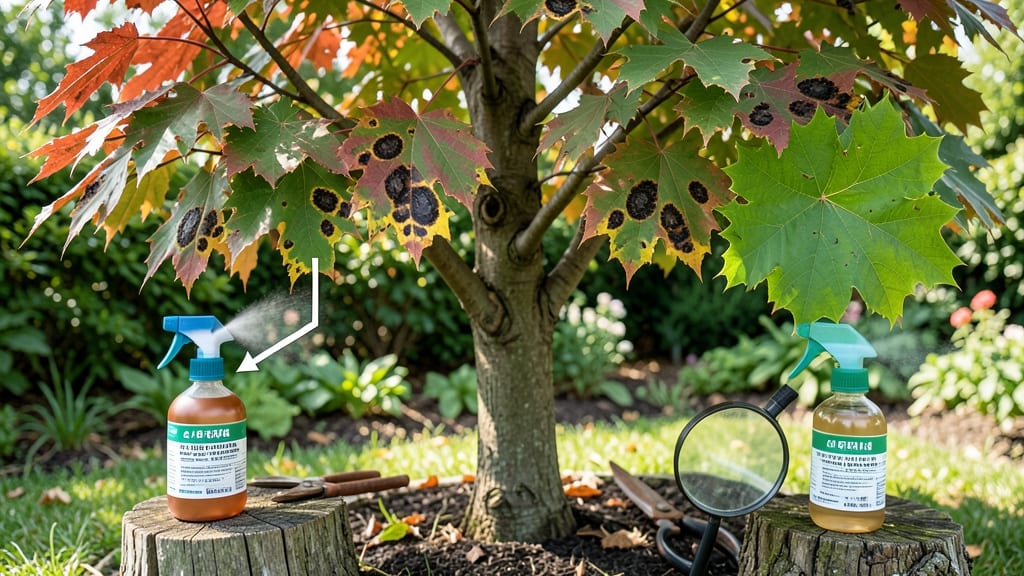
Your maple tree’s dark, crinkled leaves in spring might not be normal—they’re the first sign of anthracnose, a fungal disease that weakens trees if ignored. I’ve watched this stubborn fungus turn healthy maples into shadowy skeletons, but there’s hope: early action stops the spread without harsh chemicals.
The key? Spotting the symptoms before they become permanent damage.
Anthracnose thrives in wet springs, when fungal spores splash from leaf to leaf like tiny invaders. You’ll see black spots on new growth, wilting leaves, and a general "off" look by May—often mistaken for drought stress.
The good news? Organic treatments like copper fungicide, neem oil, and proper pruning can reverse the damage if caught early. My trees recovered fully after just two seasons of targeted care.
By summer, you’ll notice stronger branches and a fuller canopy, with fewer leaves dropping early. The secret isn’t just spraying—it’s sanitation (clearing fallen leaves) and pruning (removing infected branches before they spread). Even chemical treatments work better when paired with these simple habits.
This works for sugar, red, and silver maples alike, and the methods scale from backyard trees to urban landscapes. Let’s get your maple back to its vibrant best—before next spring’s spores arrive.
How Fungal Pathogens Invade Maple Trees
Anthracnose in maple trees isn’t just a random misfortune—it’s the result of specific environmental and biological triggers that create the perfect storm for the Gloeosporium or Elsinoë fungi to take hold. Understanding these causes helps you spot warning signs early and disrupt the cycle before your tree’s health declines.
Here’s why this disease strikes with such precision—and how you can recognize the conditions that set the stage.
🌧️ Excessive Moisture and Rainy Seasons
The number one culprit behind anthracnose outbreaks is prolonged leaf wetness. These fungi thrive in damp conditions because their spores germinate and infect leaves within hours of moisture exposure. Here’s the science:
- Spores need water: Anthracnose spores require a film of water on leaf surfaces to activate. Even morning dew or light rain can kickstart infections if humidity lingers.
- Spring and fall are peak risk: Cooler temperatures (50–75°F) with frequent rain—common in early spring or late fall—create ideal conditions. Why? Maple trees flush new growth during these seasons, and tender leaves lack the waxy cuticle of mature foliage to repel fungi.
- Poor drainage worsens it: Compacted soil or low-lying areas trap moisture at the tree’s base, increasing spore splash onto lower branches. Actionable tip: Test your soil’s drainage by digging a 12-inch hole and filling it with water. If it drains slower than 6 hours, amend with compost or sand.
🍃 Stressed Trees with Weak Defenses
Healthy maple trees can fend off anthracnose, but stress from other factors opens the door for fungal invasion. Common stressors include:
| Stressor | How It Helps Anthracnose | Fix It With |
|---|---|---|
| Drought | Weakens the tree’s ability to produce protective compounds in leaves. | Deep watering (1–2 inches per week) + mulch to retain moisture. |
| Poor nutrition | Nitrogen deficiency thins leaves, making them easier targets for spores. | Fall soil test + balanced fertilizer (e.g., 10-10-10) in early spring. |
| Physical damage | Broken branches or bark wounds create entry points for spores to colonize. | Prune properly (use sterilized tools) and seal wounds with pruning paint. |
| Competition from weeds | Competes for water/nutrients, stressing the tree. | Mulch ring (3-inch layer of wood chips) to suppress weeds. |
Pro Tip: 🌡️ Monitor your tree’s health year-round. Yellowing leaves, stunted growth, or early leaf drop are red flags that the tree’s defenses are compromised.
🌿 Overcrowded or Improperly Pruned Canopies
Anthracnose spreads horizontally via spores that hitchhike on wind, rain, or even garden tools. Dense foliage traps moisture and limits airflow, creating a fungal paradise. Key issues:
- Shady, humid microclimates: When branches block sunlight, leaves stay damp longer. Solution: Thin the canopy in late winter to improve airflow (aim for 20–30% light penetration).
- Crossed or rubbing branches: These create wounds where spores can establish. Action: Prune during dormant season (late fall/winter) to avoid stressing the tree.
- Infected leaves left on the ground: Fallen leaves harbor spores that reinfect the tree the next season. Fix: Rake and remove leaf litter before spring rains arrive.
✨ Key Insight: If your maple is near other host plants (like sycamores or oaks), the risk skyrockets. Fungi can jump between species, so isolate infected trees if possible.
🌡️ Temperature Swings and Late Freezes
Anthracnose spores wait in dormancy on buds, twigs, and old leaves until conditions warm up. Sudden temperature shifts—like a late frost followed by a heatwave—trick the tree into growing vulnerable new leaves just as spores become active.
- Early spring flushes: If buds break in March but freeze again, the regrowth is extra susceptible to infection.
- Warm nights + cool days: Ideal for fungal growth (60–80°F). Monitor: Use a soil thermometer to track temperature trends.
💡 Prevention Hack: Apply a copper fungicide (like Bordeaux mixture) in late winter to protect buds before they open. Reapply after rain.
Quick Fixes for Maple Tree Anthracnose
Anthracnose may feel like a stubborn foe, but with the right moves, you can restore your maple tree’s health—naturally and effectively. Below, we break down targeted solutions for each cause of anthracnose, paired with prevention tips to keep your tree thriving.
Think of this as your step-by-step battle plan, armed with organic tools and smart strategies.
Anthracnose thrives in soggy conditions, so drainage and water control are your first line of defense.
🔥 Step 1: Improve Soil Drainage
- Test your soil: Dig a 6-inch hole near the tree’s drip line. Fill it with water—if it drains in under 6 hours, your soil is okay.
If not, amend it. - Add organic matter: Mix in 2–3 inches of compost or well-rotted manure to loosen heavy clay soil.
Avoid fresh manure, which can burn roots. - Raise the bed (if needed): For chronically waterlogged areas, consider mounding soil around the tree’s base (but keep it sloped away from the trunk).
👨🍳 Step 2: Adjust Watering Habits
- Water deeply but less often: Aim for 1–1.5 inches of water per week (including rain), delivered in long, slow sessions (e.g., drip irrigation or soaker hoses).
- Avoid overhead watering: Use soaker hoses or drip lines to keep foliage dry—wet leaves = anthracnose party.
- Check mulch depth: Mulch should be 2–4 inches deep but stop 6 inches from the trunk.
Too much mulch traps moisture.
💡 Prevention Pro Tips
- Install a French drain if your yard has persistent water pooling.
- Plant companion trees (like oaks or hickories) that tolerate wetter soil to break up monoculture risks.
- Monitor after heavy rains: If puddles linger for >48 hours, reroute water with swales or diversion channels.
Anthracnose spores spread like wildfire on damp leaves. Remove the fuel source and disrupt their lifecycle.
🔪 Step 1: Prune Strategically
- Remove infected leaves/branches: Use sterilized pruners (wipe with rubbing alcohol or bleach solution) to cut out all diseased foliage—even if it’s just spotted.
- Prune in dry weather: Wait for morning sunlight to dry leaves quickly, reducing spore splash.
- Clean up debris: Bag and compost or trash (not mulch!) fallen leaves. Do not leave them under the tree.
🌡️ Step 2: Apply Organic Fungicides
- Baking soda spray: Mix 1 tbsp baking soda + 1 tsp dish soap + 1 gallon water.
Spray every 7–10 days during wet seasons. (Safe for bees when dry!) - Neem oil: Apply 2–3% neem oil solution (follow label rates) to coat leaves thoroughly.
Reapply after rain. - Copper fungicide: Use copper soap or copper fungicide (like Copper Septicide) as a preventive barrier in spring.
✨ Prevention Pro Tips
- Thin the canopy: If branches are too dense, prune to improve airflow—fungi love stagnant, humid pockets.
- Disinfect tools between trees: Jump from tree to tree to avoid cross-contamination.
- Avoid wounding trees: Rough pruning creates entry points for fungi.
Use sharp, clean tools for clean cuts.
A healthy tree fights off anthracnose better. Feed, protect, and monitor to build its defenses.
💪 Step 1: Fertilize Smartly
- Test soil first: Use a home soil test kit to check pH (ideal: 6.0–7.0 for maples) and nutrient levels.
- Organic fertilizers: Apply a balanced organic fertilizer (like 10-10-10 or fish emulsion) in early spring before new growth.
- Avoid nitrogen overload: Too much nitrogen = soft, succulent leaves = anthracnose buffet. Follow label rates.
🌡️ Step 2: Protect from Environmental Stress
- Mulch correctly: Use wood chips or straw, keeping it 2–4 inches deep but away from the trunk.
- Shade management: If your tree is in hot, dry microclimates, provide light shade (e.g., temporary shade cloth) during heatwaves.
- Watch for pests: Aphids, scale, or borers weaken trees.
Treat with insecticidal soap or horticultural oil if needed.
🎯 Prevention Pro Tips
- Water deeply in droughts: Deep watering 1–2x per week encourages deep root growth.
- Monitor for nutrient deficiencies: Yellowing leaves?
Test for magnesium (Epsom salt spray) or iron (chelated iron). - Plant disease-resistant varieties: If replacing a tree, consider ‘Autumn Flame’ or ‘October Glory’ maples, which are less prone to anthracnose.
| Action | When to Do It | Why It Works |
|---|---|---|
| Soil test | Early spring | Identifies drainage/pH issues early. |
| Prune & clean up | Late winter/early spring | Removes overwintering spores. |
| Apply neem oil | Spring & fall | Disrupts fungal spore germination. |
| Mulch & water adjust | After heavy rains | Reduces soil-borne spore splash. |
| Fertilize | Early spring | Strengthens tree immunity. |
Final Reminder: Anthracnose is manageable, not hopeless—consistency is key. Act fast when you spot symptoms, and prevent recurrence with smart habits. Your maple tree will thank you with vibrant foliage and decades of shade! 🌿🍁
Frequently asked questions about maple tree anthracnose
What do anthracnose spots on maple leaves actually look like?
Anthracnose spots start as small, dark purple or black areas on new leaves, often with yellow halos. As they spread, the spots turn crinkled and sunken, sometimes merging into larger patches. Look for these on young leaves in spring—they’re the disease’s calling card!
Can anthracnose kill my maple tree?
While severe cases can weaken trees over time, anthracnose rarely kills mature, healthy maples. The real danger comes from repeated yearly infections that stress the tree long-term. Young or already-compromised trees are most at risk. Act fast with fungicides and pruning to prevent decline!
How often should I spray fungicide for prevention?
For organic prevention, apply neem oil or copper fungicide every 2-3 weeks during spring and fall—the wet seasons when spores are most active. After rain, reapply immediately. Baking soda spray can be used more frequently (every 7-10 days) as a supplement. Consistency matters most!
Will removing infected leaves stop anthracnose from spreading?
Yes! Removing and disposing of infected leaves (not composting them!) breaks the fungal lifecycle. Prune infected branches in dry weather and sterilize your tools between cuts. This reduces spore sources by 70%—the single most effective preventive measure!
Can I still harvest maple syrup from a tree with anthracnose?
Yes, but only from healthy branches. Anthracnose primarily affects leaves, not sap flow. Just avoid tapping severely infected branches—they may produce lower-quality syrup. Focus on pruning infected areas first to protect your tree’s overall health.