
How To
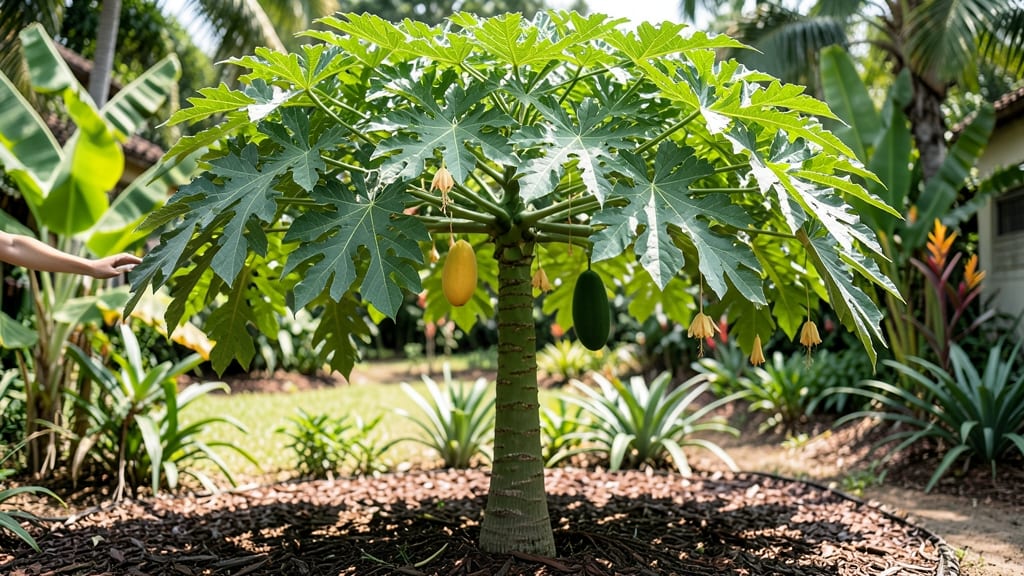
A papaya tree grows anywhere from 10 to 30 feet tall, turning your backyard into a tropical oasis with just the right care 🍈.
Picture this: a single seedling you nurtured from a tiny sprout now stretching taller than your roof, its broad leaves casting shade like a natural umbrella. But here’s the catch—some varieties stay compact, while others reach skyward like a jungle giant. The difference? Variety, pruning, and even your local climate.
If you’re wondering how to keep your tree manageable or coax it to grow faster, you’re in the right place.
I’ll break down the height ranges by popular varieties, how to support its structure, and the simple tricks to control its size—whether you want a bushy dwarf or a towering fruit factory.
Ready to turn your papaya tree into the star of your garden? Let’s dive into the heights, care secrets, and everything in between.


Papaya tree height by variety: from dwarf to towering giants
Papaya trees are tropical showstoppers, but their height varies wildly depending on the variety. Some stay compact enough for containers, while others shoot up like jungle giants.
If you're planning your garden layout, knowing these height ranges will help you choose the perfect fit for your space—and your fruit goals. Let’s break down the tallest and shortest papaya varieties so you can pick the right one for your yard.
The SunUp variety is one of the most popular for home gardens because it balances height control with high fruit production. It typically reaches 10-15 feet at maturity, making it ideal for medium-sized yards or large containers.
Meanwhile, the Red Maradol can tower over 20 feet, demanding more space and sturdy support. Your choice here will shape not just your tree’s silhouette but also how many papayas you harvest each season.
Here’s how five common papaya varieties stack up in height—and what that means for your garden:
The Solo and SunUp varieties are the best choices if you’re working with limited space. Both stay under 15 feet and produce abundant fruit, making them perfect for urban gardens or small backyards.
For larger properties, the Red Maradol is a showstopper—its 20- to 30-foot height means dramatic shade and massive, flavorful papayas, but it’ll need plenty of room to spread its roots and branches.
If you’re growing papayas in containers, stick to Solo or SunUp varieties. These can thrive in 15- to 20-gallon pots with proper drainage, though you’ll need to prune regularly to control their height.
Just remember: container-grown trees may produce slightly smaller fruit but will still reward you with tropical sweetness year after year.
One trade-off to consider is fruit production. Taller varieties like Red Maradol often yield larger individual fruits, but their height can make harvesting tricky. Shorter varieties like Golden Honey produce smaller papayas but are easier to maintain and harvest.
Think about what matters most to you—fruit size or ease of care—and let that guide your variety choice.
Pro tip: If you’re planting multiple papaya trees, space them according to their mature height. A Red Maradol needs at least 20 feet of clearance, while a Solo can comfortably share space with other tropical plants in an 8-foot radius.
Proper spacing ensures strong airflow, reducing the risk of fungal diseases and promoting healthier growth overall.
For those in cooler climates (USDA zones 10–11), even dwarf varieties may struggle to reach their full height without protection. Use greenhouse structures or move potted trees indoors during winter to preserve their growth potential.
With the right care, your papaya tree—whether it’s a 10-foot bush or a 30-foot giant—will thrive and keep you in fresh papayas for years to come.
Ready to pick your perfect papaya? Start by matching the variety’s height to your space, then give it the sun, water, and nutrients it craves. Your tropical oasis—and your taste buds—will thank you.
How pruning and care affect papaya tree height (and fruit yield)
Papaya trees grow with striking vertical ambition, but their height isn’t just about genetics—it’s a direct result of how you prune and care for them.
Left unchecked, a standard papaya tree can shoot up to 20-30 feet, while strategic pruning can keep it compact or even encourage bushier growth for higher fruit yields. The key lies in understanding when to trim for structure versus when to support natural growth.
Young papaya trees grow rapidly in their first year, often reaching 6-10 feet with proper care. However, over-pruning early can delay fruiting by redirecting energy toward new leaves instead of fruit production.
The goal is to balance height control with fruit-bearing priorities, especially if you’re growing in containers or small spaces.
Papaya trees hate aggressive pruning. Cutting back more than 20-30% of foliage at once can shock the tree, leading to reduced flowering and fruit. Instead, use light, strategic trims to shape growth without sacrificing yields.
For container-grown papayas, prune only to remove dead or crossing branches—never for height control.
To encourage bushier growth (ideal for small gardens or containers), prune the topmost leaves when the tree reaches 3-4 feet tall. This triggers lateral branching, creating a multi-stemmed shrub that produces fruit along multiple stems.
For taller, single-trunk trees, avoid pruning the central leader—instead, remove only suckers at the base to maintain a clean vertical form.
Staking is another game-changer for controlling height. Young papaya trees benefit from light bamboo stakes tied loosely to the trunk to prevent wind damage and encourage straight upward growth.
As the tree matures, reduce staking to support only during storms, as over-reliance can weaken the tree’s natural structural integrity. In container gardening, use deep pots (2+ feet) and cage supports to guide vertical growth without overcrowding.
Seasonal care plays a huge role in height management. During spring and summer, focus on regular watering and balanced fertilizer (10-10-10) to fuel growth. In fall and winter, reduce watering slightly and avoid heavy pruning—this lets the tree rest and store energy for next year’s fruit production.
A light pruning in late winter (just to remove dead wood) keeps the tree healthy without stressing it.
For container gardeners, here’s a growth hack: Prune only the tips of new shoots in early summer to encourage bushier, fruit-bearing branches. Use pruning shears sterilized with rubbing alcohol to avoid disease, and never cut into old wood—this can kill the branch entirely.
With the right balance of pruning, staking, and seasonal care, you can grow a papaya tree that’s both manageable and productive, whether it’s 10 feet tall or a compact 6-foot bush.