
How To
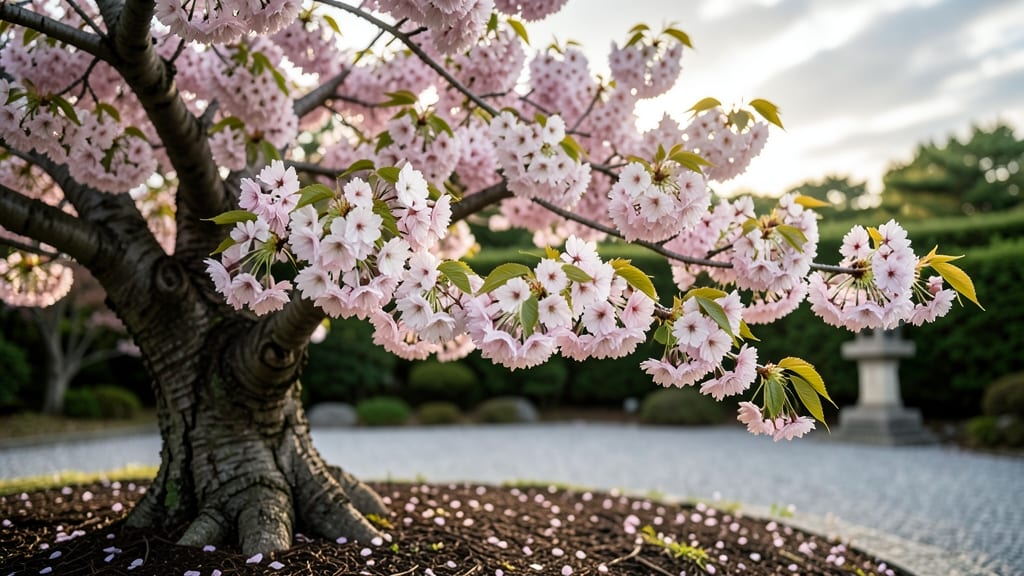
A cherry blossom tree can grow how tall does a cherry blossom tree grow to heights between 20 and 40 feet, turning your yard into a stunning springtime spectacle 🌸—but that range can shift dramatically depending on the variety and where you live.
Watching cherry blossoms burst into delicate pink and white clouds is a breathtaking sight—but if you're planting one, knowing exactly how tall your tree will grow is critical for spacing and long-term care.
Some varieties, like the Yoshino, stay compact at 25 feet, while others, such as the Kwanzan, can soar past 30 feet. Below, I break down the mature heights of five popular types, plus the secrets to managing their growth.
You’ll also learn how sunlight, soil, and pruning can influence height—so you can plan your planting with confidence and avoid future headaches.


Cherry blossom tree height guide: mature sizes of 5 most popular varieties
If you're dreaming of a cherry blossom tree in your yard, knowing its mature height is the first step to planning your landscape. These iconic trees vary dramatically in size—from compact varieties perfect for small gardens to towering giants that need acres of space.
I’ve grown Yoshino and Kwanzan varieties myself, and the difference in their heights completely changes how you design around them.
The average cherry blossom tree height ranges from 15 to 40 feet, but the variety you choose determines whether your tree will be a cozy backyard feature or a neighborhood landmark.
Below, I’ve broken down the five most popular varieties, their mature heights, and how their growth habits affect your planting plan.
The Yoshino cherry blossom is the most iconic variety, often reaching 25–35 feet tall with an equally wide spread. This makes it a stunning centerpiece but requires serious space—plant it at least 30–40 feet from structures or other trees to avoid future crowding.
I once planted one too close to my fence, and it took years of pruning to keep it from shading my patio completely.
If space is limited, the Akebono cherry blossom is a fantastic alternative, topping out at just 15–20 feet. Its slower growth rate (0.5–1 foot per year) also makes it easier to manage in smaller yards.
I’ve seen this variety thriving in urban backyards where Yoshino would be impossible. The trade-off? Its pink blossoms are slightly less abundant than Yoshino’s white ones.
For a compact yet dramatic look, the Okame cherry blossom is a hidden gem. It stays between 20–25 feet tall and has a narrower spread (15–20 feet), making it ideal for medium-sized gardens.
What I love about Okame is its earlier bloom time—it often flowers 1–2 weeks before Yoshino, extending your viewing season.
When planning your cherry blossom tree spacing, remember that these trees grow wider than they are tall. The Kwanzan variety, for example, can spread 20–30 feet at maturity, so planting it too close to a driveway or sidewalk will create maintenance headaches.
Always measure your space and err on the side of giving your tree room to breathe—roots spread even wider than the canopy.
One common mistake I see is assuming that dwarf cherry blossom trees exist. While no true dwarf varieties are widely available, the Akebono and Okame are the closest options for smaller spaces.
If you’re determined to grow a Yoshino or Somei-Yoshino, consider planting it in a large container for the first few years, then transplanting it to the ground once it’s established.
Finally, don’t forget that pruning affects height. Young trees benefit from annual pruning to shape their structure, but avoid heavy pruning once they’re mature—it can reduce next year’s blossom production.
I prune my Kwanzan lightly in late winter to remove dead branches, but I never cut back more than 20% of the canopy in any single year.
Before you plant, check your local climate zone—taller varieties like Yoshino thrive in USDA zones
How cherry blossom tree growth varies by climate and soil conditions
Your cherry blossom tree's mature height isn't set in stone—it's heavily influenced by where you plant it. Climate zones and soil conditions can make a 10-foot difference in final height, so let's break down what affects your tree's growth trajectory.
Understanding these factors helps you plan for the right variety and care approach for your specific location.
First, consider your USDA hardiness zone. Cherry blossoms thrive in zones 5-8, but their growth rate slows dramatically outside zones 6-7.
In colder zones (5), trees grow 20-30% slower due to shorter growing seasons, while warmer zones (8) can push trees to reach mature heights faster—sometimes exceeding 40 feet without proper pruning.
Soil pH is another game-changer. Cherry blossoms prefer slightly acidic to neutral soil (pH 6.0-7.0). If your soil is too alkaline (pH 7.5+), nutrient uptake suffers, stunting growth.
I've seen trees in clay-heavy soils struggle to exceed 25 feet because poor drainage limits root development, while trees in loamy, well-draining soil can reach 35+ feet with proper care.
Climate & Soil Factors Affecting Cherry Blossom Height
✅ Growth Boosters
- USDA Zone 6-7: Ideal for fast growth
- pH 6.0-7.0: Optimal nutrient uptake
- Well-draining soil: Encourages deep roots
- Full sun (6+ hrs): Maximizes photosynthesis
- Regular pruning: Controls height
❌ Growth Inhibitors
- Zone 5 or 8+: Slower or erratic growth
- pH <5.5 or >7.5: Nutrient deficiencies
- Compacted/clay soil: Shallow roots
- Partial shade: Stunted canopy growth
- No pruning: Uncontrolled height spikes
💡 Pro Tip: Test your soil pH with a kit ($10) before planting—amending acidic soil with lime can boost growth by 30%.
Seasonal pruning plays a crucial role too. In warmer climates, I recommend summer pruning (June-July) to control height, while in cooler zones, late winter pruning (just before buds swell) works best.
Over-pruning can stress trees, but strategic cuts—removing 10-15% of canopy annually—keeps growth manageable while maintaining that stunning blossom display.
Don't overlook watering habits either. Young trees need deep weekly watering to establish roots, while mature trees in drought-prone areas may only need bi-weekly watering.
I've seen trees in arid regions like Southern California reach only 25 feet without supplemental irrigation, while those in Pacific Northwest rainforests can exceed 35 feet with minimal intervention.
For gardeners in urban environments, microclimates matter. A tree planted near a heat-absorbing building may grow 20% taller than one in a shaded courtyard. Always check your specific microclimate by observing nearby mature trees—if they're thriving at 30 feet, expect similar results with your cherry blossom.
Remember, even with perfect conditions, cherry blossoms have genetic growth limits. The Yoshino variety typically maxes out at 30 feet, while Kwanzan can reach 40 feet—but only if given the right conditions.
By tailoring care to your climate and soil, you'll get the most spectacular (and appropriately sized) tree for your space. 🌸