
How To
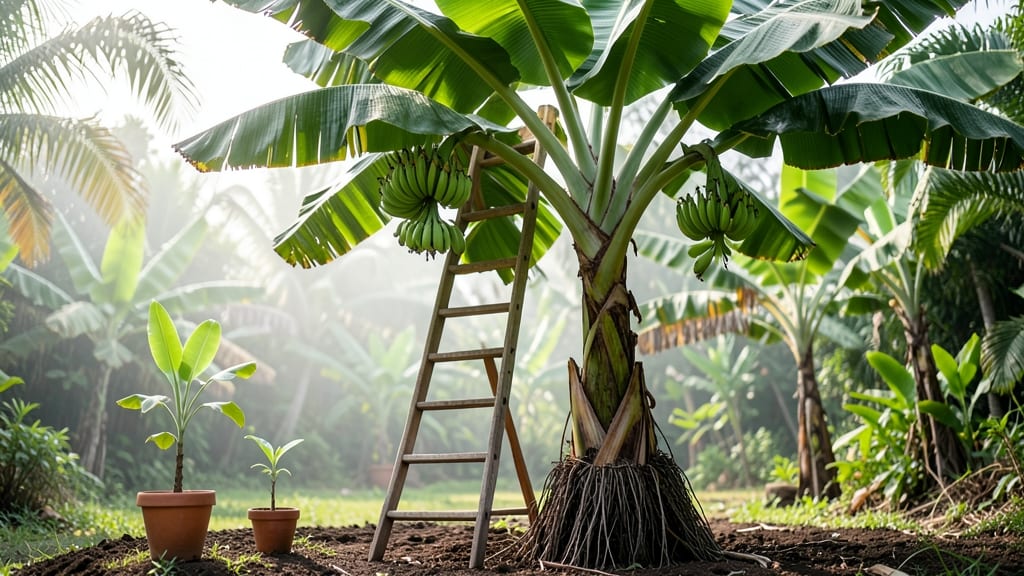
Growing a banana tree and watching how tall a banana tree grows means marveling as it stretches toward the sky—some varieties reach heights of 20 to 30 feet, while others stay compact at just 8 feet, all depending on the type and care you provide.
Imagine harvesting your own bananas straight from a towering tropical giant—but did you know some banana trees grow taller than a three-story building?
The height of your banana tree depends on its variety, climate, and care, and understanding these factors can mean the difference between a thriving plant and a struggling one.
Dwarf varieties like the Cavendish stay manageable for backyard gardens, while tropical giants like the Red Dacca can dominate your landscape.
Whether you're dreaming of a smaller, easier-to-care-for plant or embracing the drama of a monster-sized specimen, knowing the right conditions will help you grow the perfect banana tree for your space.
In this guide, I’ll break down the height ranges by variety, how climate zones affect growth, and the simple tricks to keep your banana tree at the perfect height—whether you want it towering or tamed.


Banana tree height by variety: dwarf vs. giant species compared
When you picture a banana tree, you might imagine a towering tropical giant reaching toward the sky—but not all banana varieties grow that way. The height of banana trees varies dramatically, from compact dwarf varieties perfect for containers to giant tropical species that can dwarf your backyard.
Choosing the right variety isn’t just about aesthetics; it affects fruit production, growing conditions, and even how you harvest those sweet clusters. Let’s break down the height ranges of popular banana varieties and what they mean for your garden.
Most banana trees belong to the Musa genus, and their mature height is one of the first things to consider when selecting a variety. Dwarf bananas typically stay under 10 feet tall, making them ideal for urban gardens or patios, while commercial varieties like Red Dacca can soar to 30 feet or more.
Even within dwarf categories, heights can vary—some barely reach waist height, while others stretch to your shoulders. Understanding these differences helps you plan for space requirements, support structures, and even winter protection in cooler climates.
Here’s the key distinction: edible banana varieties tend to grow taller to support heavier fruit bunches, while ornamental bananas (like the striking Red Dacca) prioritize bold foliage and striking flowers over massive fruit loads.
Some varieties, like the Lady Finger banana, strike a balance—growing to 12–18 feet while producing delicious, finger-length bananas. Below, we’ll compare the most popular varieties by height, growth habits, and fruit characteristics to help you pick the perfect fit for your space.
🌱
The Dwarf Cavendish is a favorite for home gardeners because it stays under 12 feet tall, making it perfect for container growing or small yards.
Its compact size also means it produces smaller fruit bunches, but the trade-off is easier maintenance and faster maturity—you can harvest in as little as 9–12 months.
If you’re growing bananas in USDA Zone 9b or cooler, dwarf varieties are your best bet for overwintering, as they’re less likely to suffer cold damage than their towering cousins.
On the other end of the spectrum, the Red Dacca is a showstopper with its 20–30-foot stature and vibrant red fruit.
While it’s stunning as an ornamental plant, its height requires serious planning—think sturdy supports, wide planting spaces, and possibly even trellises to handle the weight of its massive leaves and fruit. This variety thrives
Climate zones and banana tree growth: how temperature affects height
Your banana tree’s height potential is heavily influenced by USDA hardiness zones, with tropical varieties thriving in zones 10–11 and subtropical types adapting to zones 8–9b. In colder climates, growth slows dramatically, and winter dieback becomes a major risk.
Understanding these temperature thresholds helps you choose the right variety and care strategy for your location.
In USDA Zone 11, where temperatures rarely dip below 40°F (4°C), banana trees can reach their full mature height—often 20–30 feet for standard varieties like Red Dacca.
However, in Zone 9b, where winter lows can drop to 25–30°F (-4 to -1°C), growth stalls, and trees rarely exceed 12–15 feet unless protected. Container growing becomes essential in these areas.
Cold tolerance varies wildly between varieties. Tropical types like Cavendish struggle below 50°F (10°C), while subtropical varieties such as Bluggoe or Cardaba can handle brief dips to 28°F (-2°C). Even then, prolonged exposure to freezing temps will kill the pseudostem, forcing regrowth from the rhizome.
For gardeners in Zones 8–9b, container growing is your best bet to control height and protect roots. Use 15–20 gallon pots with drainage holes and move them indoors or under cover when temperatures drop below 50°F (10°C).
Mulching with straw or pine needles insulates roots and prevents temperature shocks that stunt growth.
Even in ideal climates, temperature fluctuations can limit height. For example, Lady Finger bananas in Zone 10 may only reach 12–15 feet if exposed to sudden cold snaps, while the same variety in Zone 11 can tower to 18 feet.
Monitor your local microclimate—urban areas with heat islands often support taller growth than rural zones just a few miles away.
If you’re aiming for compact banana trees, prioritize subtropical varieties and prune aggressively. Remove sucker growth regularly to redirect energy into fewer, sturdier stems. In colder zones, this strategy can keep your banana tree under 10 feet while still producing fruit—perfect for small gardens or patios.