
Trees
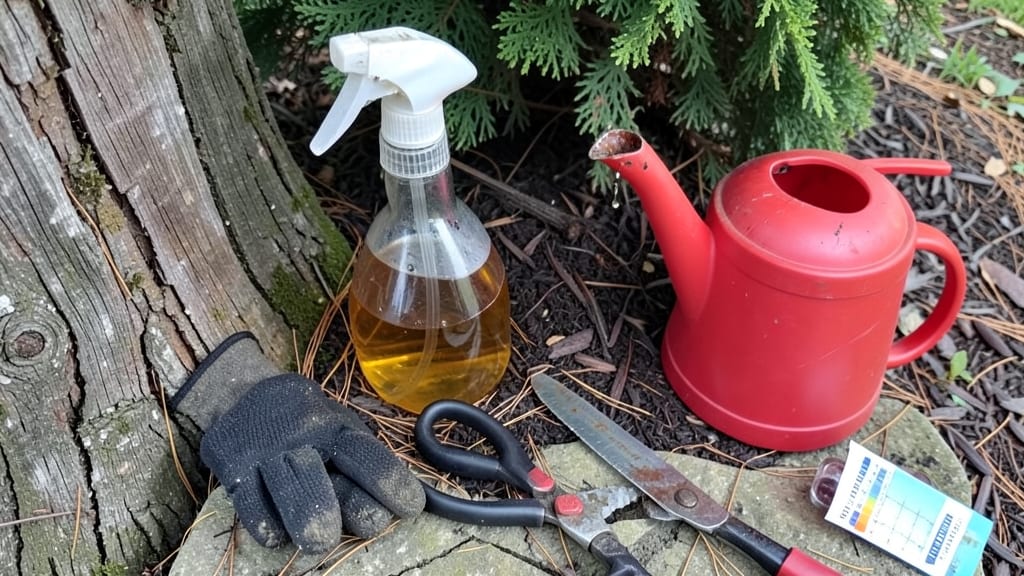
When your cypress tree is turning brown, there’s a treatment that can save it—whether it’s Seiridium canker or environmental stress—but you’ve got to act fast. 🌲 I’ve nursed back multiple cypress trees using a simple three-step approach that stops the spread and restores growth.
The key is acting fast, whether it’s pruning dead branches, applying the right treatment, or giving the tree a little extra TLC to bounce back.
Most brown spots start with fungal spores hiding in cracks or old wounds, thriving when the tree is already stressed by drought, poor drainage, or overwatering. My first recovery effort failed because I didn’t address both the fungus and the underlying conditions—so I learned to tackle it holistically.
You’ll need basic tools (pruners, fungicide, mulch) and about 2 hours on a weekend morning to turn things around.
The results? Within 4-6 weeks, you’ll see fresh green growth pushing through, and the tree’s structure will strengthen. The secret isn’t just the treatment—it’s the follow-up: consistent watering, proper spacing for airflow, and monitoring for new stress signs.
Even severely affected trees can make a full comeback with patience and the right care.
This method works for both Leyland cypress and bald cypress, though mature trees might need professional help for severe cases. Let’s get your tree back to its vibrant self—step by step.
Root Causes Of Browning Cypress
When your cypress tree starts turning brown, it’s rarely a random event—it’s usually a sign of stress from one or more specific causes. Understanding the why behind the browning is the first step to restoring your tree’s vibrant green health.
Below, we break down the most common culprits, explained in clear scientific terms so you can diagnose the issue accurately.
Cypress trees are resilient, but prolonged heatwaves or drought conditions can push them over the edge. When soil moisture drops below 30-40% field capacity, roots struggle to absorb water efficiently. This triggers a physiological response called water deficit stress, causing:
- Leaf scorch: Brown edges or tips on needles due to dehydration.
- Premature needle drop: The tree sheds older needles to conserve energy.
- Stunted growth: New growth may appear stunted or discolored.
Key indicator: Browning starts at the tips of branches and moves inward, often worse on the south or west sides of the tree (exposed to direct sunlight).
While drought is a threat, too much water can be just as damaging. Cypress trees thrive in well-draining soils, and when roots sit in soggy conditions, they suffocate. This leads to:
- Root rot: Fungi like Phytophthora thrive in waterlogged soil, attacking roots and cutting off nutrient flow.
- Chlorosis (yellowing): Brown patches appear after yellowing because the tree can’t process nutrients.
- Weakened structure: Roots decay, making the tree more susceptible to wind damage.
Key indicator: Browning occurs low on the tree (near the trunk) and may smell musty or rotten. Soil around the base stays permanently damp even days after rain.
Fungal diseases are the #1 cause of cypress browning, with Seiridium canker and Diplodia tip blight being the most aggressive. These fungi exploit stress (like drought or poor pruning) to spread:
🍄 Seiridium Canker (The Stealth Killer)
This fungal pathogen enters through pruning wounds or natural bark cracks. It blocks the tree’s vascular system, causing:
- Brown, sunken cankers: Dark, dead patches on branches or trunk.
- Dieback: Branches turn brown and die from the top down.
- Spores: Pinkish-orange fungal growth in wet conditions.
Key indicator: Browning starts at branch tips and spreads inward, often with oozing sap or cracked bark.
🌿 Diplodia Tip Blight (The Needle Burner)
This fungus targets new growth, causing:
- Brown, blighted tips: Needles turn brown and brittle, then drop.
- Black pycnidia: Tiny black dots appear on infected needles (a surefire sign).
- Stunted shoots: New growth fails to emerge or dies quickly.
Key indicator: Browning is concentrated at the ends of branches, often with a banded appearance.
Insects like cypress bark beetles and spider mites can turn your tree brown by disrupting its ability to photosynthesize or transport water. Here’s how:
- Bark beetles: Larvae burrow under bark, creating S-shaped galleries that girdle branches. This cuts off nutrient flow, leading to sudden browning of entire branches.
- Spider mites: These tiny pests suck sap from needles, causing them to yellow, then brown. Severe infestations create a stippled appearance.
- Scale insects: They excrete honeydew, which attracts sooty mold—a black fungus that smothers needles, leading to browning.
Key indicator: Look for tiny holes in bark (beetles), fine webbing (mites), or black sooty residue on needles (scale).
Cypress trees need a balance of nitrogen, iron, and manganese to stay green. Deficiencies cause browning in distinct patterns:
- Nitrogen deficiency: Older needles turn yellow between veins, then brown. New growth is stunted.
- Iron deficiency: Young needles stay yellow but may develop brown tips as the problem worsens.
- Manganese deficiency: Browning appears as interveinal brown patches (between leaf veins).
Key indicator: Browning is uniform across the tree (not patchy) and often paired with slow growth or small, sparse needles.
Pro Tip: 💡 Use a soil test kit to confirm deficiencies—over-fertilizing can burn roots, making browning worse!
Revive Your Cypress Tree Now
Brown leaves on your cypress tree? Don’t panic—most causes have quick fixes! Below, we map the most common reasons your tree is turning brown to step-by-step solutions so you can restore its lush green glow. We’ve also included prevention tips to keep your tree thriving long-term.
Brown patches, oozing sap, or dead branches? Fungal infections are likely the culprit. Here’s how to treat them:
🔥 Step 1: Prune the Problem Areas
- 🔪 Cut out infected branches at least 6 inches below the browned area using sterilized pruners (wipe with rubbing alcohol between cuts).
- 🗑️ Dispose of infected branches in a sealed bag—do not compost them.
- ⚠️ Warning: Avoid pruning during wet weather to prevent spreading spores.
🍳 Step 2: Apply a Fungicide
- Choose a copper-based fungicide (like Copper Sulfate) or a broad-spectrum fungicide (like Neem Oil or Propiconazole).
- 💡 Pro Tip: Mix 1 tsp of baking soda + 1 quart of water + a few drops of dish soap for a DIY antifungal spray (test on a small branch first).
- Spray thoroughly on both sides of leaves and bark, focusing on wounds or cankers.
Reapply every 7–14 days until new growth appears.
🌡️ Step 3: Improve Airflow & Reduce Moisture
- ✂️ Thin out dense branches to allow sunlight and air circulation.
- 💧 Water at the base (not overhead) to keep foliage dry.
- 🌿 Mulch around the tree (2–4 inches deep) with wood chips to prevent soil-borne fungi.
🔄 Prevention:
- 🌧️ Water early in the day so leaves dry before nightfall.
- 🛡️ Apply preventative fungicide in spring and fall (before rainy seasons).
- 🚫 Avoid wounding the tree—use proper pruning techniques to prevent entry points for fungi.
Yellowing leaves, soft bark, or a musty smell at the base? Your cypress may be drowning.
💧 Step 1: Check the Soil
- Stick your finger 6 inches deep—if it’s soggy, you’re overwatering.
- 📏 Dig a small trench around the tree to see if water drains within 24 hours. If not, improve drainage.
🏗️ Step 2: Fix Drainage Issues
- 🪓 Amend the soil with sand or perlite (mix 50/50 with existing soil).
- 🚜 Consider raised beds if your yard has clay-heavy or compacted soil.
- 🌊 Install a French drain if water pools around the base.
🔄 Step 3: Adjust Watering Habits
- 💧 Water deeply but infrequently—1–1.5 inches per week (check with a rain gauge).
- 🌧️ Use drip irrigation instead of sprinklers to avoid wetting leaves.
- 🚫 Stop watering entirely if the ground is already saturated.
🔄 Prevention:
- 🌱 Plant cypress in well-draining soil (avoid low-lying areas).
- 🌿 Choose the right location—cypress trees hate "wet feet."
- 🌡️ Monitor soil moisture with a moisture meter (ideal range: 40–60% moisture).
Brown, crispy edges on leaves? Your cypress might be thirsty or sunburned.
💦 Step 1: Deep Watering
- 💧 Water slowly (1–2 hours) once a week during dry spells.
- 🌊 Use a soaker hose to deliver water directly to the roots.
- ⏰ Water in the early morning to reduce evaporation.
🌳 Step 2: Provide Temporary Shade
- 🏡 Use shade cloth (30–50%) if your tree is in full sun.
- 🌿 Plant taller trees or shrubs to the south or west for natural shade.
- 🪴 Move potted cypress to a slightly shadier spot for a few weeks.
🌱 Step 3: Mulch Properly
- 🍃 Apply 2–3 inches of mulch (wood chips or pine straw) 3 inches away from the trunk.
- 🚫 Avoid piling mulch against the trunk—this traps moisture and invites rot.
🔄 Prevention:
- 🌧️ Water deeply before droughts to build root resilience.
- 🌿 Choose a location with partial shade if you’re in a hot, dry climate.
- 💧 Use drought-resistant mulch like gravel or pine needles in arid areas.
Holes in leaves, sawdust-like frass, or tiny bugs crawling on branches? Pests like bagworms, spider mites, or scale insects could be the issue.
🕷️ Step 1: Identify the Pest
- 🔍 Check for:
- Bagworms (small bags hanging from branches).
- Spider mites (tiny webs on undersides of leaves).
- Scale insects (brown bumps on stems).
🧴 Step 2: Apply Natural or Chemical Controls
| Pest | Treatment |
|---|---|
| Bagworms | Handpick bags or spray with Bt (Bacillus thuringiensis). |
| Spider Mites | Spray with neem oil or insecticidal soap. |
| Scale Insects | Scrape off with a stiff brush or use horticultural oil. |
🌿 Step 3: Encourage Beneficial Insects
- 🐞 Plant companion plants like marigolds or lavender to attract ladybugs and lacewings.
- 💧 Install a bird feeder—birds love eating bagworms!
🔄 Prevention:
- 🌱 Inspect trees regularly (especially in spring and summer).
- 🚫 Remove fallen leaves where pests hide.
- 🌿 Use reflective mulch (like aluminum foil) to deter some pests.
🎯 Final Tip: If your cypress is severely damaged, don’t hesitate to consult an arborist—some issues (like root rot) may require professional intervention.
With these targeted treatments, your cypress should bounce back to its healthy, vibrant green in no time! 🌿✨
Frequently asked questions
Why does my cypress tree turn brown in patches?
Patchy browning usually signals fungal infections like Seiridium canker or Diplodia tip blight. These thrive when your tree is stressed from drought, poor pruning, or compacted soil. Check for sunken cankers or black pycnidia (tiny dots) on needles—these are dead giveaways.
Can I save a cypress tree with severe browning?
Yes, but act fast! Start by pruning dead branches 6+ inches below the browning, then apply a copper-based fungicide (like Copper Sulfate). For advanced cases, consider a professional arborist—some issues (like root rot) need deeper intervention.
Is overwatering worse than underwatering for cypress trees?
Cypress trees hate soggy soil—overwatering causes root rot (fatal if ignored), while drought just stresses them. Test drainage: If water pools after 24 hours, amend soil with sand or perlite. Aim for 1–1.5 inches of water weekly, not daily drips.
What’s the fastest way to stop browning from spreading?
Combine pruning (remove infected branches immediately) with a baking soda spray (1 tsp baking soda + 1 quart water + dish soap). Reapply every 7–14 days and mulch with wood chips to block fungal spores. Airflow is key—thin dense branches to let sunlight dry foliage.
Can I use household items to treat browning?
Yes! Mix 1 tsp baking soda + 1 quart water + a drop of dish soap for a DIY antifungal spray. For pests, try neem oil (diluted) or insecticidal soap. Just test sprays on a small branch first—some trees are sensitive.