
Pests and Diseases
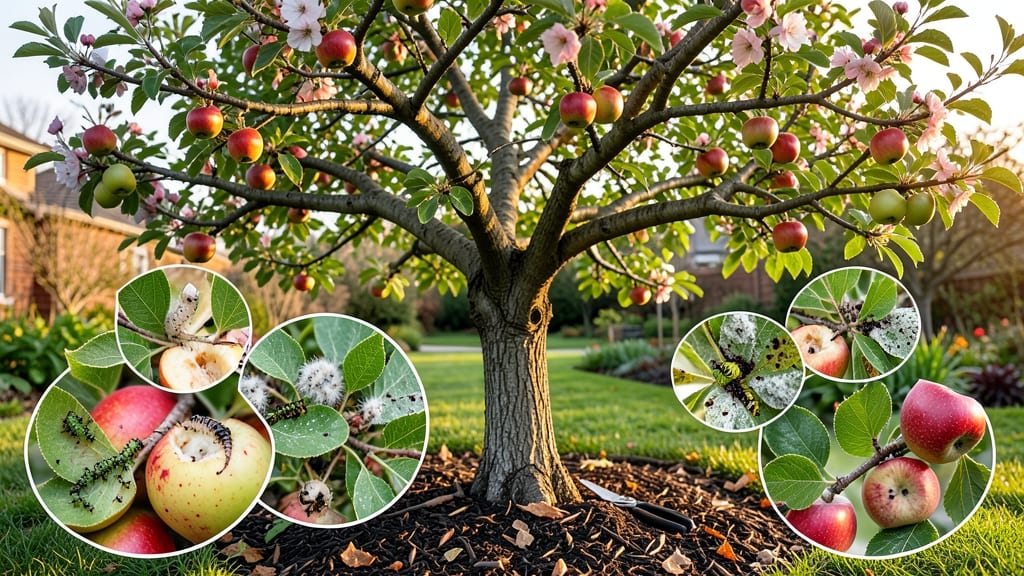
Your apple tree’s leaf spot and borer damage don’t have to mean the end of your harvest—even when battling the most common apple tree pests and diseases. 🌳 I’ve nursed back trees with blackened leaves and hollowed trunks using simple, organic methods—and you can too, without harsh chemicals that harm pollinators or future fruit.
The real culprits are often hidden: codling moths tunneling into apples, aphids sucking sap, or fungal spores riding the wind. But here’s the good news—most damage happens in predictable patterns, so you can outsmart it with the right timing and tools.
Think of it like a game of chess, not a losing battle.
By next spring, your tree could be thriving again—with fewer holes in the bark, fewer spots on the leaves, and apples that stay firm until you’re ready to pick. The key is acting early, using nature’s own defenses, and giving your tree the support it needs to bounce back.
Whether you’re dealing with a young sapling or a mature orchard, these organic fixes work for both. Let’s get your tree back on track—without the guesswork or the guilt.
Root Causes Of Apple Tree Stress
Apple trees, like all living organisms, are vulnerable to pests and diseases when their natural defenses weaken. Understanding why these issues arise is the first step toward prevention and organic treatment. Below, we break down the key factors that create the perfect storm for infestations and infections in your orchard.
Healthy soil is the foundation of a thriving apple tree. When soil lacks essential nutrients—such as nitrogen, phosphorus, potassium, or micronutrients like zinc or boron—the tree struggles to grow strong roots, bark, and leaves.
This weakness makes it an easy target for pests like codling moths and diseases like apple scab.
- 🔬 How it happens: Compacted or poorly drained soil restricts root growth, reducing the tree’s ability to absorb water and nutrients. Over time, this stress manifests as yellowing leaves, stunted growth, and thin bark—all of which invite pests and pathogens.
- 💡 Pro tip: Test your soil annually. Aim for a pH between 6.0 and 7.0 for optimal nutrient uptake. Amend soil with compost or organic matter to improve structure and microbial activity.
Water is life, but too much—or too little—of it disrupts your apple tree’s natural balance. Overwatering creates soggy conditions that encourage fungal growth (like Venturia inaequalis, the cause of apple scab), while drought stress weakens the tree, making it susceptible to borers and mites.
- 🔬 How it happens:
- Overwatering: Saturated soil cuts off oxygen to roots, leading to root rot and fungal infections. Pests like apple maggot flies thrive in damp, shaded environments.
- Underwatering: Drought-stressed trees produce weak, brittle wood that borers (e.g., Anobium punctatum) easily penetrate. Leaves may curl or drop prematurely, signaling distress.
- 💡 Pro tip: Water deeply 1–2 times per week (depending on climate) and ensure proper drainage. Mulch around the base to retain moisture without suffocating roots.
Apple trees have a protective layer called the bark and cuticle that shields them from invaders. When this barrier is broken—through pruning cuts, hail, or animal activity—pests and diseases slip in effortlessly.
- 🔬 How it happens:
- Improper pruning: Jagged cuts or leaving stubs create entry points for bacterial canker or wood borers. Always prune during the dormant season and use clean, sharp tools.
- Mechanical injury: Hail, lawnmowers, or even wildlife (like deer rubbing against the trunk) can strip bark, exposing the tree to Nectria canker or fire blight.
- 💡 Pro tip: Seal pruning wounds with organic tree paint (like copper-based sprays) if your region is prone to canker diseases. Protect young trees with tree guards.
While synthetic pesticides can kill pests, they often create a vacuum effect: by wiping out natural predators (like ladybugs or parasitic wasps), they allow secondary pests to explode in numbers. Additionally, chemical residues can weaken the tree’s immune response.
- 🔬 How it happens:
- Disrupting beneficial insects: Broad-spectrum pesticides kill aphid predators, leading to worse infestations later. For example, spider mites may surge if their natural enemies (like predatory mites) are eliminated.
- Chemical burn or stress: Overapplication of fungicides (e.g., copper sprays) can damage leaves, making them more susceptible to sooty mold or powdery mildew.
- 💡 Pro tip: Rotate organic sprays (neem oil, horticultural oil, or Bacillus thuringiensis for caterpillars) and introduce beneficial insects like Trichogramma wasps to control pests naturally.
Apple trees are sensitive to extreme temperatures, humidity, and sudden weather shifts. These conditions don’t just stress the tree—they also create ideal conditions for pests and diseases to thrive.
- 🔬 How it happens:
- High humidity: Fungal spores (like those causing apple scab) germinate and spread rapidly in moist air. Wet foliage for prolonged periods is a red flag.
- Heatwaves or drought: Stressed trees produce sticky honeydew, attracting sooty mold and aphids. Weakened canopies also fail to self-clean, trapping debris where diseases fester.
- Late frosts: Damaged blossoms reduce fruit set, diverting the tree’s energy toward repairing damage—leaving it vulnerable to fire blight.
- 💡 Pro tip: Plant apple varieties suited to your hardiness zone. Use row covers for frost protection and ensure good airflow between trees to reduce humidity-related diseases.
By addressing these root causes—soil health, water balance, physical protection, ecological harmony, and climate resilience—you’ll fortify your apple tree against the most common pests and diseases. Prevention is always easier (and more cost-effective) than treatment!
Fixing Apple Tree Woes Naturally
Now that you know what’s attacking your apple tree, let’s roll up our sleeves and get it back to thriving! 🌿🍏 Most of these problems can be tackled with organic, low-toxicity solutions that won’t harm pollinators or your family.
Below, we’ve mapped out practical fixes for each pest or disease, along with prevention tips to keep your tree healthy long-term.
Cause: Venturia inaequalis (apple scab) or other leaf spot fungi Fix: Act fast—fungal spores spread quickly!
🔥 Remove Infected Debris Immediately
- Rake up and destroy fallen leaves, mummified fruit, and twigs (don’t compost them!).
- Bag and dispose of infected material in the trash—do not leave it near the tree.
🍳 Spray with Baking Soda or Copper Fungicide
- DIY baking soda spray (safe, cheap, and effective):
- Mix 1 tbsp baking soda + 1 tbsp vegetable oil + 1 tsp dish soap in 1 gallon of water.
- Spray thoroughly on both sides of leaves and the tree trunk.
- Reapply every 7–10 days during wet or humid weather.
- For severe cases, use an organic copper fungicide (follow label instructions).
👨🍳 Improve Airflow & Reduce Moisture
- Prune to open up the canopy—fungi love tight, damp spaces.
- Water at the base (not overhead) to keep leaves dry.
- Avoid overhead irrigation (drip systems or soaker hoses work best).
🌡️ Prevent Future Outbreaks
- Plant resistant varieties like ‘Liberty,’ ‘Enterprise,’ or ‘Akane’ if scab is recurrent.
- Apply dormant oil in late winter to smother overwintering spores.
- Mulch properly (2–4 inches of organic mulch) to improve drainage.
Cause: Larvae burrowing into fruit (codling moth) or adult flies laying eggs (apple maggot) Fix: Trapping + organic sprays to break their life cycle.
🔪 Set Up Pheromone Traps Early
- Hang red delta traps (for codling moth) before blooms open (late spring).
- Apple maggot traps (yellow sticky traps or commercial lures) should go up after petal fall.
- Check traps weekly and replace lures as needed.
🥘 Use Kaolin Clay or Insecticidal Soap
- Surround WP (kaolin clay) creates a protective film that deters moths and maggots.
- Apply every 10–14 days starting at petal fall.
- Insecticidal soap (like Safer’s Soap) can be sprayed directly on larvae (but must make contact).
⏰ Time Your Sprays Right
- Codling moth: Spray every 7–10 days from petal fall to fruit set, then again after harvest to catch late hatchers.
- Apple maggot: Spray every 5–7 days from June to August (peak flight time).
🎯 Prevent Egg Laying
- Cover young fruit with floating row covers if infestations are severe.
- Pick and destroy any wormy apples immediately (don’t leave them on the tree or ground).
- Drop cloths under the tree can help catch fallen fruit before pests spread.
Cause: Semiothisa depravata (apple tree borer) or Anobium (wood borers) tunneling under bark Fix: Early detection + manual removal is key—these pests are sneaky!
🔍 Inspect for Sawdust & Holes
- Look for:
- Sawdust-like frass at the base of the trunk or branches.
- Small holes (1/8” wide) with exit holes nearby.
- Oozing sap or peeling bark (signs of tunneling).
- Tap the trunk—a hollow sound means borers are inside.
👨🍳 Manually Remove Larvae (Best Method)
- Use a screwdriver or ice pick to pry open the bark near the hole.
- Fish out larvae (they’re 1–1.5” long, white, and worm-like).
- Fill holes with sand or wood putty to prevent reinfestation.
🥘 Apply Beneficial Nematodes or Mineral Oil
- Beneficial nematodes (Heterorhabditis bacteriophora) drown larvae when applied to soil.
- Mix with water and pour around the base in early spring or fall.
- Dormant oil spray (in late winter) smothers eggs and young larvae.
🌡️ Strengthen the Tree’s Defenses
- Water deeply during droughts—stressed trees attract borers.
- Apply mulch (4–6 inches) to insulate roots and retain moisture.
- Avoid wounding the trunk (e.g., from lawnmowers or string trimmers).
No matter the problem, healthy trees resist pests and diseases better. Here’s how to future-proof your apple tree:
| Do This ✅ | Avoid This ❌ |
|---|---|
| Plant in full sun (6+ hours/day) | Overcrowding (keep 15–20 ft from other trees) |
| Choose disease-resistant varieties | Ignoring pruning (dead wood = pest hotels) |
| Mulch properly (2–4” of organic mulch) | Over-fertilizing with nitrogen (weakens disease resistance) |
| Monitor regularly (check leaves, fruit, trunk) | Skipping dormant sprays (prevents early infestations) |
| Encourage beneficial insects (ladybugs, lacewings) | Using chemical pesticides (kills good bugs too!) |
Pro Tip: 💡 The best defense is a strong offense! A well-maintained apple tree with good airflow, proper watering, and regular checks will fight off 80% of pests naturally. If you catch a problem early, most organic fixes work without harsh chemicals.
Now grab your gloves, mix up that baking soda spray, and give your tree the TLC it deserves—your future apple harvest will thank you! 🍏🌟
Frequently asked questions
What’s the first sign my apple tree has apple scab?
Look for olive-brown spots with yellow halos on leaves—these appear 2-3 weeks after wet spring weather. Check the undersides of leaves too, as scab often starts there. If spots develop tiny black dots (fungal spores), it’s confirmed.
Can I save my tree if borers are already tunneling?
Yes, but act fast! First, pry out larvae (they’re 1-1.5” white worms) with a screwdriver, then fill holes with sand or wood putty. Apply beneficial nematodes around the base to kill remaining eggs. Severe cases may need a professional arborist.
How do I tell codling moth damage from apple maggot?
Codling moths create large, irregular tunnels inside fruit (often near the core), while apple maggots make small, round holes near the fruit’s surface. Check for frass (brown sawdust-like poop) around holes—codling moths leave more of it.
Is neem oil safe to use when bees are active?
Neem oil is low-toxicity to bees if used correctly—apply only after sunset when pollinators aren’t active. Avoid spraying directly on blooms, and never mix with synthetic pesticides. For extra safety, use kaolin clay instead during bloom time.
Why do some leaves turn black while others stay green?
This is often fire blight, caused by Erwinia amylovora. Blackened, shepherd’s crook-shaped branches with oozing sap confirm it. Prune 6 inches below infected areas with clean tools, then sterilize cuts with copper fungicide.