
Pruning
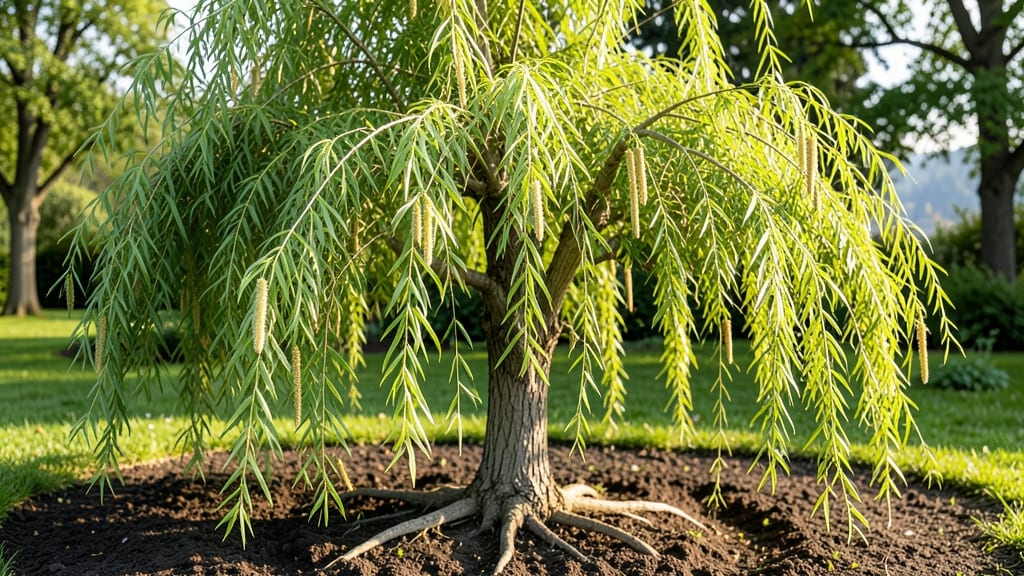
Spring is when your willow tree wakes up with explosive energy—those weeping branches need shaping before they get too heavy. 🌿 I’ve learned the hard way that waiting too long means wrestling with tangled, overgrown limbs instead of guiding them into a graceful shape.
The key is timing: prune just as the buds swell but before new leaves unfurl, usually in late March or early April, depending on your zone.
You’ll want to remove about 25-30% of the previous year’s growth, focusing on branches that cross or rub against each other. Willow trees respond well to pruning, so don’t be afraid to cut back to strong, outward-facing buds—they’ll send out fresh, vibrant shoots by summer.
The goal is to open up the canopy for better airflow and sunlight, which keeps the tree healthy and prevents those pesky fungal issues.
What you’ll end up with is a willow that looks lighter and more balanced, with new growth that’s straighter and fuller. The catkins—those fuzzy, early-spring flowers—will stand out against fresh green leaves, and the tree will put all its energy into strong, sturdy branches instead of weak, sprawling ones.
It’s the difference between a willow that sags under its own weight and one that stands tall and proud.
This works for both weeping willows and upright varieties, though weeping types need a little more frequent pruning to maintain their signature shape. If you’re in a windy area, pruning now also helps the tree withstand storms better. Ready to give your willow the fresh start it deserves?
📚 In This Guide
- What you need
- Instructions
- Tips and common mistakes
- Wrapping up and next steps
What you need
- ● Pruning shears: Bypass pruners (for cuts 1 pair. Choose sharp, stainless steel blades for clean cuts.
- ● Loppers: For branches ½–2 inches thick – 1 pair. Look for long handles (30+ inches) for reach.
- ● Pruning saw: For thick branches (2+ inches) – 1. Opt for a bow saw or curved blade for willow’s flexibility.
- ● Gloves: Heavy-duty, cut-resistant (e.g., leather or Kevlar) – 1 pair. Willow sap can irritate skin!
- ● Disinfectant: 70% rubbing alcohol or bleach solution (1:9 bleach:water) – small bottle. Sanitize tools between cuts to prevent disease.
- ○ Pruning sealant: Tree wound paint (optional but recommended for large cuts > 2 inches) – small jar.
- ● Ladder or step stool: Sturdy, non-slip – 1. Ensure it’s taller than your tree’s reach (willows can grow 30+ feet!).
- ● Heavy-duty trash bags: For debris removal – 2–3. Willow leaves and branches are wet and heavy!
- ● Eye protection: Safety goggles (to shield from sap and debris).
- ● Long sleeves/pants: Wear closed-toe shoes and long clothing to avoid scratches.
- ● First-aid kit: Include antiseptic wipes and bandages (willow sap can cause rashes).
- ● Weather check: Prune on a dry, calm day (avoid wind or rain).
- ● Mark your tools: Use colored tape on handles to distinguish shears, loppers, and saws.
- ● Bring water: A hose or bucket to rinse off sap sticky on tools/gloves.
- ● Work with a buddy: Willow branches are heavy when wet—team up for large cuts!
Step-by-step guide to pruning willow trees in spring
Spring is the perfect time to shape your willow tree for healthy growth—here's how to do it right.
☀️ Step 1: Time Your Pruning for New Growth
Prune your willow tree as soon as new growth begins in early spring, typically when you see 1-2 inch long shoots emerging from the branches. This timing ensures you remove dead wood while encouraging fresh, vigorous growth. Avoid pruning too early—willows are still dormant, and late pruning after leaves appear stresses the tree.
Check the buds along the branches for swelling, which signals the tree is waking up. Willow trees respond best to pruning when they're actively growing, so don't wait until summer heat sets in. If you missed early spring, wait until late spring when leaves are fully unfurled but before the tree puts all its energy into new foliage.
✂️ Step 2: Remove Dead, Weak, or Crossing Branches
Start by cutting out any dead or diseased branches first—these are easy to spot as they're brown, brittle, or lack leaves. Use clean, sharp pruners to make a smooth cut just outside the branch collar (the swollen area where the branch meets the trunk). This prevents damage to the tree's healing tissue.
Next, remove weak or crossing branches that rub against each other. Crossed branches compete for sunlight and nutrients, weakening both. Cut one of the branches at its base, leaving the stronger one. Look for branches growing inward or downward—they're often the culprits. Thin out crowded areas to improve airflow and reduce disease risk.
🌿 Step 3: Shape the Tree for Balance and Structure
Step back and assess the tree's overall shape. Willow trees naturally grow long, arching branches, but you can guide their form by pruning selectively. Focus on opening the center of the tree to let sunlight reach the inner branches. Remove any branches that grow straight up or block light from penetrating the canopy.
For a more natural look, avoid heavy pruning—willows thrive when you only remove no more than 20-25% of the foliage in one season. Cut back overgrown branches to a strong lateral branch or bud, making your cuts at a 45-degree angle just above an outward-facing bud. This encourages new growth in the right direction and maintains the tree's graceful silhouette.
💧 Step 4: Clean Up and Protect the Tree
After pruning, rake up and dispose of all debris, especially diseased branches. Willow trees are prone to fungal issues, so removing infected material prevents the spread. Sterilize your pruners with rubbing alcohol between cuts if you're working on multiple trees or branches with signs of disease.
Apply a thin layer of mulch around the base of the tree (but keep it 3-4 inches away from the trunk) to retain moisture and regulate soil temperature. Water deeply after pruning to help the tree recover, especially if you've made large cuts. Monitor the tree for new growth in the coming weeks—a healthy willow will sprout fresh leaves within 4-6 weeks of proper pruning.
Tips & tricks for perfect willow tree pruning in spring
These practical insights will help you prune your willow tree like a pro—avoiding common mistakes that can stress your tree.
Timing is Everything: Look for those 1-2 inch shoots as your clear signal to prune. I learned this the hard way—pruning too early when buds are still dormant can shock the tree, while waiting too late stresses it as it focuses on new foliage. Early spring is your sweet spot, right when those tiny green shoots appear. If you miss the window, late spring works too, but don't wait until summer heat sets in.
Cutting Technique Matters: Always make your cuts just outside the branch collar at a 45-degree angle—this is where the tree's natural healing begins. I see so many people cutting too close to the trunk or making jagged cuts that create wounds. For larger branches, consider making a three-cut technique: first an undercut, then a top cut, and finally a clean removal. This prevents tearing the bark.
Shape with Purpose: Remember the 20-25% foliage rule—this is your maximum safe pruning amount. I always step back and visualize the tree's natural shape before making cuts. Focus on opening the center to improve airflow, which reduces fungal risks. Willow trees have a natural grace, so avoid heavy pruning that can make them look unnatural. Think of it as sculpting rather than hacking.
Aftercare Prevents Problems: That 3-4 inch mulch distance from the trunk is crucial—too close can cause rot. I also recommend sterilizing your pruners between cuts if you're working on multiple trees, especially if you notice any signs of disease. After pruning, give your tree a deep watering to help it recover, particularly if you've made large cuts. You'll notice new growth appearing within 4-6 weeks if everything's done right.
Pro Tips for Willow Tree In Spring
- These practical insights will help you prune your willow tree like a pro—avoiding common mistakes that can stress your tree.
- Timing is Everything: Look for those 1-2 inch shoots as your clear signal to prune.
- Cutting Technique Matters: Always make your cuts just outside the branch collar at a 45-degree angle—this is where the tree's natural healing begins.
Frequently asked questions
about willow tree pruning in spring—because every gardener deserves clarity! Here’s what you need to know before diving in.When is the exact best time to prune a willow tree in spring?
The ideal window is late winter to early spring (February–March in most U.S. zones), before buds swell but after hard frosts. For weeping willows, avoid pruning too early—wait until sap flow slows (mid-to-late spring) to prevent excessive bleeding. Pro tip: Check your local frost dates for precision!
How much can I cut back a willow tree without harming it?
Willows are resilient but need balance. For young trees, remove up to 25–30% of the canopy; for mature willows, limit pruning to 10–20% per year. Avoid cutting into old wood (gray/brittle branches)—focus on live growth (green, flexible stems). Warning: Over-pruning weakens structural integrity.
What if it rains after I prune? Will that ruin my efforts?
Rain won’t ruin pruning, but it can slow healing. Prune on a dry, calm day to let cuts seal faster. If rain follows, monitor for fungal issues (like canker) and apply pruning sealant (optional) to large cuts. Bonus: Wet weather helps distribute nutrients to new growth!
Can I prune a willow tree in spring if it’s diseased or dead?
Yes, but strategically. Remove all dead/diseased wood first (sterilize tools with rubbing alcohol). For severe issues (e.g., willow blight), prune below the damage by 6–12 inches. Act fast: Diseased willows spread pathogens—clean up debris immediately!
Are there alternatives to pruning willow trees in spring?
If pruning feels overwhelming, try selective thinning (removing only crowded branches) or coppicing (cutting stems to ground level for regrowth). For non-invasive options, mulching or fertilizing can support health without tools. Note: Willows thrive on pruning—skipping it may lead to weak, leggy growth.
Why is my willow tree bleeding sap after pruning?
Sap bleeding is normal but can be reduced by pruning on cooler days (below 60°F) and sealing cuts with pruning paint (for cuts >2 inches). Avoid pruning during active sap flow (early spring). Quick fix: Apply a thin layer of petroleum jelly to large cuts to minimize mess.
Wrapping up and next steps
Spring is the perfect time to give your willow tree the care it deserves—pruning now sets the stage for vibrant growth, healthier branches, and even more stunning foliage this season. 🌿 By following the right techniques, you’re not just trimming; you’re investing in your tree’s long-term health and beauty.
Ready to see the difference? Grab your tools, step outside, and get pruning! Start small—even a single branch makes a difference—and watch your willow thrive.