
Pests and Diseases
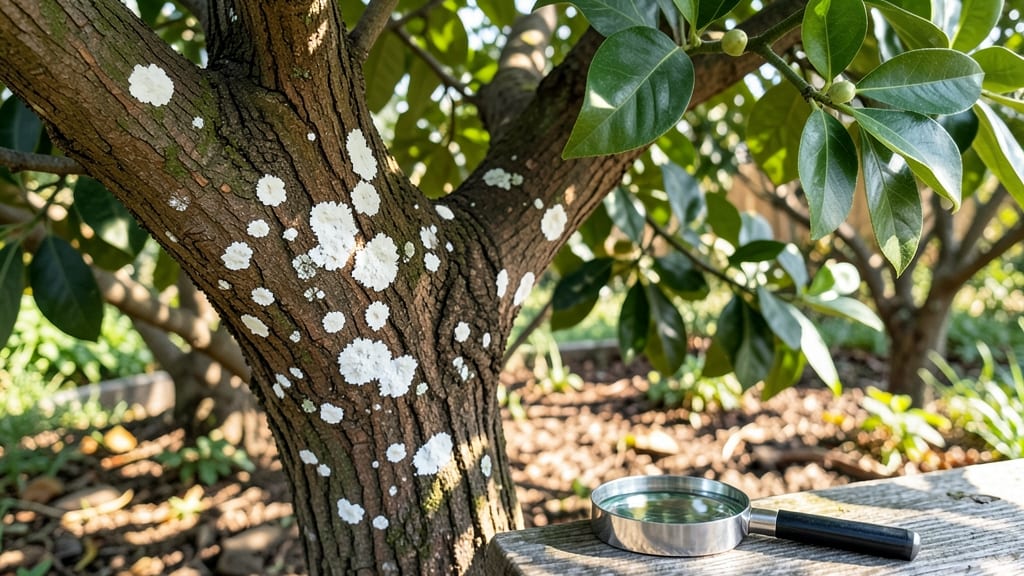
Those chalky white spots on your orange tree trunk aren’t just unsightly—they’re a warning sign of fungal scab, a stubborn citrus disease that can weaken your tree if ignored. 🌿 I’ve battled this exact problem with my Meyer lemon, and the key is catching it early before the spots spread like wildfire across the bark and leaves.
Most home gardeners assume these spots are harmless lichen or scale insect waste, but citrus scab thrives in warm, humid conditions—exactly what our orange groves provide. The fungus feeds on the tree’s protective oils, creating those rough, crusty patches that eventually crack and ooze.
Left untreated, it can stunt growth and reduce fruit quality, turning your dream harvest into a bitter disappointment.
Here’s the good news: you can stop it in its tracks with a mix of pruning, copper-based fungicides, and organic remedies like neem oil. Within 2-3 weeks of consistent treatment, you’ll see fresh green growth pushing through, and those white spots will start to fade.
The trick is acting before the fungus moves into the leaves—when the bark is still the main battleground.
Prevention is where the real game-changer lies. A 2-inch layer of mulch around the base keeps soil moisture steady (but not soggy), and regular inspections after rainstorms let you catch new spots before they take hold.
Trust me, once you’ve saved a tree from fungal scab, you’ll spot those first warning signs a mile away.
Hidden Causes Behind Trunk Spots
White spots appearing on your orange tree trunk aren’t just random blemishes—they’re often signals from nature’s hidden troublemakers. Understanding the root causes helps you take precise action before the problem spreads.
Let’s break down the most common culprits, from microscopic invaders to environmental stressors, and why they target your citrus tree.
Fungal diseases are the #1 reason for white spots on tree bark, and they thrive in damp, humid conditions. Two of the most aggressive offenders are:
- Citrus Scab (Elsinoë spp.)
- How it works: This fungus creates raised, white-to-gray spots that may crack open, revealing dark, scab-like lesions. It attacks young shoots, leaves, and bark, weakening the tree’s defenses.
- Why it happens: Spores spread via wind, rain, or splashing water. Warm, wet springs (60–80°F) are prime breeding grounds. Overhead irrigation or dense foliage traps moisture, giving spores the perfect environment to germinate.
- Actionable clue: Look for puffy, crusty spots that feel rough to the touch, often surrounded by yellowing leaves.
- Powdery Mildew (Oidium spp.)
- How it works: While powdery mildew typically targets leaves, it can also colonize bark, especially in shaded or poorly ventilated areas. It leaves a white, powdery coating that rubs off like talcum powder.
- Why it happens: This fungus loves high humidity (above 75%) and thrives on weak or stressed trees. Over-fertilizing with nitrogen (especially synthetic blends) makes trees more susceptible by promoting soft, tender growth.
- Actionable clue: Check for white residue on bark that’s more pronounced on the north or west side of the trunk (where sunlight is limited).
Not all white spots are fungal—some are the handiwork of tiny pests that leave behind a trail of destruction. Here’s how they do it:
- Scale Insects (e.g., Citrus Snow Scale, Unaspis citri)
- How it works: These sap-sucking insects attach to bark, excreting a white, waxy residue that looks like spots or fluffy patches. Heavy infestations can stunt growth and attract sooty mold (a black fungal growth that feeds on their honeydew).
- Why it happens: Scale thrives in dry, hot conditions and is often introduced via infected nursery stock or neighboring trees. Weak trees (due to poor drainage, overwatering, or nutrient deficiencies) are easier targets.
- Actionable clue: Scrape a spot—if you find small, immobile bumps (like tiny buttons) or sticky residue, it’s likely scale.
- Mealybugs (e.g., Citrus Mealybug, Planococcus citri)
- How it works: These pests cluster in bark crevices, leaving behind white, cottony masses. Their feeding weakens the tree, making it prone to secondary infections.
- Why it happens: Mealybugs are drawn to new growth and disturbed bark (e.g., after pruning or storm damage). They’re also spread by ants, which “farm” them for honeydew.
- Actionable clue: Look for fluffy white clumps in bark folds or under branches. Shake the tree—if white “snow” falls, it’s a mealybug party.
Sometimes, white spots aren’t caused by pathogens or pests at all—they’re a symptom of environmental abuse. Here’s how your tree’s surroundings might be sabotaging it:
- Sun Scald and Frost Damage
- How it works: Sudden temperature swings (e.g., daytime sun + nighttime frost) can cause white, sunken spots on bark, especially on the south or west sides of the trunk. The tree’s protective layer (bark) cracks or dies, leaving vulnerable areas.
- Why it happens: Young, thin-barked trees (like citrus) are most at risk. Lack of mulch or reflective surfaces (like white walls) intensify heat stress, while poor drainage leads to frost susceptibility.
- Actionable clue: Spots may appear dry, papery, or slightly sunken. Check for peeling bark or blackened edges around the spots.
- Chemical Burn from Over-Fertilization
- How it works: Excessive nitrogen or salt buildup (from fertilizers, well water, or runoff) can cause white, crusty deposits on bark. The tree’s cells become overwhelmed, leading to necrosis (dead tissue).
- Why it happens: Over-application of synthetic fertilizers or using untested soil amendments (like gypsum without a soil test) disrupts pH balance. Citrus trees prefer slightly acidic soil (pH 6.0–7.0)—anything outside this range stresses them.
- Actionable clue: White spots may glisten when wet or appear near the base of the trunk (where fertilizer drips accumulate).
- Algal or Lichen Growth
- How it works: While not harmful, white, crusty, or hair-like growths on bark are often algae or lichens—symbiotic organisms that thrive in moist, shaded conditions.
- Why it happens: These organisms don’t harm the tree but indicate excess moisture retention (e.g., from overwatering, poor drainage, or dense mulch). They’re more common on mature trees with rough bark.
- Actionable clue: Growths are non-parasitic—they don’t penetrate the bark. Scrape them off to check for underlying damage.
Now that you know the why, the next step is how to fix it. Each cause demands a different approach—whether it’s fungal sprays, pest control, or adjusting your tree’s environment. Stay tuned for actionable solutions tailored to your orange tree’s specific needs!
Fixing white spots on your tree
Now that you know what’s causing those pesky white spots on your orange tree trunk, it’s time to roll up your sleeves and get to work! The good news? Most issues are treatable with the right approach.
Below, we’ve broken down practical, step-by-step solutions tailored to the most common causes—fungal infections, bacterial scab, or even environmental stress. We’ve also included prevention tips to keep your tree thriving long-term.
If your tree is battling fungal scab or powdery mildew, act fast to stop the spread. Fungi love warm, humid conditions, so early intervention is key.
🔥 Step 1: Prune Infected Branches
- Use sterilized pruning shears (wipe with rubbing alcohol) to remove branches with heavy white spots or blackened lesions.
- Dispose of infected branches in the trash (not compost)—fungal spores can linger and reinfect.
🍳 Step 2: Apply Fungicide
- Copper-based fungicides (like copper sulfate or copper hydroxide) are highly effective against fungal scab. Follow label instructions for dilution and application.
- Neem oil (1-2% solution) is a natural, organic option that disrupts fungal growth.
Spray in the early morning or evening to avoid burning leaves. - Baking soda spray (1 tsp baking soda + 1 tbsp oil + 1 gallon water) can also help, but reapply every 7-10 days.
👨🍳 Step 3: Improve Air Circulation
- Thin out dense foliage to allow sunlight and air to reach the trunk and branches.
- Avoid overhead watering—use drip irrigation or water at the base to keep the trunk dry.
💡 Prevention Tips
✔ Sanitize tools after pruning to prevent spreading spores. ✔ Mulch properly—keep mulch 3-4 inches away from the trunk to reduce moisture buildup. ✔ Water in the morning so foliage dries quickly.
Bacterial scab is trickier to treat because antibiotics aren’t an option for plants. Focus on removing infected areas and boosting tree health to outcompete the bacteria.
🔪 Step 1: Sterilize and Prune Aggressively
- Cut out all visibly infected branches (look for oozing lesions or sunken spots).
- Burn or bag infected material—do not compost it.
🌡️ Step 2: Use Copper Sprays (But Differently)
- Copper fungicides can help prevent bacterial spread, but they won’t cure an active infection.
- Apply copper hydroxide (like Kocide) every 10-14 days during wet seasons.
🎯 Step 3: Strengthen Tree Resistance
- Fertilize with balanced nutrients (10-10-10 or citrus-specific fertilizer) to support recovery.
- Avoid wounding the bark—use sharp tools for pruning and seal large cuts with pruning sealant.
✨ Prevention Tips
✔ Remove fallen leaves—they can harbor bacteria over winter. ✔ Avoid overhead irrigation—water at the base to keep the trunk dry. ✔ Plant in well-draining soil to reduce stress on the tree.
If white spots are due to sun scald, nutrient deficiency, or pests, the fix is often simpler—just tweak your tree’s growing conditions.
🌿 Step 1: Shield from Harsh Sun
- If spots are on sun-exposed sides, wrap the trunk with tree wrap or lightweight burlap during extreme heat.
- Paint the trunk with white latex paint (diluted) to reflect sunlight—reapply annually.
💪 Step 2: Feed and Hydrate Properly
- Test soil pH (citrus prefers 6.0-7.0). Amend with sulfur if too alkaline.
- Fertilize in early spring with citrus-specific fertilizer (high in nitrogen, zinc, and iron).
- Water deeply but infrequently—orange trees hate soggy roots!
🐞 Step 3: Pest Control
- If scale insects or aphids are causing stress, spray with insecticidal soap or horticultural oil.
- Introduce beneficial insects (like ladybugs) for natural pest control.
🔥 Prevention Tips
✔ Mulch with wood chips (2-3 inches deep) to retain moisture and regulate temperature. ✔ Monitor for pests regularly—catch infestations early! ✔ Avoid heavy pruning in summer—stress weakens the tree’s defenses.
If the white spots spread rapidly, the tree looks severely weakened, or home treatments fail, consult an arborist or citrus specialist. They can diagnose the issue and recommend targeted solutions (like systemic fungicides or bacterial treatments).
Remember: Consistency is key! Fungi and bacteria won’t disappear overnight, but with diligent care, your orange tree can bounce back stronger than ever. 🌱🍊
Frequently asked questions
Are white spots on my orange tree bark always harmful?
Not necessarily! While fungal diseases like citrus scab or powdery mildew are common causes, some white growths are harmless. Algae or lichen often appear as crusty patches but don't damage the tree. However, if the spots are rough, crack open, or spread quickly, they're likely fungal or pest-related and need treatment. Always check for underlying damage by gently scraping a small area.
How can I tell if white spots are from scale insects vs. fungus?
Scale insects leave waxy, immobile bumps that feel like tiny buttons when scraped, often with sticky residue underneath. Fungal spots (like citrus scab) appear as puffy, crusty patches that may crack open. For scale, look for ants "farming" them or sooty mold (black fungus) growing on their honeydew. Fungal spots often spread in damp conditions and may have yellowing leaves nearby.
Will pruning infected branches help stop the spread?
Prune all visibly infected branches using sterilized tools (wipe with rubbing alcohol) to prevent spreading spores or pests. Dispose of infected material in the trash—not compost—since fungal spores can survive. For severe cases, remove up to 20% of the canopy to improve air circulation, which helps fungicides work better and speeds recovery.
Can I use household items like baking soda to treat white spots?
Yes! A baking soda spray (1 tsp baking soda + 1 tbsp oil + 1 gallon water) works as a mild fungicide for early-stage citrus scab or powdery mildew. Spray in the early morning or evening and reapply every 7-10 days. For stubborn cases, combine it with copper fungicide (like copper sulfate) for better results. Always test a small area first to avoid leaf burn.
How long does it take to see improvement after treatment?
With consistent care, you should see noticeable improvement in 2-3 weeks. Fungal spots may fade as new growth emerges, but severe cases might take 4-6 weeks2-4 weeks during humid seasons. Monitor for new spots—early action prevents long-term damage and keeps your tree healthy for fruit production.