
Companion Plants
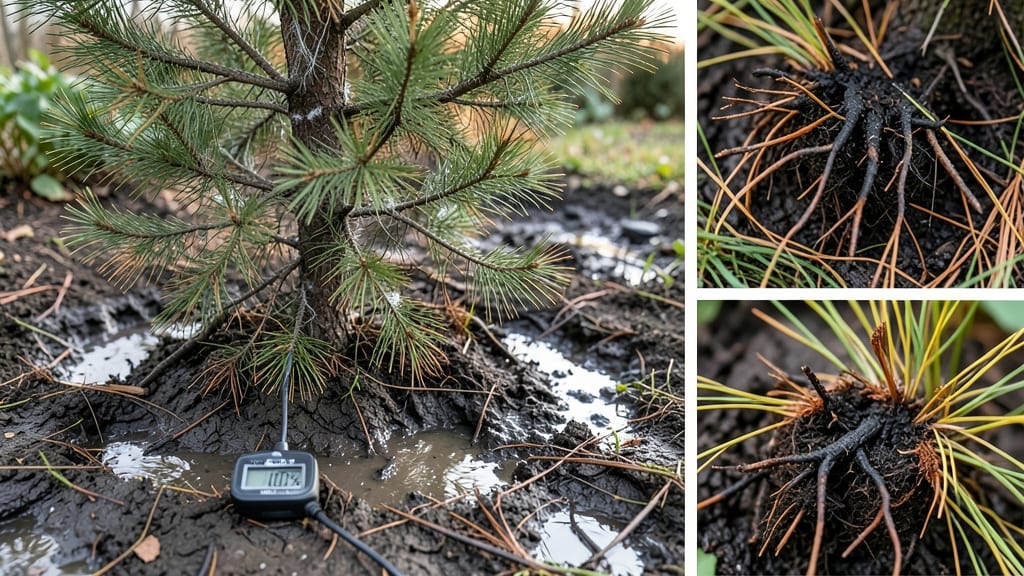
What does an overwatered pine tree look like?
It reveals itself through yellowing needles, drooping branches, and a sad, wilted appearance that’s impossible to miss. 🌲 I’ve seen it too many times—trees that looked healthy one week suddenly sporting brown, mushy needles and roots that smell foul when you dig near them.
The damage starts at the roots, where too much moisture cuts off oxygen, and spreads upward like a silent killer.
Look for needle drop that’s uneven across the tree, with clusters of brown or blackened tips rather than the crisp green of healthy growth. Fungal growth at the base of the trunk or white, cottony mold on the soil surface are dead giveaways—these thrive in soggy conditions.
The contrast with drought stress (where needles turn straw-colored and crisp) is stark: overwatered pines feel limp to the touch, almost like they’re drowning.
Fixing it starts with cutting back watering—let the top 2-3 inches of soil dry out completely before watering again. Improve drainage by amending the soil with coarse sand or perlite, and consider raising the tree’s root zone with a mound of gravel if your yard stays wet.
Within weeks, you’ll see new growth pushing through, and those sad branches will perk up like they’ve been given a second chance.
Patience is key—roots can take months to recover, but with the right adjustments, your pine will bounce back stronger than ever. The lesson? When in doubt, underwater slightly—pines tolerate dry spells far better than they handle soggy soil. Your tree’s survival depends on it.
Root Causes Of Overwatering
When your pine tree starts showing signs of distress—like yellowing needles, wilting branches, or a mushy trunk—it’s often a cry for help from its roots. Overwatering isn’t just about giving a tree too much water; it’s a complex issue tied to soil health, drainage, and even the tree’s natural biology.
Let’s break down the key reasons this happens, so you can address the problem at its source.
Pine trees thrive in well-draining soil, but when their roots sit in soggy conditions, they struggle to absorb oxygen. Here’s why this happens:
- Compacted Soil: Heavy clay or tightly packed soil traps water around roots, cutting off airflow. This creates anaerobic conditions, where roots suffocate because they can’t access the oxygen they need to respire (breathe).
- Lack of Organic Matter: Soil rich in organic material (like compost or mulch) helps create air pockets. Without it, water pools instead of draining, leading to root rot—a fungal infection that decays roots over time.
- Improper Grading: If the ground slopes toward the tree’s base, water pools like a puddle, drowning the roots. Even a slight dip can turn your landscape into a swampy death trap for pine trees.
Actionable Fix: Test your soil’s drainage by digging a 12-inch hole near the tree, filling it with water, and timing how long it takes to drain. If it takes more than 6 hours, amend the soil with perlite, sand, or pine bark fines to improve aeration.
Pine trees are drought-tolerant by nature, but many gardeners assume they need frequent watering—especially in hot climates. Here’s why this backfires:
- Frequent Shallow Watering: Light, frequent watering encourages roots to stay near the surface, where they’re more prone to drying out quickly. But if you’re watering too often, the soil never dries out enough, leading to waterlogged roots.
- Ignoring Seasonal Needs: Pine trees slow their growth in winter and need far less water during cooler months. Overwatering in fall or spring can weaken the tree before it’s ready for dormancy.
- Automatic Irrigation Gone Wrong: Timers or sprinklers set on a schedule don’t account for rain or soil moisture. A pine tree in a pot or a sandy soil bed may only need water every 2–3 weeks, not daily.
Actionable Fix: Water deeply but infrequently—aim for 1–1.5 inches of water per week (including rain) for established pines. Use a soil moisture meter to check before watering, and avoid wetting the foliage to prevent fungal diseases.
Sometimes, overwatering isn’t your fault—it’s Mother Nature’s doing. These conditions can turn your well-intentioned care into a disaster:
- Heavy or Prolonged Rainfall: Pine trees in low-lying areas or regions with frequent downpours can’t escape waterlogging. Even drought-resistant species like Pinus sylvestris (Scots pine) will suffer if rain doesn’t stop for weeks.
- High Humidity + Poor Airflow: In humid climates, moisture lingers in the soil longer. If your pine is planted in a shady, enclosed space (like a courtyard or under dense foliage), evaporation slows, and roots stay soggy.
- Frost or Cold Soil: Cold temperatures slow root activity, making it harder for trees to absorb water. If you water heavily during a cold snap, the roots can’t process the excess, leading to cold stress and rot.
Actionable Fix: If your area gets consistent rain, skip watering until the top 2–3 inches of soil dry out. In humid climates, prune nearby plants to improve airflow, and avoid planting pines in depressions where water collects.
Pine trees in containers are especially vulnerable because their root systems are confined. Here’s why pots can lead to overwatering:
- Limited Drainage Holes: Many nursery pots have no drainage, or the holes get clogged with roots or soil. Without an escape route, water sits at the bottom, drowning the roots.
- Small Root Zone: A pot restricts root growth, so the tree can’t seek out deeper, drier soil. Even if you water less, the roots have nowhere to go.
- Fast-Drying Soil Mixes: Some potting mixes dry out quickly, tricking you into thinking the tree needs more water. But if the bottom stays wet, the roots rot anyway.
Actionable Fix: Always use pots with drainage holes, and elevate them on feet or saucers to prevent water from pooling. Repot every 2–3 years to refresh the soil with a chunky, fast-draining mix (e.g., 50% pine bark, 30% perlite, 20% peat moss).
Understanding these causes is the first step to saving your pine tree. The good news? Most overwatering issues are reversible with the right adjustments. Next, we’ll cover how to diagnose the damage and revive your tree—before it’s too late.
Reviving Your Pine Tree: Step-by-Step Fixes
Overwatering can turn your pine tree from a thriving evergreen into a sad, soggy mess—but don’t worry! With the right approach, you can nurse it back to health.
Below, we’ll break down cause-specific fixes to address the root of the problem (literally), plus prevention tips to keep your pine tree happy and hydrated—without drowning it.
Yellowing needles are often the first sign of overwatering, but they can also signal other issues like nutrient deficiencies or fungal infections. Here’s how to tackle it:
🔥 Step 1: Check the Soil Moisture
Before you do anything, test the soil to confirm the problem: - Stick your finger 2–3 inches deep into the soil.
If it feels soggy or smells like rot, you’ve got overwatering. - Use a moisture meter for accuracy—ideal soil for pines should feel damp but not waterlogged.
🍳 Step 2: Adjust Your Watering Routine
Pines hate wet feet. Follow these rules: - Water deeply but infrequently: Soak the root zone (first 6–12 inches of soil) until water drains out the bottom.
Wait until the top 1–2 inches are dry before watering again. - Morning watering is best: This gives excess moisture time to evaporate during the day. - Avoid overhead watering: Use drip irrigation or soaker hoses to deliver water directly to the roots.
👨🍳 Step 3: Improve Drainage
If your pine is in containers or compacted soil, drainage is key:
- Repot if needed: If the tree is in a container, choose one with drainage holes and use a well-draining mix (e.g., 60% pine bark, 30% perlite, 10% compost).
- Amend garden soil: Mix in sand, perlite, or compost to loosen heavy clay soil.
- Raise garden beds: If planting in the ground, consider a slightly elevated bed to prevent water pooling.
🥘 Step 4: Trim Damaged Needles (If Necessary)
If needles are brown and crispy (not just yellow), they’re dead and won’t recover. Use clean, sharp pruners to:
- Remove only the dead needles—healthy green needles will stay put.
- Avoid over-pruning; pines are slow to regrow.
Root rot is a silent killer—by the time you see mushrooms or black, mushy roots, it’s already serious. Act fast:
⏰ Step 1: Stop Watering Immediately
- No more water until the soil dries out. Let the roots breathe for at least 3–5 days.
- If the tree is in a pot, move it to a shady, dry spot out of direct sunlight.
🔪 Step 2: Prune Damaged Roots (For Severe Cases)
If you see black, slimy roots, you may need to trim the rotten parts: 1. Gently remove the tree from its pot (or dig carefully if planted in the ground).
- Rinse roots with water to remove soil.
- Snip off mushy, dark roots with sterilized pruners—keep only firm, white roots.
- Dust roots with fungicide (like copper fungicide or hydrogen peroxide solution—1 part peroxide to 10 parts water).
💡 Step 3: Repot in Fresh, Dry Soil
- Use a clean pot (or dig a new hole if planted in the ground).
- Replace all soil with a fast-draining mix (avoid peat-heavy soils).
- Add perlite or sand (20–30%) to improve aeration.
🎯 Step 4: Monitor and Adjust Care
- Wait 1–2 weeks before watering again—only when the top inch of soil is dry.
- Avoid fertilizing until the tree shows signs of recovery (new growth).
- Keep the area dry for at least 4–6 weeks to prevent reinfection.
Drooping can mean root stress, fungal issues, or even pest damage. Here’s how to revive it:
💪 Step 1: Check for Pests
Overwatered pines are vulnerable to pests like:
- Aphids, spider mites, or bark beetles (look for sticky residue, webbing, or tiny holes).
- Treat with neem oil (mix 1 tbsp neem oil + 1 tsp mild soap in 1 quart water) and spray thoroughly.
🥗 Step 2: Support the Tree Temporarily
If branches are heavily drooping but not broken:
- Gently tie them to stakes with soft tree ties to prevent further damage.
- Avoid pruning unless branches are completely dead.
🍎 Step 3: Boost Recovery with Proper Care
- Reduce watering to once every 10–14 days (unless in extreme heat).
- Fertilize lightly (if needed) with a balanced, slow-release fertilizer (10-10-10) only after 4–6 weeks of recovery.
- Mulch properly: Use 2–3 inches of pine bark mulch, keeping it 6 inches away from the trunk to prevent rot.
Once your pine tree is back on track, prevent future overwatering with these habits:
- 📊 Know Your Pine’s Needs: Different pines have different water needs—mature pines often need less water than young ones. - 🌡️ Water Based on Weather: In hot, dry climates, water deeply 2–3 times a week.
In cool, rainy seasons, cut back to once every 2–3 weeks. - 🎯 Use a Rain Gauge: Track rainfall to avoid overwatering during wet spells. - 🔍 Install a Soil Moisture Sensor: These battery-powered devices alert you when it’s time to water. - 🌿 Choose the Right Location: Pines prefer well-draining soil and full sun—avoid low-lying areas where water pools.
By following these targeted fixes, your pine tree should bounce back within a few months. Patience is key—overwatered pines recover slower than underwatered ones, but with the right care, they can thrive again! 🌲💚
Frequently asked questions
How can I tell if my pine tree’s yellow needles are from overwatering vs. drought?
Overwatered pines show yellowing needles that stay soft and limp, often with brown or black tips that feel mushy. Drought-stressed needles turn straw-colored and crispy to the touch. Check the soil too—overwatered roots smell foul and feel soggy, while drought-stressed roots pull away from dry soil.
Why does my pine tree have white, fuzzy growth at the base?
That’s likely fungal growth (like mold or mushroom spores) thriving in wet conditions. Overwatered pines create the perfect soggy environment for fungi to spread. Remove the growth carefully, improve drainage, and let the soil dry out completely before watering again.
Can I save a pine tree with root rot?
Yes, but act fast! Stop watering immediately, prune away black, mushy roots, and repot in fresh, fast-draining soil. Use a copper fungicide to prevent reinfection. Recovery takes 4–6 weeks—be patient and avoid fertilizing until new growth appears.
How often should I water a mature pine tree?
Mature pines need deep watering every 10–14 days (unless in extreme heat). Let the top 2–3 inches of soil dry out between waterings. Overwatering is more dangerous than underwatering—pines are drought-tolerant but hate soggy roots!
Will mulch help or hurt an overwatered pine?
Mulch can help if applied correctly—use 2–3 inches of pine bark mulch, keeping it 6 inches away from the trunk. This improves soil structure but avoid piling it against the base, which traps moisture and worsens rot. Always use well-draining mulch!