
Companion Plants
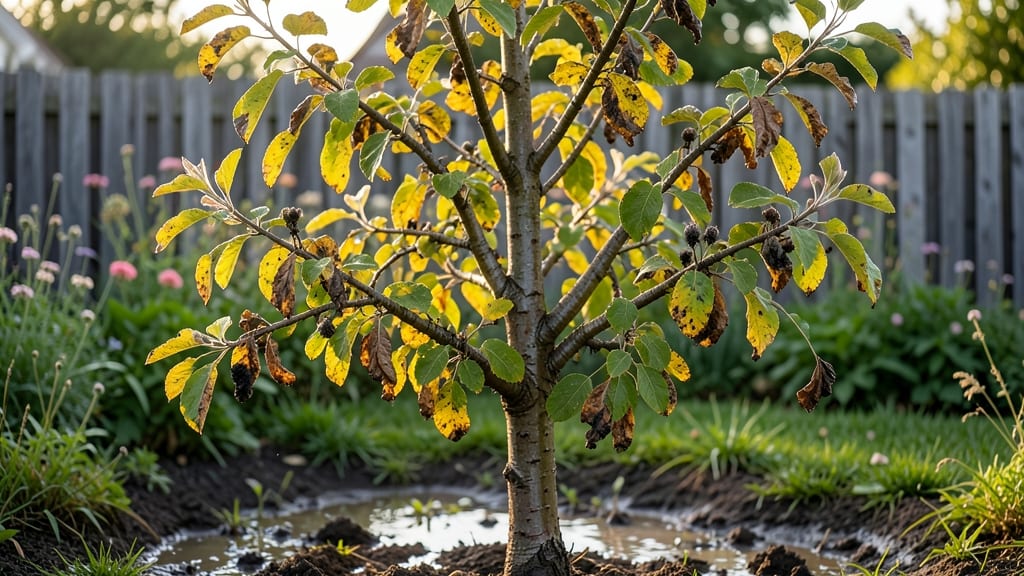
What does an overwatered apple tree look like? It reveals itself in ways that mimic drought—wilting leaves, yellowing foliage, and branches that droop like a sad dog’s ears. 🌳 I’ve seen my own trees struggle when I ignored the soggy soil beneath the surface, thinking more water was always better.
The truth? Roots suffocate in waterlogged conditions, starving the tree of oxygen and nutrients it desperately needs.
Look for leaves that turn yellow or brown at the edges, then curl inward like a crumpling paper bag. The soil around the base stays damp for days, smelling musty rather than fresh, and mushrooms or fungal growth might pop up near the trunk.
Unlike underwatered trees—which have crisp, dry leaves and brittle branches—overwatered ones feel heavy, limp, and often shed leaves prematurely.
Fixing it starts with adjusting your watering routine: let the top 2–3 inches of soil dry out before watering again. Improve drainage by amending the soil with compost or sand, and consider raising the tree’s position slightly if your yard floods easily.
Within weeks, you’ll see leaves perk up and new growth that’s vibrant, not wilted.
This isn’t just about saving your tree—it’s about giving it the right balance. Overwatering is sneaky; it mimics other problems, but the soggy soil and fungal signs give it away. Trust your fingers: if the soil feels like a damp sponge, it’s time to back off the hose.
Root Causes Of Overwatering
Overwatering an apple tree might seem like a harmless mistake—after all, more water is always better, right? Wrong. Too much moisture can suffocate your tree’s roots, disrupt nutrient uptake, and create the perfect breeding ground for pests and diseases.
Let’s break down the key reasons why your apple tree might be drowning in its own soil—and how to fix it.
If your apple tree’s roots are sitting in soggy soil, the problem likely starts with compacted or clay-heavy soil. These soils don’t allow excess water to drain away, leaving roots waterlogged and starved for oxygen. Without proper aeration, roots can’t absorb nutrients efficiently, leading to:
- Yellowing leaves (chlorosis) due to nutrient deficiencies like iron or nitrogen.
- Stunted growth as the tree diverts energy to surviving rather than thriving.
- Root rot from fungal infections like Phytophthora or Pythium, which thrive in wet conditions.
Actionable fix: Test your soil’s drainage by digging a 12-inch hole, filling it with water, and timing how long it takes to drain. If it takes more than 6 hours, amend the soil with organic matter (compost, sand, or perlite) to improve porosity. Raised beds or mounding soil around the base can also help.
Apple trees need consistent moisture but not constant soaking. Overwatering often happens when gardeners:
- Water on a strict daily schedule without checking soil moisture.
- Use sprinklers or hoses that flood the root zone instead of delivering deep, targeted water.
- Ignore weather conditions—watering heavily after rain or during humid periods.
When roots stay wet for too long, they can’t breathe. This triggers:
- Wilting leaves (even with wet soil—a classic sign of root stress).
- Blossom drop in spring, as the tree prioritizes survival over fruit production.
- Weak wood prone to cracking or splitting under stress.
Actionable fix: Switch to the “finger test”: Stick your index finger 2–3 inches into the soil. Water only if it’s dry at that depth. For mature trees, deep watering 1–2 times per week (depending on climate) is better than shallow daily doses. Morning watering reduces evaporation and fungal risks.
Sometimes, overwatering isn’t your fault—it’s Mother Nature playing tricks. Consider these unavoidable culprits:
🌊 High Water Tables or Poor Grading
If your yard sits in a low-lying area or has poor slope, rainwater pools around the tree’s roots, mimicking overwatering. Apple trees hate soggy feet—even if you’re not adding extra water.
Actionable fix: Create a swale (a shallow trench) around the tree to divert water away. Or, plant the tree on a mound to elevate roots above the water table.
🌡️ Humidity and Rainfall Patterns
In humid climates or during prolonged rainy seasons, soil stays moist longer than usual. Apple trees in these areas may show overwatering symptoms even with “normal” care.
Actionable fix: Monitor rainfall totals (aim for 1–1.5 inches per week, including rain). Skip watering if the ground is already saturated. Use a soil moisture meter for accuracy.
🌿 Mulch Gone Wrong
Mulch is a gardener’s best friend—unless it’s piled too high. A thick mulch layer (over 4 inches) can smother roots and trap moisture, creating a waterlogged barrier.
Actionable fix: Keep mulch 2–3 inches deep and 2–3 inches away from the trunk. Use organic mulch (wood chips, straw) that breaks down over time, improving soil structure.
By identifying the specific cause of overwatering in your apple tree, you can tailor your fixes—whether it’s adjusting your watering routine, amending the soil, or tweaking the landscape. Next up: How to Diagnose the Damage before it’s too late.
Reviving Your Apple Tree: Step-by-Step Fixes
Overwatering can turn your thriving apple tree into a sad, soggy mess—but don’t worry! With the right adjustments, you can nurse it back to health. Below, we’ll break down cause-specific solutions to fix an overwatered tree, plus prevention tips to keep it strong for years to come.
Cause: Too much water suffocates roots, cutting off nutrient flow. Solution:
- 🔥 Stop Watering Immediately – Let the soil dry out completely before watering again.
- 🍳 Improve Drainage – Dig a trench around the tree (12–18 inches deep) to redirect excess water away from roots.
- 👨🍳 Aerate Compacted Soil – Use a garden fork to loosen soil around the base (avoid damaging roots).
Prevention Tip: 💡 Mulch properly—3–4 inches of organic mulch (wood chips, straw) helps regulate moisture while keeping roots cool.
Cause: Root rot from prolonged soggy soil weakens the tree’s structure. Solution:
- ⏰ Prune Damaged Branches – Cut back any branches that look mushy or blackened at the base (sterilize pruners with rubbing alcohol).
- 🌡️ Boost Airflow – Thin out dense foliage to improve sunlight and airflow, reducing humidity around the tree.
- 🎯 Water Deeply but Less Often – Switch to deep, infrequent watering (1–2 inches per week) instead of daily shallow soaks.
Prevention Tip: ✨ Test your soil—if it’s heavy clay, amend with compost or sand to improve drainage.
Cause: Fungal root rot thrives in waterlogged conditions. Solution:
- 🔪 Remove Affected Roots – Gently dig around the root ball and trim any black, mushy roots with clean shears.
- 🍄 Apply Fungicide – Use a copper-based or phosphite fungicide to kill pathogens (follow label instructions).
- 🥗 Replace Saturated Soil – Mix in perlite or coarse sand to improve drainage in the root zone.
Prevention Tip: 💪 Raise the tree’s base—if your yard floods, mound soil slightly higher around the trunk to prevent water pooling.
Once you’ve addressed the immediate issues, focus on revitalizing the tree’s health:
- 🍏 Fertilize Lightly – Use a balanced, slow-release fertilizer (10-10-10) in early spring to rebuild strength.
- ☀️ Monitor Sunlight – Ensure the tree gets at least 6–8 hours of sun daily to aid recovery.
- 📅 Schedule a Soil Test – Check pH and nutrient levels annually—apple trees prefer slightly acidic soil (6.0–6.5).
Final Pro Tip: 🔥 Patience is key! Recovery can take several weeks to months, but with consistent care, your apple tree will bounce back—stronger than ever.
Frequently asked questions
How can I tell if my apple tree is overwatered vs. underwatered?
Overwatered trees show yellowing leaves and soggy soil that smells musty, while underwatered trees have crispy brown edges and dry soil. Both can cause wilting, but overwatered trees feel heavy and limp, while underwatered ones feel dry and brittle. Check soil moisture with your finger—overwatered soil stays damp for days.
Can overwatering cause my apple tree to lose leaves?
Yes! When roots suffocate from excess water, the tree drops leaves to conserve energy. You’ll often see yellowing or brown leaves first, followed by premature leaf drop. Unlike seasonal shedding, overwatering causes leaves to fall even when the tree appears healthy otherwise.
What’s the best way to fix overwatered roots?
Stop watering immediately and let the soil dry completely. Improve drainage by adding compost or sand to heavy clay soil, and consider creating a shallow trench around the tree to redirect water. For severe cases, prune blackened roots and apply a copper-based fungicide to prevent rot.
Will my apple tree recover from overwatering?
With prompt action, most trees recover within 4-8 weeks. Focus on deep but infrequent watering, proper soil aeration, and avoiding soggy conditions. New growth should appear within 2-3 weeks if roots aren’t severely damaged. Monitor for fungal signs like mushrooms near the base.
How often should I water an apple tree after fixing overwatering?
Wait until the top 2-3 inches of soil are dry before watering again. For mature trees, 1-2 deep waterings per week (depending on climate) is ideal. Use a soil moisture meter for accuracy, and always water in the morning to reduce evaporation and fungal risks.