
Plants
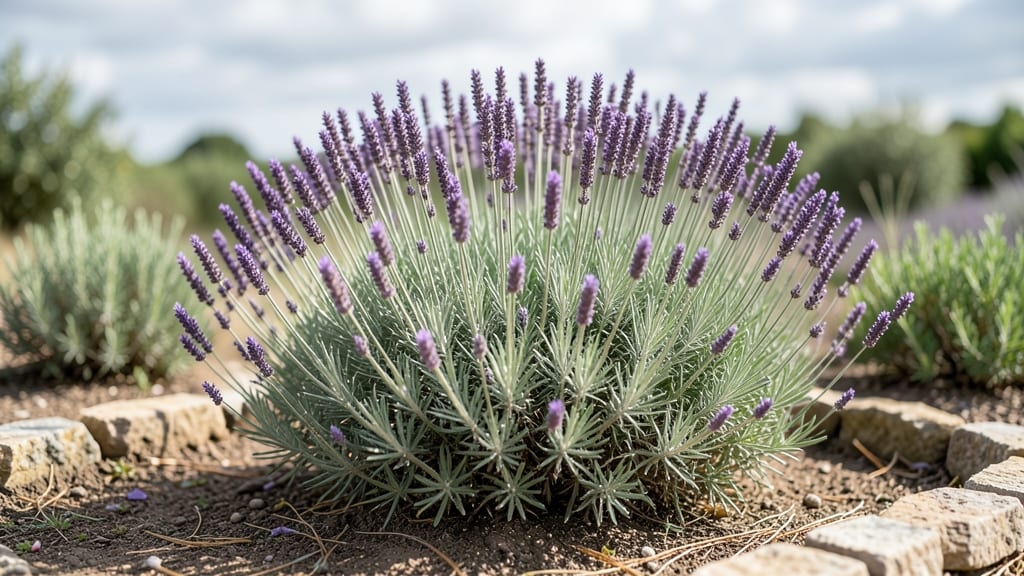
A lavender tree looks like a fragrant purple dream with silvery foliage that shimmers in the sunlight. 🌿 Unlike its bushy cousins, this trained lavender grows tall and slender—think 8 to 12 feet—with a single trunk and layered branches that cascade like a fountain.
The bark is smooth and grayish, while the leaves are narrow, needle-like, and aromatic when crushed, releasing that signature lavender scent.
The real showstopper? Those iconic purple flower spikes that bloom in late spring to early summer, creating a vertical waterfall of color. Unlike shrub lavender, which spreads wide, this tree form keeps its elegant silhouette year-round.
In winter, the foliage turns a soft gray-green, adding texture to bare branches. It’s easy to confuse with other lavenders, but its upright growth habit and taller stature set it apart.
Pair it with drought-tolerant companions like rosemary, thyme, or ornamental grasses to create a Mediterranean-inspired garden. The fragrant foliage and striking blooms make it a standout focal point—perfect for borders, containers, or even as a small patio tree.
Just be patient; it takes a few years to reach its full height and lushness.
If you’re growing one, keep the soil well-draining and prune lightly after flowering to encourage denser growth. The scent alone makes it worth the effort—imagine walking past and catching that familiar, calming aroma wafting through the air. It’s not just a tree; it’s a living fragrance statement.
📚 In This Guide
- What you need
- Instructions
- Tips and common mistakes
- Wrapping up and next steps
What you need
- ● Lavender plants: 1–3 Lavandula varieties (e.g., English lavender, French lavender, or Spanish lavender). Choose based on your climate—Lavandula angustifolia (English) thrives in cooler zones, while Lavandula stoechas (French) loves heat.
- ● Well-draining soil: 5–10 gallons of sandy or gravelly potting mix (avoid clay-heavy soil). Mix in perlite or coarse sand (1 part perlite to 3 parts soil) for optimal drainage.
- ● Containers (if potted): 1–3 terracotta or fabric pots (12–18 inches deep) with drainage holes. Pro tip: 💡 Terracotta wicks away moisture, preventing root rot!
- ● Sunlight access: 6+ hours of full sun daily (south-facing windows or outdoor spaces). No compromise here—lavender demands sun!
- ● Watering can or hose: A light spray nozzle or drip irrigation system to avoid overwatering.
- ● Pruning shears: 1 pair of sharp, sterilized shears (clean with rubbing alcohol to prevent disease).
- ● Slow-release fertilizer: A balanced 10-10-10 or low-nitrogen (5-10-10) fertilizer to nourish roots without promoting leafy growth over flowers.
- ● Mulch: Gravel or pebbles around the base (not touching the stem) to retain heat and deter weeds.
- ● Support stakes: For taller varieties like Lavandula stoechas, use 3–4 bamboo stakes tied with soft twine.
- ● pH testing kit: To ensure soil pH is 6.5–7.5 (lavender prefers slightly alkaline soil).
- ● Dried lavender bundles: For harvesting and drying your own fragrant bundles! 🌸
Identifying a lavender tree: key visual and sensory traits
Here's how to recognize one of nature's most fragrant trees at a glance.
🌿 Step 1: Examine the Foliage Shape and Color
Lavender trees feature silvery-gray, narrow leaves that look like elongated ovals, typically 1-2 inches long. They grow opposite each other along the stems, creating a uniform, feathery appearance. Run your fingers along the leaves—they feel slightly fuzzy due to fine hairs that help reflect sunlight and conserve moisture.
The color is distinctive: a soft, pearlescent gray that stands out against other evergreens. Younger growth often appears slightly lighter, almost white, before maturing to that classic silvery hue. This foliage stays attractive year-round, though it may darken slightly in winter.
🌸 Step 2: Look for the Signature Flower Spikes
The most recognizable feature is the dense, upright flower spikes that emerge in late spring to early summer. These 4-6 inch long clusters are packed with tiny, tubular lavender-purple flowers that give the tree its name. Each spike holds hundreds of individual blooms arranged in a whorl pattern around the stem.
When fully open, the flowers create a soft, fuzzy texture—almost like a paintbrush dipped in lavender. The scent is unmistakable: a sweet, floral fragrance that becomes stronger as the day warms. You'll often see bees and butterflies drawn to these clusters, especially in the morning when the blooms are freshest.
☀️ Step 3: Observe the Tree's Growth Habit and Size
Mature lavender trees typically reach 6-10 feet tall with a rounded, bushy shape. The branches grow in a semi-upright pattern, creating a natural, layered look rather than a single central trunk. Young trees have a more compact, almost shrub-like appearance before developing their characteristic tree form.
The bark is smooth and light gray, with a slightly textured surface that develops subtle ridges as the tree ages. Unlike many trees, lavender trees maintain their shape well without pruning, though they respond beautifully to light shaping. The overall silhouette is airy and open, allowing light to filter through the foliage.
🌱 Step 4: Check the Seasonal Changes
In spring, you'll notice new growth emerging from the tips of branches, often with a slightly darker green cast. By summer, the foliage takes on its characteristic silvery hue, and the flower spikes become the star of the show. In fall, the spent flower heads turn brown but may persist through winter, adding texture to the landscape.
Winter brings minimal change—lavender trees are evergreen, so they retain their foliage year-round. The leaves may darken slightly in cold weather but never fall completely. This evergreen nature makes lavender trees excellent for adding color and fragrance to winter gardens when many other plants have gone dormant.
⏰ Step 5: Test the Fragrance for Confirmation
The easiest way to confirm you've found a lavender tree is to give the foliage a gentle rub between your fingers. The scent should be immediately recognizable: a sweet, floral aroma with hints of herbal notes. This fragrance is strongest in the morning after dew has evaporated but remains noticeable throughout the day.
If you're unsure, crush a small leaf between your fingers—the released oils will intensify the scent. True lavender trees have a consistent fragrance throughout the foliage, not just in the flowers. This sensory confirmation is often the final clue that distinguishes lavender trees from other silvery-leaved plants like olive trees or some varieties of rosemary.
Tips & tricks for identifying lavender trees
Real talk: Lavender trees are often confused with other silvery-leaved plants, so here's how to nail the identification every time.
Leaf Texture Clue: The fuzzy, silvery-gray leaves are your first hint—run your fingers along them and you'll feel that signature velvet-like texture caused by tiny hairs. This isn't just for show; those hairs help reflect sunlight and conserve moisture, which is why lavender thrives in dry climates. In Step 1, when you're examining the foliage, pay special attention to how the leaves grow opposite each other along the stems—this uniform pattern is a dead giveaway.
Flower Timing Secret: Don't expect to see those iconic purple spikes year-round. In Step 2, when you're looking for the signature flower clusters, remember they only appear in late spring to early summer. If you're visiting in winter or early spring, focus on the foliage instead. Pro tip: The flowers are densest in the morning when the scent is strongest—this is when you'll spot the most bees and butterflies drawn to them.
Size and Shape Matters: In Step 3, when observing the tree's growth habit, remember mature lavender trees typically reach 6-10 feet tall with that distinctive rounded, bushy shape. Young trees are more compact, but even then they maintain that airy, open silhouette. The semi-upright branching pattern is another key feature—it's not like a traditional tree with a single central trunk but rather a layered, natural look that lets light filter through beautifully.
Seasonal Confirmation: Use the changing seasons as your guide. In Step 4, when checking seasonal changes, note that new spring growth appears slightly darker before turning silvery. In fall, those browned flower spikes add winter interest. The fact that lavender trees are evergreen and never completely lose their leaves is a major distinguishing factor from many other trees that go dormant in winter.
Pro Tips for What Does A Lavender Tree Look Like
- Real talk: Lavender trees are often confused with other silvery-leaved plants, so here's how to nail the identification every time.
- Leaf Texture Clue: The fuzzy, silvery-gray leaves are your first hint—run your fingers along them and you'll feel that signature velvet-like texture caused by tiny hairs.
- Flower Timing Secret: Don't expect to see those iconic purple spikes year-round.
Frequently asked questions
Got questions about lavender trees? You’re not alone! Here are some of the most common queries—plus quick, practical answers to help you spot, grow, or care for these fragrant beauties.
Do lavender trees really exist, or is it just shrubs?
While true lavender trees (like Lavandula pedunculata) are rare, most people grow lavender shrubs that resemble trees with pruning. These can reach 6–10 feet tall with woody stems. For a "tree-like" look, opt for Lavandula dentata or train a shrub with a single central stem.
How long does it take for a lavender tree to mature?
Patience is key! Lavender shrubs (often called "trees") typically take 3–5 years to reach full maturity and produce those signature purple spikes. In ideal conditions (full sun, well-drained soil), you’ll see blooms by year 2, but the tree-like structure develops slowly. Prune lightly in early spring to encourage a sturdier form.
Can I grow a lavender tree indoors? What about in pots?
Lavender thrives outdoors but can sometimes live in pots indoors—with caveats! Place it near a south-facing window for 6+ hours of sunlight daily. Use a terracotta pot (for drainage) and a cactus/succulent mix. Expect slower growth and fewer blooms. For best results, move it outside in warm months and bring it in before frost.
Why isn’t my lavender tree blooming? Troubleshooting tips!
No purple spikes? Check these fixes:
- Not enough sun: Lavender needs 6–8 hours of direct sunlight daily. Move it to a sunnier spot.
- Overwatering: These drought-lovers hate soggy soil. Water only when the top inch is dry.
- Poor soil: Amend heavy soil with sand or gravel to improve drainage.
- Young plant: First-year lavender focuses on roots, not flowers. Be patient!
Are there lavender alternatives that look like trees?
If you love the look of a lavender tree but want variety, try:
- Rosemary ‘Tuscan Blue’ – Woody stems, silvery foliage, and drought-tolerant.
- Santolina (Cotton Lavender) – Silvery-green leaves and yellow button flowers.
- Lantana – Compact, multi-colored blooms (but not fragrant).
- Olive Tree – Evergreen, silvery leaves, and a classic "tree" shape.
Wrapping up and next steps
Now that you’ve explored the distinctive beauty of a lavender tree—from its fragrant purple spikes to its silvery-gray foliage—you’re ready to bring its charm into your garden or home! 🌿 Whether you’re drawn to its aromatic allure or its low-maintenance elegance, this plant is a fantastic addition for any space.
Ready to plant your own? Start by researching the best lavender varieties for your climate, then gather supplies and follow care tips to nurture a thriving, fragrant tree. Happy gardening! 🌸