
Pruning
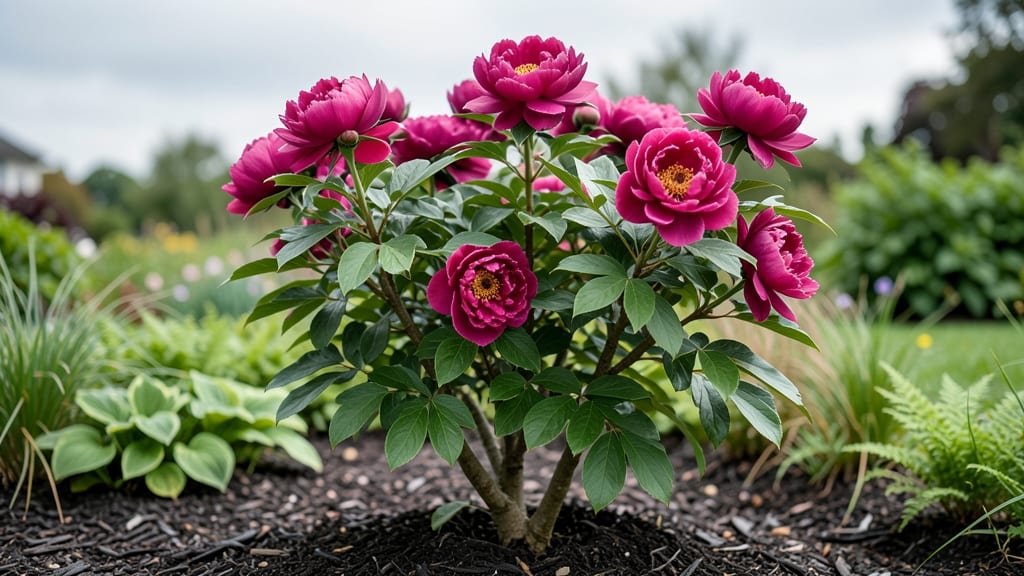
Tree peonies grow to heights between 3 and 10 feet, depending on the variety and care you provide, making them a stunning focal point in any garden.
If you're dreaming of a dramatic floral display that towers over your garden borders, tree peonies could be your perfect match—but their height varies wildly by variety.
Some stay compact at just 3 feet, while others reach towering heights of 8 to 10 feet, like the iconic 'Sarah Bernhardt'.
Understanding these differences is key to planning your garden layout. Too much space around a dwarf variety can leave it looking lost, while a tall cultivar planted too close to a patio might cast unwanted shade or block views.
The right placement ensures your tree peony 🌸 thrives while enhancing your outdoor space.
In this guide, we’ll break down the height ranges of popular cultivars, share tips for managing growth through pruning and spacing, and help you choose the perfect variety for your garden’s size and style.

Tree peony height by variety: from dwarf to towering giants
Tree peonies (Paeonia suffruticosa) are deciduous shrubs that bring stunning spring blooms to gardens, but their mature height can vary dramatically—from compact dwarf varieties to towering giants. Choosing the right size for your space ensures both visual impact and long-term health.
Some varieties stay under 3 feet, perfect for containers or small borders, while others reach 10 feet, making them focal points in large landscapes.
Height isn't just about aesthetics—it also affects flowering habits and pruning needs. Taller varieties often produce larger blooms but require more space and structural support, while dwarf types are ideal for urban gardens or rooftop containers.
Below, I’ve broken down the most popular cultivars by their mature height ranges, along with growth habits and spacing recommendations to help you plan your garden layout.
Pro Tip: Always measure your tree peony’s canopy spread (width) too—it’s often 2-3 times wider than its height! This is critical for avoiding overcrowding in small gardens.
Taller varieties like 'Sarah Bernhardt' and 'Shirley Temple' grow 8–10 feet at maturity, making them ideal for backyard focal points or as privacy screens. Their single-stemmed growth means they develop a tree-like trunk over time, adding architectural interest.
These giants thrive in open, sunny locations with well-draining soil and benefit from staking in windy areas.
For small gardens or containers, 'Koi No Mai' and 'Lavender Lady' are excellent choices, staying under 5 feet while still delivering showstopping blooms. Their multi-stemmed habit creates a lush, bushy appearance without taking up excessive space.
These dwarf varieties also adapt well to urban landscapes where height restrictions apply.
If you’re planting multiple tree peonies, space them 6–10 feet apart depending on their mature size. Smaller varieties (3–4 feet) can be planted 3–4 feet apart, while taller ones (6+ feet) need 8–10 feet of clearance.
This prevents root competition and ensures each plant gets adequate sunlight and airflow.
One common misconception is that taller tree peonies always produce larger flowers. While varieties like 'Sarah Bernhardt' do have 8–10 inch blooms, their
How to control tree peony height: pruning & training techniques
Tree peonies (Paeonia suffruticosa) can grow into stunning architectural focal points—but their height often surprises gardeners. Whether you're dealing with a wildly overgrown specimen or want to encourage a compact, bushier form, the right techniques make all the difference.
The key lies in seasonal pruning, strategic staking, and thoughtful plant placement to guide growth without sacrificing those prized blooms.
Unlike herbaceous peonies, tree peonies are woody shrubs that grow year-round in warmer climates (USDA zones 5-8). Their height depends on variety, age, and care—but with the right approach, you can shape their growth to fit your garden vision.
For example, 'Koi No Mai' typically stays under 4 feet, while 'Sarah Bernhardt' can soar to 10 feet if unchecked. Let’s explore how to manage their height while keeping them healthy and floriferous.
Remove dead or crossing branches to improve airflow and reduce disease risk. Cut back overly long stems by 1/3 to encourage bushier growth. Avoid heavy pruning—tree peonies bloom on old wood, so aggressive cuts can reduce next year’s flowers.
Install 3-4 ft stakes at planting to support top-heavy growth. Tie stems loosely with soft plant ties to prevent wind damage. This prevents flopping and encourages upright, sturdy stems as the plant matures.
Tree peonies hate waterlogged roots, which can lead to overgrowth and weak stems. Amend heavy soil with compost and sand to promote compact, healthy growth. A slightly alkaline pH (6.5-7.5) also supports stronger structure.
Apply a balanced fertilizer (5-10-10) in early spring to support controlled growth. Avoid high-nitrogen feeds, which promote leafy growth over flowers. A ½ cup per plant is plenty—over-fertilizing leads to weak, leggy stems.
For taller varieties like 'Duchesse de Nemours', consider structural pruning in late winter to remove older, woody stems at the base. This encourages new growth from lower buds, creating a fuller, more manageable shape.
Just remember: never prune in fall, as this can stimulate tender new growth that won’t survive winter.
If your tree peony is already too tall for its space, you can gradually reduce height by pruning 1/3 of the tallest stems annually. Over 2-3 years, this will bring it down to a more manageable size while preserving flower quality.
Pair this with regular deadheading to redirect energy into compact, bushy growth rather than vertical shoots.
With these techniques, your tree peony will thrive at the perfect height for your garden—whether that’s a dwarf specimen for containers or a towering statement plant in the backyard. The secret? Patience and precision—tree peonies reward careful pruning with years of stunning blooms! 🌸✂️🌿