
Blooming
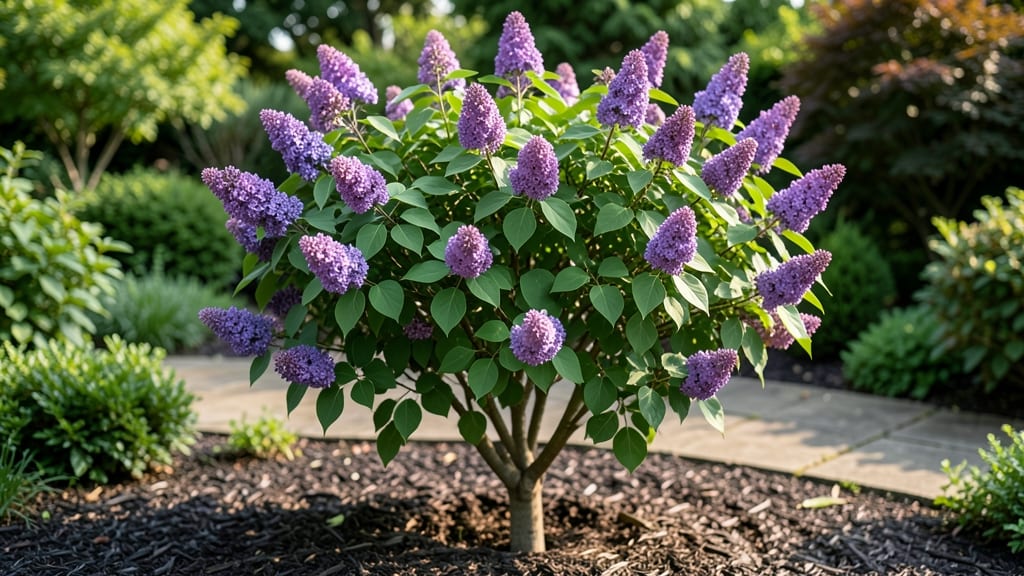
That dark purple cascade of the Bloomerang dark purple lilac tree form transforms any small garden into a fragrant masterpiece. 🌿 The Bloomerang Dark Purple Lilac isn’t just a plant—it’s a statement piece that spills over patios, frames entryways, and turns mixed borders into living art.
Its compact, tree-like form makes it perfect for spaces where big shrubs would overwhelm.
What sets it apart is that arching, layered habit—like a purple waterfall you can’t resist reaching out to touch. The fragrance hits hardest on warm spring mornings, drawing bees and hummingbirds while keeping deer at bay. Even after blooms fade, the glossy foliage holds its shape, offering year-round structure.
Place it where you want to linger: near seating areas, along walkways, or as a dramatic centerpiece in a cottage-style bed. Pair it with silver foliage plants (like lamb’s ear) or blues (like catmint) to make the purple pop even more.
A light pruning after blooming keeps it tidy without sacrificing next year’s show.
For small gardens, this lilac delivers big impact with minimal space. It’s the kind of plant that makes neighbors pause and ask, “What’s that?”—then smile when you tell them.
📚 In This Guide
- What you need
- Instructions
- Tips and common mistakes
- Wrapping up and next steps
What you need
- ● Bloomerang Dark Purple Lilac Tree: 1 container-grown plant (3–5 gallons, 18–24" tall)
- ● OR 1 bare-root sapling (dormant season only)
- ● OR Seeds (if propagating from scratch—requires patience!)
- ● Planting Hole Supplies: 1 shovel (round or spade, 18–24" wide)
- ● 1 garden trowel (for delicate root adjustments)
- ● 1 hose or watering can (with gentle spray nozzle)
- ● 1 bucket of water (for pre-watering roots)
- ○ Soil Amendments (Optional but Helpful): 2–3 gallons of well-draining potting mix (if amending native soil)
- ● 1 cup of compost or aged manure (for nutrient boost)
- ● 1 tbsp bone meal (for phosphorus-rich soil)
- ● Support & Mulch: 2–3 stakes (2–3 ft tall) + garden twine (for young trees)
- ● 2–3 inches of organic mulch (shredded bark or wood chips)
- ● 1 tree guard (to protect from critters)
- ● 1 slow-release fertilizer (10-10-10 or lilac-specific)
- ● 1 pruning shears (for shaping after blooms fade)
- ● 1 soil pH test kit (ideal range: 6.0–7.0)
Instructions for planting and pruning a Bloomerang dark purple lilac tree
This compact, two-tone lilac brings drama to small spaces with minimal fuss.
🌱 Step 1: Choose and Prepare the Planting Site
Select a location with full sun exposure (6-8 hours daily) and well-draining soil—the Bloomerang thrives where roots won’t suffocate. Dig a hole twice as wide and just as deep as the root ball, loosening the surrounding soil with a garden fork to encourage root spread. The dwarf form tolerates urban conditions, but avoid low spots where water pools.
Amend the native soil with 2-3 inches of compost mixed into the bottom of the hole. This ensures the first year’s growth establishes strong roots. Tap the plant gently from its container to check root health—white, fibrous roots mean it’s ready; circling roots need careful loosening before planting.
✂️ Step 2: Plant and Prune for the Right Shape
Position the Bloomerang so the top of the root ball sits 1 inch above ground level—this prevents rot while allowing roots to expand. Backfill with native soil, pressing gently to remove air pockets but not compacting too firmly. Water deeply to settle the soil and remove the container.
Here’s the key: prune immediately after planting to shape the tree. Remove any crossing branches or those growing inward, cutting back to the nearest outward bud. The Bloomerang’s natural branching habit makes it resilient, but this step prevents future congestion. Use clean, sharp pruners to make cuts at a 45-degree angle just above a leaf node.
☀️ Step 3: Establish Care for Year-Round Health
Water newly planted lilacs once a week for the first month, then taper to every 10-14 days once established, depending on rainfall. The dwarf form’s shallow roots mean it’s drought-tolerant once mature, but young trees need consistent moisture. Mulch with 2-3 inches of organic mulch (like shredded bark) to retain moisture and regulate soil temperature.
Fertilize lightly in early spring with a balanced, slow-release fertilizer (10-10-10) to support blooms. Avoid high-nitrogen fertilizers—they promote leafy growth at the expense of flowers. The Bloomerang’s dark purple blooms emerge in late spring, so prune spent flowers immediately after they fade to encourage next year’s display.
🌿 Step 4: Prune Annually for Long-Term Beauty
Prune your Bloomerang in late winter or early spring, before buds swell but before new growth begins. Remove any dead, diseased, or weak branches first, then shape the tree by cutting back overgrown stems to a strong lateral branch. The goal is to maintain an open, airy form—never let branches grow too dense, as this reduces airflow and invites pests.
Watch for suckers at the base of the tree and remove them promptly. These compete with the main structure for nutrients. The Bloomerang’s two-tone blooms (dark purple with white edges) are its signature, so avoid heavy pruning that could reduce flowering. A light trim keeps the tree compact while preserving its dramatic color contrast.
Tips & tricks for perfect Bloomerang lilac planting
Between us, the Bloomerang's compact charm comes from thoughtful planting and pruning—here's how to avoid the most common mistakes that ruin its elegant form.
Sunlight Strategy: The 6-8 hours of full sun requirement is non-negotiable for that signature two-tone bloom. I've seen gardeners place theirs in partial shade and end up with sparse, weak flowers. If your yard has afternoon shade, position it to catch morning sun instead—this gives it the light intensity it needs without scorching the leaves.
Root Health Check: That root inspection step in Step 1 isn't just busywork—it's critical. I learned this the hard way after planting a tree with circling roots that struggled for years. Gently tease apart any tangled roots before planting, and if you see any brown or mushy areas, trim them off completely. Healthy roots mean your Bloomerang will establish itself in half the time.
Pruning Precision: When you're shaping the tree after planting, remember that 45-degree angle cut isn't arbitrary—it directs water away from the branch collar. I always mark my cuts with a pencil first to visualize where the bud will emerge. And here's a secret: if you're unsure about a cut, err on the side of leaving more branch. You can always prune more later, but you can't undo a mistake.
Mulch Mastery: Those 2-3 inches of organic mulch serve two purposes most gardeners overlook. First, it creates a moisture barrier that keeps roots consistently hydrated. Second, it insulates the soil—keeping roots cooler in summer and warmer in winter. I like to use shredded bark because it breaks down slowly, adding organic matter to the soil over time. Just keep it 2-3 inches away from the trunk to prevent rot.
Pro Tips for Bloomerang Dark Purple Lilac Tree Form
- Between us, the Bloomerang's compact charm comes from thoughtful planting and pruning—here's how to avoid the most common mistakes that ruin its elegant form.
- Sunlight Strategy: The 6-8 hours of full sun requirement is non-negotiable for that signature two-tone bloom.
- Root Health Check: That root inspection step in Step 1 isn't just busywork—it's critical.
Frequently asked questions
about the Bloomerang Dark Purple Lilac Tree Form—because every gardener deserves clarity before diving in!How fast does this lilac tree grow?
The Bloomerang Dark Purple is a dwarf variety, growing 12–18 inches per year. With proper care, it typically reaches 6–8 feet tall and wide in 3–5 years, making it ideal for small spaces. Patience pays off—its slow growth ensures manageable pruning and steady blooms!
When is the best time to plant or transplant it?
Plant your lilac in early spring or early fall (4–6 weeks before frost) for optimal root establishment. Avoid extreme heat or cold. If transplanting an existing plant, do it in late winter or early spring before new growth begins. Pro tip: Water deeply after planting to reduce shock!
Can this lilac thrive in full sun or partial shade?
While it prefers full sun (6+ hours/day) for vibrant blooms, it tolerates partial shade (4–6 hours), especially in hot climates. In shadier spots, expect fewer flowers but lush foliage. Avoid deep shade—it can lead to leggy growth and sparse blooming.
How and when should I prune it?
Prune right after flowering (late spring) to shape the tree and encourage next year’s blooms. Avoid heavy pruning—remove no more than 1/3 of the plant at a time. Deadhead spent blooms in early summer to tidy it up. Warning: Never prune in fall or winter, as lilacs bloom on old wood!
What pests or diseases should I watch for?
Common issues include aphids, borers, and powdery mildew. Monitor leaves for yellowing, holes, or white powder. Treat aphids with a hose spray or neem oil. For mildew, improve air circulation and apply fungicide if needed. Resistant varieties like Bloomerang are less prone to issues, but vigilance helps!
Are there non-toxic alternatives for small gardens?
Yes! If you love the look but want pet-friendly options, consider Dwarf Korean Lilac (Syringa meyeri) or Japanese Tree Lilac (Syringa reticulata). Both are compact, fragrant, and non-toxic to pets. Just ensure they get similar sun and soil conditions!
Wrapping up and next steps
The Bloomerang Dark Purple Lilac isn’t just a tree—it’s a statement of elegance in compact form. With its dwarf stature, dramatic blooms, and low-maintenance charm, it’s the perfect way to add color and sophistication to even the tiniest garden.
Whether you’re a first-time gardener or a seasoned green thumb, this variety proves that big impact doesn’t require big space!
Ready to transform your outdoor space? Plant one today—your garden (and your neighbors!) will thank you. 🌸 For extra inspiration, explore local nurseries or online plant communities to connect with fellow lilac lovers.