
How To
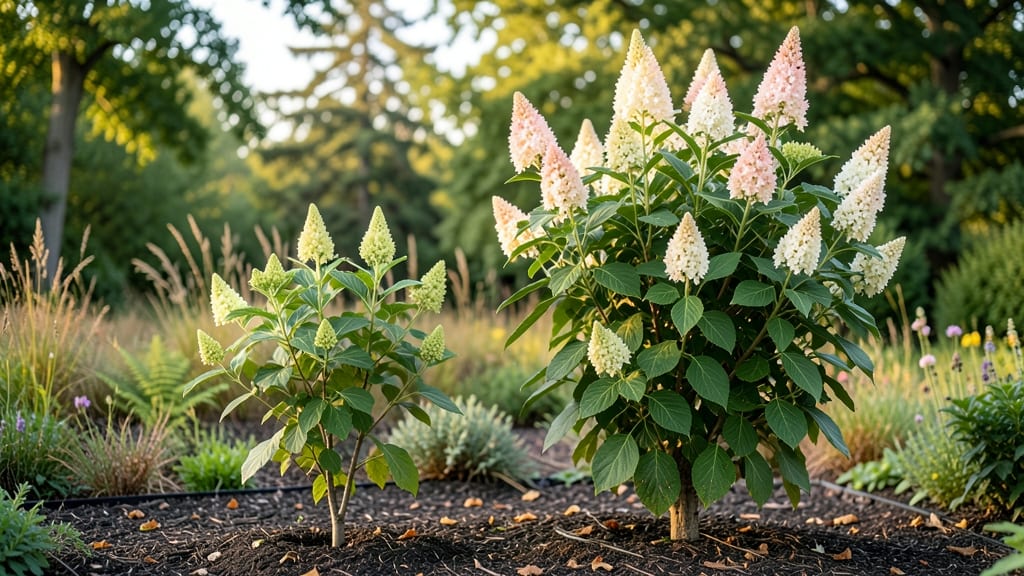
A hydrangea tree—how tall do they grow?—depends entirely on the variety and growing conditions, with heights ranging from 6 to 15 feet. Some types shoot up like rockets while others stay cozy for small spaces.
If you're dreaming of a stunning hydrangea tree but worried about space, don't fret — some varieties grow taller than skyscrapers while others stay compact enough for small yards.
The fastest-growing types, like Hydrangea paniculata, can reach 10 feet in just 3 years, while dwarf varieties like Little Lime max out at 3-5 feet.
Your yard's size and sunlight play a huge role: full sun speeds up growth, while shade keeps them shorter. Pruning at the right time can also control height — a 3-step method works for most varieties, and I’ll show you how to do it without sacrificing blooms.
Below, I break down the top 3 fast-growing varieties, how to pick the right one for your space, and when to prune for maximum height control. Ready to plan your perfect hydrangea?


Fastest-growing hydrangea tree varieties and their maximum heights
When planning your garden, knowing which hydrangea tree varieties grow fastest and tallest helps you make space-smart choices. Some varieties shoot up 3-5 feet per year, while others mature more slowly.
Let’s explore the top contenders for height and speed, so you can pick the perfect fit for your yard.
Hydrangea trees aren’t just about height—they’re also about growth speed. The fastest growers can reach their mature size in just 3-5 years, while slower varieties take a decade or more. Understanding these differences helps you plan for pruning, spacing, and long-term care from day one.
Below, I’ve compared the three most popular hydrangea tree types—Oakleaf, Panicle, and Smooth—based on their maximum heights and how quickly they reach maturity. This comparison will help you decide whether to go for a towering statement piece or a more manageable size.
The Panicle Hydrangea stands out as the fastest grower, shooting up 3-5 feet per year and reaching maturity in just 3-5 years. This makes it ideal if you want quick results without waiting a decade.
Varieties like 'Limelight' or 'Little Lime' are popular choices for their vibrant blooms and rapid growth.
If you love the bold foliage of Oakleaf Hydrangeas, be prepared for a slower climb to maturity—it takes 5-7 years to reach its full 10-15 foot height. However, the stunning fall colors and large leaves make the wait worthwhile for those with patience and space.
For smaller yards, the Smooth Hydrangea is a reliable choice, though it grows more slowly at 1-2 feet per year. Its 6-10 foot mature height and adaptability to partial shade make it perfect for woodland gardens or shaded patios.
Climate plays a huge role in growth speed. In USDA Zones 5-9, hydrangeas thrive, but cooler climates may slow growth by 20-30%. If you’re in a warmer zone, expect faster growth and earlier blooming. Always check your local hardiness zone before selecting a variety.
Pruning also affects height. If you want to control growth, prune in late winter or early spring before new shoots emerge. For Panicle Hydrangeas, prune back by 1/3 to encourage bushier growth and more blooms. Oakleaf and Smooth varieties benefit from lighter pruning to maintain their natural shape.
Soil quality impacts growth too. Hydrangeas prefer well-draining, slightly acidic soil (pH 5.5–6.5) for optimal bloom production. Amend heavy clay with compost or organic matter to improve drainage and nutrient uptake, which directly affects growth speed.
Ready to pick your perfect hydrangea tree? Consider your space, climate, and how quickly you want to see results. Whether you choose a fast-growing Panicle or a slow-but-stunning Oakleaf, these varieties will add beauty and height to your garden in no time. 🌸
How to control hydrangea tree height naturally (pruning tips)
If your hydrangea tree is reaching for the sky faster than you planned, don’t panic! Pruning isn’t just about cutting back—it’s about guiding growth while keeping those stunning blooms.
The key is timing and technique, especially since some varieties like Hydrangea paniculata grow aggressively. With the right approach, you can reduce height naturally without sacrificing beauty or health.
Before grabbing your shears, know that pruning hydrangeas depends on their type. Panicle hydrangeas (like Limelight) bloom on new wood, so you can cut back hard in late winter. Meanwhile, Oakleaf hydrangeas bloom on old wood and need a gentler touch.
Missteps here can delay blooms or stunt growth entirely. Let’s break it down step-by-step to keep your hydrangea tree at your ideal height.
Pro tip: If your hydrangea tree is too leggy, try the "crown reduction" method—cut the main stem just above a lateral branch to encourage branching lower down. This works wonders for Hydrangea arborescens varieties like Annabelle, which can grow 6–10 feet tall if unchecked.
Remember, hydrangeas respond well to pruning if done correctly. Over-pruning can stress the plant, while under-pruning may lead to woody, sparse growth. Aim for a balanced approach: trim back 1/3 of the oldest stems annually to maintain shape and health.
With patience, your hydrangea tree will thrive at your desired height—whether that’s a compact 5-foot specimen or a towering 12-foot statement piece.
For extra control, consider topping the tree (cutting the main stem flat) in early spring. This forces multiple side branches to grow from the top, creating a bushier silhouette. Just be prepared for slower initial growth as the tree recovers.
🌿