
Pruning
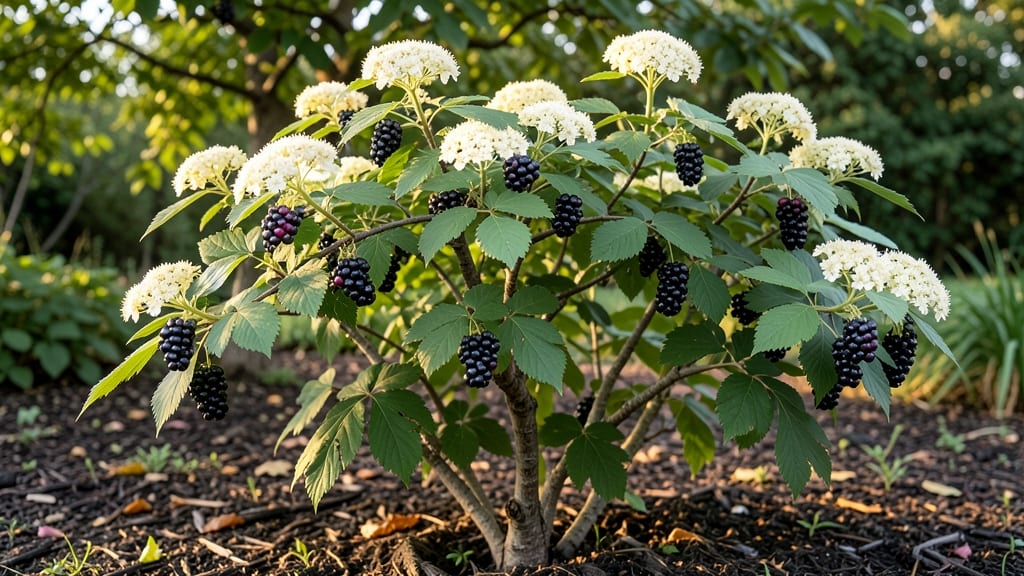
The identification of that tree with black berries just became easier. 🌿 Those sharp leaf teeth and glossy berries narrow it down to a handful of suspects—some edible, some toxic, and all worth knowing.
My neighbor’s backyard mystery tree turned out to be elderberry, but I’ve also spotted yew and hackberry with similar traits in my area. Start by checking the berry clusters: elderberry grows in drooping bunches, while yew’s berries stay tight and fleshy.
Leaf shape matters too—hackberry leaves are rougher, almost crinkled, while elderberry’s are smoother with serrated edges. Bark texture can be a dead giveaway too; yew bark is reddish-brown and fibrous, while elderberry’s is smoother and grayer.
Once you’ve narrowed it down, verify with a local extension office or plant ID app. That way, you’ll know whether those berries are safe for jams or best left alone. I’ve learned the hard way that yew berries are poisonous—don’t let kids or pets near them.
For a foolproof ID, snap a few photos of the leaves, berries, and bark, then cross-reference with regional guides. If you’re still unsure, tag a local arborist group on social media—they often help with tricky IDs faster than you’d expect.
Natural Reasons Behind Black Berries
When you spot a tree adorned with glossy black berries, it’s often a sign of nature’s intricate reproductive strategies at work. These berries aren’t just random growths—they’re the result of carefully evolved biological processes designed to ensure survival.
Below, we break down the key reasons why trees produce black berries, from ecological adaptations to genetic triggers.
Black berries are primarily a seed dispersal mechanism. Many trees rely on animals—like birds, mammals, or even insects—to eat the berries, then spread the seeds through their waste. The dark color acts as a visual signal to wildlife, making the fruit stand out against foliage.
Trees with black berries often have fleshy, nutrient-rich pulp that entices animals to consume them whole, ensuring the seeds travel far from the parent plant.
For example, Prunus serotina (black cherry) produces bitter-tasting black berries that birds still devour, while Ilex verticillata (winterberry) offers sweet, vibrant berries that persist through winter, providing food when other sources are scarce. Actionable tip: If you notice black berries disappearing in your yard, you’re likely witnessing this clever dispersal in action!
Not all flowers lead to berries—but when they do, it’s usually because pollination was successful. Trees with black berries often have perfect flowers (containing both male and female parts) or rely on cross-pollination between trees.
Once pollination occurs, the ovary of the flower swells and matures into a berry, protecting the developing seeds inside.
Some trees, like Rhamnus (buckthorn), produce berries only after two years of growth—first developing flowers, then fruit the following season. Others, such as Viburnum species, may produce sterile flowers (showy but non-reproductive) alongside fertile ones, ensuring some berries form while others serve as attractants for pollinators.
Pro tip: If a tree has flowers but no berries, it may lack pollinators (like bees or butterflies) or suffer from environmental stress. Planting native pollinator-friendly species nearby can boost berry production!
Black berries don’t appear randomly—they’re influenced by environmental conditions. Trees need the right balance of sunlight, water, and nutrients to produce fruit. For instance:
- Sunlight: Many berry-producing trees thrive in full sun (6+ hours/day). Shade can reduce flower and fruit development. Example: Cornus racemosa (gray dogwood) may produce fewer berries if grown under dense canopy.
- Water: Drought stress can stunt berry growth or cause them to drop prematurely. Consistent moisture (but not waterlogging) is key during flowering and fruiting seasons.
- Nutrients: A deficiency in phosphorus or potassium can lead to poor berry formation. A soil test can reveal if your tree needs amendments like compost or fertilizer.
- Temperature: Some trees (like Sambucus nigra, elderberry) require chilling hours (a period of cold winter temps) to trigger flowering. Without this, they may skip berry production entirely.
💡 Quick fix: If your tree has leaves but no berries, check its location. Moving it to a sunnier spot or improving soil drainage could encourage fruit development next season.
Some black berries form as a defense mechanism against pests or diseases. When a tree is under attack (e.g., by aphids, borers, or fungal infections), it may redirect energy toward producing berries as a way to ensure genetic survival. For example:
- Berries as a distraction: Trees like Celastrus orbiculatus (oriental bittersweet) produce vibrant berries to lure animals away from leaves, reducing herbivore damage.
- Secondary metabolites: Some berries contain toxic compounds (e.g., cyanogenic glycosides in cherries) that deter predators, ensuring only animals adapted to tolerate them will disperse the seeds.
- Disease response: In stressed trees, berry production can spike as a last-ditch reproductive effort before decline. If a tree suddenly bursts with black berries after a fungal outbreak, it may be fighting for survival.
⚠️ Watch for signs: If berries appear deformed, moldy, or fail to ripen, your tree may be battling an underlying issue. Prune affected branches and treat with organic fungicides if needed.
Finally, genetics play a huge role. Certain tree species are hardwired to produce black berries as part of their natural lifecycle. For example:
| Tree Species | Berry Color & Traits | Why It Happens |
|---|---|---|
| Prunus serotina (Black Cherry) | Dark purple-black, bitter | Evolved to attract birds for seed dispersal; berries ripen late in the season. |
| Ilex verticillata (Winterberry) | Bright red or black (varies by cultivar) | Berries persist through winter, providing food when scarce; female plants require a male pollinator. |
| Rhamnus alaternus (Italian Buckthorn) | Shiny black, pea-sized | Produces berries annually if pollinated; drought-tolerant but prefers well-drained soil. |
| Viburnum lentago (Nannyberry) | Dark blue-black, waxy | Berries ferment slightly, attracting wildlife; thrives in wet soils. |
✨ Fun fact: Some trees, like Callicarpa americana (American beautyberry), produce berries only on new wood—so aggressive pruning can actually reduce berry yield! If you want a berry bonanza, avoid heavy trimming in spring.
Quick Fixes for Black-Berried Trees
Identifying a tree with black berries and serrated leaves can be both fascinating and tricky—especially if you're unsure whether it's safe or invasive. The good news? With the right approach, you can safely manage, prune, or even remove these trees while keeping your yard healthy.
Below are practical solutions tailored to common scenarios, from identification to actionable steps.
Before taking action, double-check what you’re dealing with. Misidentifying a tree could lead to unnecessary work—or worse, harming a native species. Here’s how to nail it down:
📋 Use a Field Guide or App
- Download a tree ID app like PictureThis or LeafSnap to snap a photo of the leaves and berries.
- Compare features to known black-berried trees (e.g., Poison Ivy, Virginia Creeper, Elderberry, or Bittersweet).
- Check bark texture, leaf arrangement, and berry clusters—these details matter!
🌿 Consult a Local Expert
- Contact your county extension office—they often have free resources for plant ID.
- Post in gardening forums (like Reddit’s r/whatsthisplant) with clear photos.
- Visit a local nursery—staff may recognize it on sight.
> ⚠️ Pro Tip: If the berries are smooth, shiny, and clustered in pairs, it’s likely Bittersweet—a common invasive species. If leaves have three leaflets and a glossy finish, it could be Poison Ivy (handle with gloves!).
Once you’ve ID’d the tree, decide whether to prune, contain, or remove it based on its threat level.
🌱 Option 1: Prune for Control (Non-Invasive Trees)
If the tree is native or non-aggressive (e.g., Elderberry or Hawthorn), pruning can help manage its spread:
- 🔪 Trim back aggressive vines (like Bittersweet) in late winter or early spring before new growth starts.
- Remove seed-bearing stems to prevent berry spread—focus on cutting just above a leaf node.
- Use clean, sharp pruners to avoid damaging the tree or spreading disease.
🚜 Option 2: Dig It Out (Small Trees/Shrubs)
For smaller black-berried plants (like Poison Ivy or Virginia Creeper):
- Wear gloves and long sleeves—some plants (like Poison Ivy) cause skin irritation.
- Dig a trench around the root zone (at least 6–12 inches deep) to sever roots.
- Pull or saw larger roots—don’t leave fragments behind!
- Bag and dispose of debris—never compost invasive species.
🌳 Option 3: Call a Pro for Large or Hazardous Trees
If the tree is tall, invasive, or near structures, hire an arborist:
- Licensed tree services can safely remove large specimens (e.g., Russian Olive or Multiflora Rose).
- Ask about stump grinding if the root system is extensive.
- Check local regulations—some areas restrict removal of protected species.
> 💡 Prevention Tip: After removal, monitor the area for regrowth. Some trees (like Bittersweet) resprout from roots—consider mulching with cardboard to block light and prevent new shoots.
Once you’ve dealt with the current issue, keep black-berried invaders at bay with these long-term strategies:
| Problem | Solution | Prevention Tip |
|---|---|---|
| Invasive spread | Remove berries before they drop | Collect and dispose of fallen berries in a sealed bag. |
| Poisonous plants | Wear protective gear when pruning | Spray affected areas with vinegar (for Poison Ivy) or boiled water (for small weeds). |
| Wildlife attraction | Install bird feeders away from trees | Prune trees away from roofs/porches to deter nesting. |
| Root competition | Mulch native plants to outcompete weeds | Plant ground covers (like Clover or Creeper) to suppress invasive roots. |
🌱 Choose Native Alternatives
If you love the look of black berries but want low-maintenance, eco-friendly options, consider:
- Elderberry (Sambucus) – Great for wildlife but manageable with pruning.
- American Holly (Ilex opaca) – Evergreen with red berries (non-invasive).
- Serviceberry (Amelanchier) – Native, edible berries, and beautiful fall color.
- Best time to prune: Late winter/early spring (before buds swell) or summer (avoid late fall—some trees bleed sap).
- Avoid pruning in fall—many trees (like Bittersweet) spread seeds this time of year.
- For poisonous plants: Remove as soon as identified to prevent skin contact or wildlife issues.
- ❌ Don’t burn invasive plants—some (like Poison Ivy) release toxic smoke.
- ❌ Avoid using herbicides near desirable plants—they can harm roots and soil.
- ❌ Don’t ignore small patches—invasives spread quickly!
By following these steps, you’ll not only solve your black-berried tree dilemma but also keep your landscape healthy and low-maintenance. Whether you’re pruning, removing, or preventing, knowledge is your best tool—so grab those gloves, break out the shears, and get to work! 🌿✂️
Frequently asked questions
Are all black berries on trees safe to eat?
Absolutely not! Many trees with black berries produce toxic fruit. For example, Yew berries contain deadly taxine alkaloids, while Poison Ivy berries cause skin irritation. Always verify the species before consuming—stick to well-known edible options like Elderberry or Black Cherry (cooked only). When in doubt, research thoroughly or consult a local botanist.
How can I tell the difference between Elderberry and Bittersweet?
Look at the leaf edges and berry clusters! Elderberry leaves have sharp, saw-toothed edges and berries grow in drooping bunches, while Bittersweet leaves are smoother with paired, orange berries that stay tight on the stem. Elderberry bark is smoother and grayer, while Bittersweet has a reddish-brown, fibrous texture. Bittersweet is also invasive—remove it if found in your yard.
Why do some black berries stay on trees all winter?
Winterberry (Ilex verticillata) and Nannyberry (Viburnum lentago) are prime examples! These berries persist through winter to provide food for birds when other sources are scarce. The dark color makes them highly visible against snow, signaling wildlife to feast. Unlike summer berries, winter varieties often have a waxy coating that resists freezing—perfect for cold-weather survival.
What should I do if I find Poison Ivy with black berries?
Remove it immediately using protective gear! Wear gloves and long sleeves, then dig out the roots (at least 6 inches deep) to prevent regrowth. Avoid burning it—smoke can irritate lungs. For small patches, spray with a 20% vinegar solution or use a targeted herbicide. Always bag and dispose of debris properly to stop seed spread.
Can I grow black berry-producing trees in containers?
Yes, but choose dwarf varieties! Dwarf Elderberry or Container Holly thrive in large pots with well-draining soil. Use a 15-gallon container minimum and ensure it gets 6+ hours of sunlight daily. Prune regularly to control size, and fertilize with a balanced formula in spring. Just avoid toxic species like Yew—opt for non-invasive, edible alternatives instead.