
Pruning
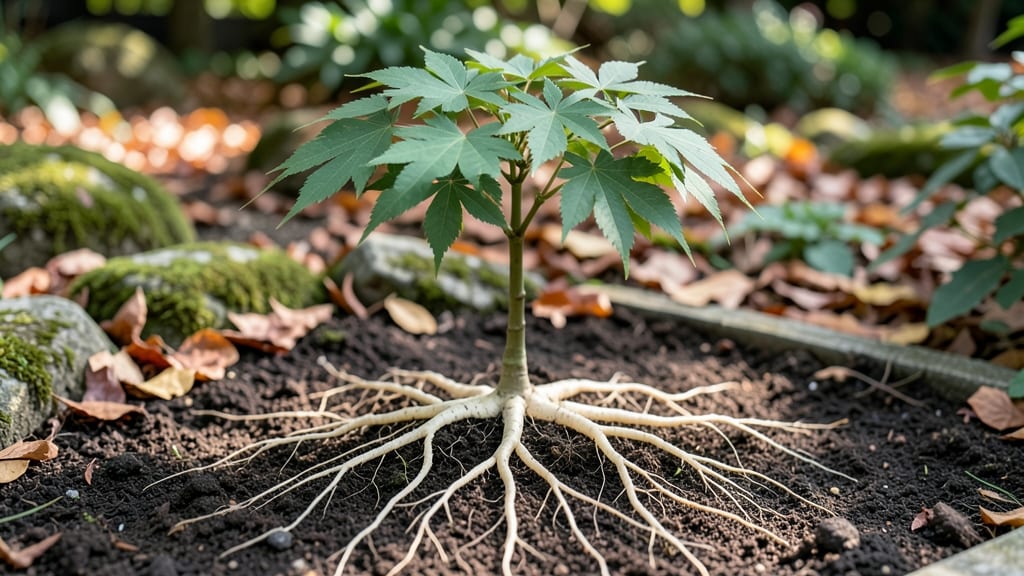
The Japanese Maple Tree’s root system determines its stability, health, and stunning foliage—so knowing how deep and wide these roots spread is the key to long-term care.
Did you know your Japanese Maple Tree’s stability—and even its stunning foliage—depends entirely on its intricate root system? Understanding how these roots grow and spread is the key to nurturing a thriving, long-lived specimen that resists storms and droughts.
Unlike many trees, Japanese maples develop a shallow but extensive root network that spreads horizontally, anchoring the tree securely in the soil. This growth pattern means they’re sensitive to soil compaction, root damage during transplanting, and improper watering.
In this guide, you’ll discover how to support your tree’s roots for a stronger, healthier specimen—from soil prep to pruning techniques that protect this delicate system.
Japanese maple root system: depth, spread, and growth patterns explained
The Japanese maple tree (Acer palmatum) boasts a root system as delicate as its foliage, with a unique balance between fibrous roots and shallow lateral spread. Unlike oak trees with deep taproots, Japanese maples develop a shallow but expansive root network that anchors them securely in well-draining soil.
This structure explains why they thrive in containers but struggle in compacted clay—understanding these patterns helps you plant and care for them effectively.
Young Japanese maples (under 3 years old) focus root growth within the top 12-18 inches of soil, forming a dense web of fine roots. As they mature, their lateral roots spread 2-3 times wider than the tree’s canopy, which is why pruning near the trunk can damage hidden roots.
This shallow depth also makes them sensitive to drought and soil erosion, requiring consistent moisture and mulch protection.
The root-to-shoot ratio in Japanese maples shifts dramatically with age. Seedlings invest 80% of energy into root development, while mature trees (10+ years) allocate more resources to foliage and branches.
This explains why young trees recover faster from transplant shock—their roots haven’t yet reached the 2-3x canopy spread seen in adults.
Soil type dramatically alters root behavior: in sandy soil, roots grow deeper (up to 24 inches) to access moisture, while clay soil restricts growth to the surface, increasing drought vulnerability.
Amending with compost or peat moss creates an ideal loose, airy medium that mimics the forest floors where these trees evolved. Always test soil pH (ideal range: 5.0-6.5) before planting.
Container-grown Japanese maples develop root circling when roots spiral around the pot’s edge, a common issue in nursery stock. To prevent this, choose containers with at least 12 inches of depth and 18 inches of diameter for dwarf varieties.
When transplanting, gently tease out circling roots and bury the root ball no deeper than its original level—deeper planting suffocates roots and causes trunk rot.
Environmental stress like high winds or prolonged drought triggers Japanese maples to produce extra lateral roots for stability, often within 2-4 weeks. This adaptive growth explains why they recover from pruning wounds faster than many other trees—their root system compensates for above-ground losses.
However, this also means they’re not ideal for windy sites without staking support.
Pruning roots is controversial, but root pruning can be necessary when transplanting or managing invasive roots. Use a sharp spade to sever roots 6-12 inches from the trunk, then apply rooting hormone to stimulate regrowth.
Timing matters: perform this task in early spring when the tree is actively growing, not in late summer when energy reserves are low.
Mulching plays a critical role in root health by maintaining consistent soil temperature and moisture. Use 2-3 inches of organic mulch (like wood chips or shredded bark) and keep it 6 inches away from the trunk to prevent rot.
Avoid inorganic mulches like gravel, which don’t improve soil structure and can overheat roots in summer.
Monitor your Japanese maple’s roots by observing leaf color and growth rate. Yellowing leaves or stunted growth often signal root stress from compaction, poor drainage, or root-bound conditions
How Japanese maple roots adapt to soil and climate for maximum stability
Your Japanese maple tree thrives when its roots adapt perfectly to their environment. Unlike many trees, Japanese maples develop a shallow but extensive root system, spreading horizontally rather than diving deep.
This adaptation helps them anchor securely in well-draining soil while maximizing access to moisture and nutrients near the surface.
Climate plays a crucial role in root development. In cooler, humid zones (USDA 5-7), roots grow more aggressively to take advantage of consistent moisture. Meanwhile, in hotter, drier climates (USDA 8-9), roots develop deeper lateral extensions to seek out underground water sources, though they still prefer surface-level nutrients.
Soil type dramatically impacts root health. Loamy soil is ideal because it balances drainage and moisture retention, allowing roots to spread freely. Sandy soil drains too quickly, while clay soil can suffocate roots by becoming waterlogged. Understanding these differences helps you prepare the perfect planting environment.
Soil & Climate Adaptation for Japanese Maple Roots
Loamy Soil
- ✓ Perfect drainage & moisture retention
- ✓ Encourages extensive root spread
- ✓ Ideal for most USDA zones
- ✗ Requires regular compost addition
- ✗ Can compact over time
Clay Soil
- ✓ Retains moisture well
- ✓ Natural nutrient richness
- ✗ Poor drainage risks root rot
- ✗ Requires heavy amendment
- ✗ Roots struggle to spread
Sandy Soil
- ✓ Excellent drainage
- ✓ Low risk of waterlogging
- ✗ Dries out too quickly
- ✗ Requires frequent watering
- ✗ Nutrients wash away easily
Container planting offers unique advantages for root adaptation. In pots, roots grow in a circular pattern around the root ball, making them more susceptible to root circling if not pruned regularly.
Choose containers with adequate drainage holes and use a well-aerated potting mix with perlite or orchid bark to prevent compaction.
Mulching plays a vital role in root stability. Apply 2-3 inches of organic mulch (like wood chips or shredded bark) around the base of your tree, keeping it 6 inches away from the trunk. This helps regulate soil temperature, retain moisture, and prevent soil-borne diseases from affecting delicate roots.
Pruning roots isn't something you do often, but when transplanting or repotting, prune circling roots with clean, sharp shears to encourage outward growth. Water deeply after pruning to reduce stress, and avoid fertilizing for 4-6 weeks to allow roots to recover before resuming nutrient uptake.