
Blooming
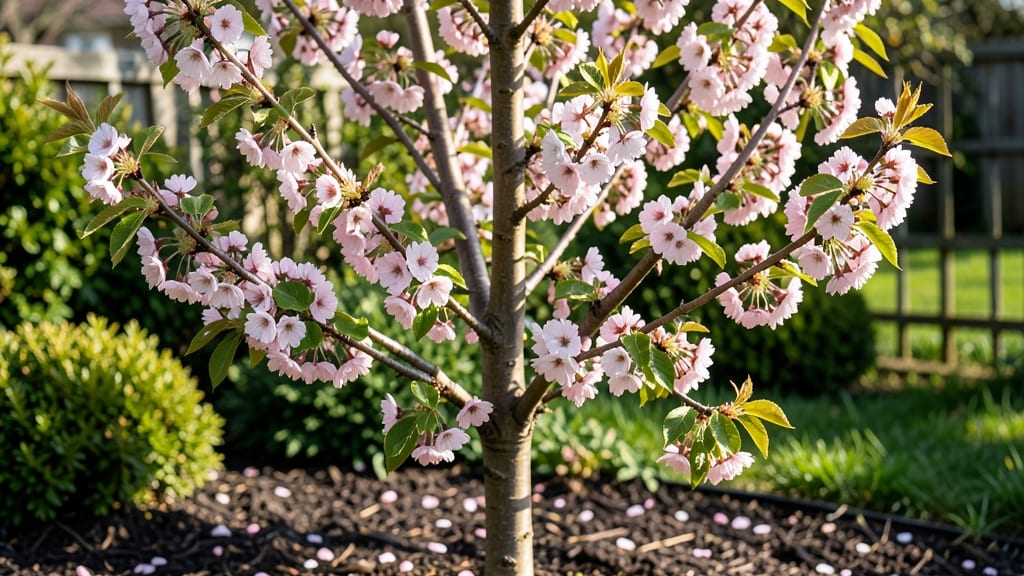
Sour cherry tree blossoms turn your spring garden into a fragrant cloudburst of pink and white. 🌸 I remember the first time I saw one—how the branches seemed to glow against the pale sky, drawing bees and butterflies like a magnet.
These trees aren’t just pretty; they’re the centerpiece of early spring, offering weeks of delicate blooms before the leaves even appear. The secret to making them stand out? Plant them where they’ll get morning sun and afternoon shade, surrounded by plants that love the same conditions.
Daffodils, bleeding hearts, and hellebores all play well together, creating a layered spring display that lasts from late winter through early summer. The blossoms even have a faint almond scent that fills the air on still mornings.
You’ll end up with a garden that feels like a living painting—soft pink canopies contrasting against dark evergreens, with pollinators buzzing happily between branches. The best part? Once established, these trees need almost no extra care beyond occasional pruning to keep their shape open and airy.
Perfect for small yards, cottage gardens, or even as a dramatic focal point along a driveway. Here’s how to make them the star of your spring landscape!
📚 In This Guide
- What you need
- Instructions
- Tips and common mistakes
- Wrapping up and next steps
What you need
- ● Pro tip: 💡 If planting in containers, use a large pot (20+ gallons) with drainage holes—sour cherry trees can grow surprisingly well in urban spaces!
How to encourage vibrant sour cherry tree blossoms
Here's how to coax those fragrant white blooms into full, pollinator-friendly glory.
🌱 Step 1: Select and Prepare the Right Location
Sour cherry trees thrive in full sun—at least 6-8 hours daily—with well-draining soil. I always test soil pH first (aim for 6.0-7.0) because acidic soil stunts blossom production. If your yard has heavy clay, amend with 2-3 inches of compost mixed into the top 12 inches of soil before planting.
Dig a hole twice as wide as the root ball but no deeper. The tree’s graft union (visible bump near the base) should sit 2-3 inches above ground level to prevent rot. Water deeply before planting to help roots settle into moist soil.
☀️ Step 2: Provide Proper Light and Airflow
Once planted, sour cherries need unfiltered sunlight—no afternoon shade. If your yard has tall trees or buildings blocking light, consider a south-facing exposure or prune nearby obstructions. I’ve seen blossoms fade under partial shade, so don’t skimp on sun.
Thin out lower branches annually to improve airflow. Crowded canopies trap moisture, inviting fungal diseases like powdery mildew, which weakens blooms. Prune in late winter (before buds swell) to shape the tree while preserving its natural vase shape.
💧 Step 3: Water and Fertilize for Blooming Success
Water deeply once a week during dry spells, ensuring moisture reaches 12-18 inches down. Sour cherries hate soggy roots but also suffer from drought stress, which reduces flower production. You’ll know you’re doing it right when the soil feels damp 6 inches down—not muddy, not bone-dry.
Feed in early spring (as buds swell) with a balanced 10-10-10 fertilizer, then again in late summer with a low-nitrogen, high-phosphorus blend (like 5-10-10) to encourage root and flower development. Avoid high-nitrogen fertilizers—they push leafy growth at the expense of blossoms.
✂️ Step 4: Prune Strategically to Boost Blooms
Prune annually in late winter to remove dead, crossing, or inward-growing branches. I target 3-5 main scaffold branches spaced evenly around the trunk—this opens the canopy to sunlight and air. Cut just outside the branch collar (the swollen area where the branch meets the trunk).
Thin out water sprouts (fast-growing vertical shoots) and suckers (shoots from the base) immediately. These steal energy from blossoms. Aim for an open, vase-like shape—this isn’t about aesthetics, it’s about maximizing sunlight penetration to every bud.
🐝 Step 5: Support Pollinators for Fruit Set
Sour cherry trees rely on bees and butterflies to pollinate blossoms. Plant native pollinator-friendly flowers (like dill, milkweed, or coneflowers) nearby to attract them. Avoid pesticides—even "organic" sprays can harm pollinators. I’ve seen blossom-heavy trees with no fruit because of poor pollinator activity.
If your area has few pollinators, hand-pollinate by gently shaking branches on warm, dry mornings when bees are active. This mimics natural pollination and ensures fruit set. Watch for white petals falling—this is normal, but if they drop without bees visiting, pollination failed.
Tips & tricks for perfect sour cherry tree blossoms
Real talk: The difference between a sparse handful of blossoms and a full, fragrant canopy often comes down to these small but critical details.
Soil Prep Matters: In Step 1, when amending heavy clay soil with 2-3 inches of compost, don't just scratch it in—mix it thoroughly into the top 12 inches. I learned this the hard way after planting in amended surface soil only to see roots struggle to penetrate deeper. The goal is to create a loose, crumbly texture that mimics the tree's natural forest floor environment. This encourages strong root development, which directly supports more robust blooming.
Pruning Precision: During your annual late winter pruning (Step 4), focus on creating that open vase shape by selecting 3-5 main scaffold branches. I recommend making your cuts just outside the branch collar—the swollen area where the branch meets the trunk—using sharp pruners. This technique promotes faster healing and prevents disease entry points. The open shape isn't just for looks; it's about maximizing sunlight penetration to every bud cluster, which is crucial for vibrant blossoms.
Fertilizer Timing: The early spring feeding with 10-10-10 fertilizer (Step 3) is non-negotiable, but here's what nobody tells you—don't apply it when the ground is frozen. Wait until you can press your finger into the soil about 2 inches deep without resistance. This ensures the nutrients are immediately available to the emerging roots and buds. The second feeding in late summer with 5-10-10 should happen after you've harvested any fruit, giving the tree energy to prepare for next year's blooms.
Pollinator Partnership: When planting native flowers to attract pollinators (Step 5), choose varieties that bloom at the same time as your sour cherries. I've had great success with purple coneflowers and bee balm—they create a pollinator highway right to your tree. Pro tip: Plant these flowers in a circle around your tree, about 10 feet out, to create a natural landing zone for bees. This simple arrangement can double your fruit set if pollinators are scarce in your area.
Pro Tips for Sour Cherry Tree Blossom
- Real talk: The difference between a sparse handful of blossoms and a full, fragrant canopy often comes down to these ...
- Soil Prep Matters: In Step 1, when amending heavy clay soil with 2-3 inches of compost, don't just scratch it in—mix ...
- Pruning Precision: During your annual late winter pruning (Step 4), focus on creating that open vase shape by selecti...
Frequently asked questions
Got questions about sour cherry tree blossoms? You’re not alone! Here are answers to the most common queries—from planting tips to troubleshooting—so you can enjoy your fragrant spring canopy with confidence.
When do sour cherry tree blossoms appear?
Sour cherry blossoms typically bloom in early to mid-spring, often between March and May, depending on your climate zone. Cooler regions may see later blooms, while warmer areas might enjoy earlier bursts of pink and white. Prune in late winter to encourage vibrant, timely blossoms!
Are sour cherry blossoms good for pollinators?
These blossoms are a pollinator magnet, attracting bees, butterflies, and hummingbirds. Their early spring nectar is a critical food source when other flowers are scarce. Planting a sour cherry tree supports local ecosystems—just ensure it’s pesticide-free during bloom season.
Can I grow a sour cherry tree in a container?
While possible, sour cherry trees thrive best in deep, well-draining soil with ample space for roots (they can reach 15–25 feet tall). Containers limit growth and may require frequent pruning. If you’re set on a pot, choose a large, sturdy container (20+ gallons) and replant outdoors after 2–3 years.
Why aren’t my sour cherry blossoms opening?
Blossoms may fail to open due to cold damage, late frosts, or dormancy issues. Ensure your tree gets full sun (6+ hours/day) and adequate water. If buds form but don’t bloom, check for bacterial canker or spider mites—treat with neem oil if needed.
What’s a good alternative if I can’t grow a sour cherry?
If sour cherries aren’t feasible, try these pollinator-friendly blossoms:
- Black cherry (Prunus serotina) – Native and drought-tolerant.
- Peach or plum trees – Similar blossoms, edible fruit.
- Crabapple (Malus spp.) – Compact, disease-resistant, and colorful.
- Serviceberry (Amelanchier) – Early blooms + edible berries.
Wrapping up and next steps
The sight of sour cherry tree blossoms isn’t just a feast for the eyes—it’s a lifeline for pollinators and a burst of natural beauty in spring. 🌸 From selecting the right variety to nurturing your tree, every step brings you closer to a thriving, fragrant canopy that benefits both your garden and local ecosystems.
Ready to turn your yard into a pollinator paradise? Start by planting your sour cherry tree this season—your future blossoms (and hungry bees!) will thank you. Happy gardening! 🌱