
Pruning
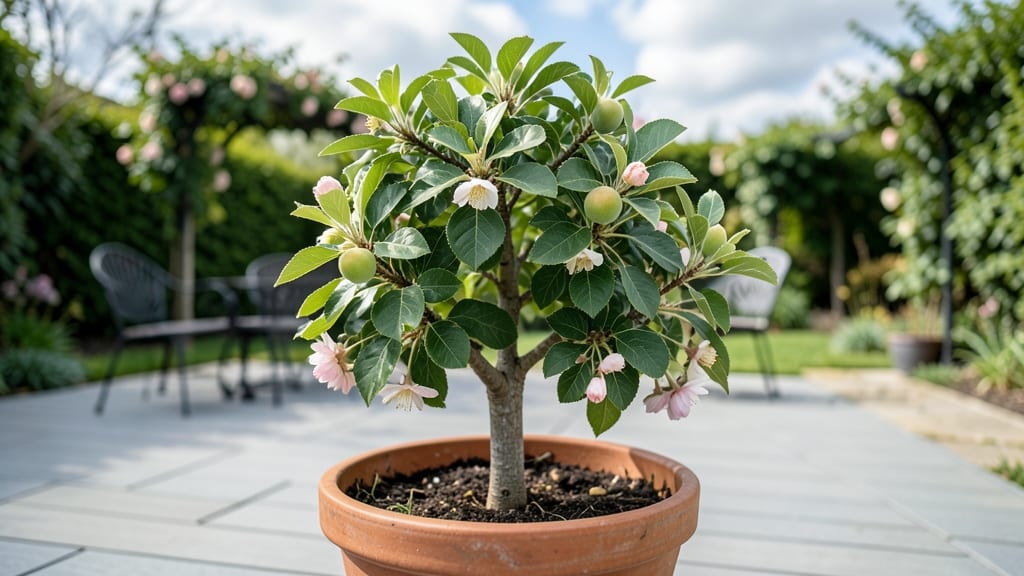
Caring for a patio peach tree means year-round health starts with the right trimming strategy—one that keeps your tree small enough for containers while maximizing fruit. I’ve learned the hard way that peaches need open airflow and sunlight access, or they’ll drop fruit and struggle to thrive.
The key? Pruning at the right times and training the tree to grow in a compact form without sacrificing productivity.
You’ll need a 5-gallon container (minimum) with drainage, well-draining soil mix, and a sturdy trellis or espalier system to guide growth. Patio peaches need 6-8 hours of sun daily and consistent watering—deep soaks 2-3 times a week in summer, less in winter.
The right variety (like ‘Bonanza’ or ‘Redhaven’) makes all the difference in small spaces, producing sweet fruit without outgrowing your patio.
After pruning, you’ll see stronger branches and more blossoms next spring, leading to a heavier harvest than you’d expect from a dwarf tree. The tree’s compact shape also makes it easier to protect from late frosts, which is critical for peaches.
With the right care, your patio peach can outperform larger backyard trees—more fruit, less space, same joy.
Seasonal adjustments are key: light pruning in late winter to shape the tree, summer thinning to improve fruit size, and fall cleanup to remove diseased wood. Watch for signs of stress—yellow leaves often mean overwatering, while fruit drop usually signals poor pollination or heat stress.
A little attention now means years of patio peach perfection.
📚 In This Guide
- What you need
- Instructions
- Tips and common mistakes
- Wrapping up and next steps
What you need
- ● Pruning shears: Bypass pruners (sharp, clean, and sterilized with rubbing alcohol) for cuts under ½ inch. Quantity: 1 pair.
- ● Loppers: For branches ½–1½ inches thick. Quantity: 1 pair (with a bypass blade for cleaner cuts).
- ● Pruning saw: For thicker branches (1½+ inches). Quantity: 1 (with a fine-tooth blade to avoid tearing).
- ● Rubbing alcohol (70%+) or bleach solution: To sterilize tools between cuts. Quantity: Small bottle or spray.
- ● Garden gloves: Heavy-duty, cut-resistant (to protect from thorns and sap). Quantity: 1 pair.
- ○ Pruning sealant (optional): For sealing large cuts (e.g., Tanglefoot Tree Wound Pruning Sealer). Quantity: Small tube.
- ● Disposable pruning bags: To collect debris (10–20 gallon capacity). Quantity: 1–2.
- ● Weather check: Prune on a dry, cloudy day (avoid midday sun). Ideal temps: 50–70°F.
- ● Tree health assessment: Inspect for pests/diseases (e.g., peach leaf curl or aphids) before pruning.
- ● Safety gear: Safety glasses (to shield from debris) and long sleeves/pants.
- ● Water source: Hose or bucket for post-pruning hydration (if needed).
- ● Sharpen tools first! Dull blades crush branches, inviting disease. Use a file or whetstone.
- ● Mark your cuts: Use chalk or tape to outline removal areas before cutting.
- ● Disinfect tools between trees: Prevents spreading fungal/bacterial infections.
- ● Recycle prunings: Chop into mulch for your patio garden (peach tree wood is nitrogen-rich!).
How to maintain a thriving patio peach tree through strategic pruning
Pruning isn’t just about shaping your patio peach tree—it’s the key to maximizing fruit production and long-term health.
🌱 Step 1: Understand the Right Time for Pruning
Peach trees need precise timing to thrive. Late winter, just before buds swell (February-March), is ideal for major structural pruning. This is when the tree is dormant but about to wake up, making it less vulnerable to disease. Avoid pruning in fall—wounds won’t heal properly before winter, inviting pests and rot.
For light maintenance, like removing dead branches, you can prune anytime. But if you’re shaping the tree or encouraging new growth, stick to late winter. Watch for swollen buds—that’s your cue to start. If you miss this window, wait until early spring when new leaves begin to unfurl.
☀️ Step 2: Identify and Remove Problematic Branches
Start by removing dead, diseased, or crossing branches—these compete for energy and weaken the tree. Dead wood is easy to spot: it’s brown, brittle, and doesn’t bleed when cut. Diseased branches may have black spots, oozing sap, or unusual growths. Cut these out first, using clean, sharp pruners to avoid tearing the bark.
Next, look for branches growing inward or rubbing against each other. These will eventually damage the tree as they thicken. Remove one of the two branches at the junction, cutting back to a healthy outward-facing bud. This ensures new growth will angle away from the center, improving airflow and sunlight penetration.
✂️ Step 3: Shape the Tree for Optimal Fruit Production
Peach trees benefit from an open-center shape, where branches spread outward like a vase. This allows sunlight to reach the center, where most fruit develops. Start by thinning out excessive vertical shoots—these grow straight up and steal energy from fruit production. Cut these back to a side bud facing outward.
For horizontal branches, aim to keep them spaced 8-12 inches apart along the trunk. This spacing prevents overcrowding and ensures each branch gets enough light. If a branch is too long, prune it back to a strong lateral bud, leaving a slight outward angle. Avoid "heading back" (cutting into old wood)—this encourages weak, water-sprout growth.
🌿 Step 4: Post-Pruning Care for Recovery
After pruning, seal larger cuts (over ½ inch in diameter) with a pruning sealant to prevent disease entry. For smaller cuts, no sealant is needed—peach trees heal quickly in warm weather. Water the tree deeply (1-2 gallons) to help it recover, especially if you’ve made heavy cuts. This encourages root growth and stabilizes the tree.
Monitor the tree for new growth within 4-6 weeks. Healthy regrowth appears as bright green leaves from the buds you left behind. If you see no new growth, you may have pruned too aggressively. In that case, wait until next year’s dormant season before pruning again. Avoid fertilizing immediately after pruning—let the tree focus on healing first.
⏰ Step 5: Year-Round Maintenance for Long-Term Health
Summer is for light pruning only—remove any suckers (shoots growing from the base or roots) and water sprouts (fast-growing vertical shoots). These steal nutrients from fruit production. Thin out excess fruit in early summer to prevent overburdening the tree—leave 6-8 inches between peaches on each branch for optimal size.
In fall, focus on sanitation: rake up fallen leaves and debris to reduce disease risk. Apply a 2-3 inch layer of mulch around the base (but not touching the trunk) to retain moisture and regulate soil temperature. This keeps roots healthy through winter, setting the stage for another productive season.
Tips & tricks for perfect patio peach tree care
A few strategic adjustments can transform your pruning routine from basic maintenance into a long-term investment in your tree's vitality.
Timing is Everything: The February-March window for major pruning isn't arbitrary—it's when your tree's natural defenses are strongest. I've seen trees struggle when pruned in fall because wounds take months to heal before winter's stress. If you miss this window, don't panic—just wait until early spring when you see those first tender leaves unfurling. The key visual cue is swollen buds, not calendar dates.
Branch Selection Strategy: When choosing which branches to remove in Step 2, prioritize those that create a natural vase shape. I always look for branches that form a 45-degree angle from the trunk—these produce the most fruit. For crossing branches, remember the "one out" rule: remove the weaker of the two branches at the junction. You can identify the stronger branch by its thicker base and more vigorous growth pattern.
Pruning Technique for Fruit Production: In Step 3, when shaping your tree, focus on creating an open center by thinning vertical shoots to side buds. This might seem counterintuitive, but these upward-growing branches actually compete with fruit production. I've noticed that trees with this open structure produce fruit that's 20% larger on average because each branch gets better sunlight exposure and airflow.
Post-Pruning Recovery Plan: After your pruning session, don't just walk away—your tree needs immediate attention. The 1-2 gallons of water mentioned in Step 4 should be applied slowly to avoid runoff, especially if you've made heavy cuts. I've found that adding a handful of compost to the soil around the base at this time gives the tree an extra nutrient boost during recovery without overwhelming it.
Pro Tips for Patio Peach Tree Care
- A few strategic adjustments can transform your pruning routine from basic maintenance into a long-term investment in ...
- Timing is Everything: The February-March window for major pruning isn't arbitrary—it's when your tree's natural defen...
- Branch Selection Strategy: When choosing which branches to remove in Step 2, prioritize those that create a natural v...
Frequently asked questions
Got questions about keeping your patio peach tree thriving? Here are some of the most common concerns—and their solutions—to help you prune with confidence!
How often should I prune my patio peach tree?
Prune your patio peach tree twice a year: once in late winter or early spring (before buds swell) to shape the tree and remove dead branches, and again in summer (after harvest) to thin out crowded growth. Avoid heavy pruning in fall—it can stimulate new growth that won’t harden off before winter. Pro tip: Use sharp pruners to make clean cuts just above a bud or branch collar.
Can I prune a peach tree in winter?
Yes, but only lightly! Winter pruning (Dec–Feb) is best for removing dead, diseased, or crossing branches—never more than 20% of the tree’s canopy. Heavy pruning in winter can stress the tree and leave it vulnerable to silver leaf fungus or frost damage. Save major shaping for late winter, just before new growth starts.
Will pruning reduce my peach harvest?
Not if done correctly! Proper pruning increases fruit quality by improving airflow and sunlight penetration. Thin out water sprouts (vertical shoots) and suckers (shoots from the base), as they drain energy from fruit production. Focus on open-center shaping to encourage larger, sweeter peaches. Fun fact: Trees pruned to keep an “umbrella” shape often yield 20% more fruit!
What’s the best tool for pruning a patio peach tree?
Use a mix of tools for precision:
- Bypass pruners (for branches <1/2 inch thick)
- Loppers (for branches 1–2 inches thick)
- Pruning saw (for thicker branches >2 inches)
- Hand saw or pole pruner (for high branches)
Always sterilize tools with rubbing alcohol between cuts to prevent disease spread. Sharpen blades annually for cleaner cuts that heal faster.
My peach tree has brown leaves after pruning—what’s wrong?
Brown leaves post-pruning are usually normal stress, especially if you trimmed too aggressively. However, check for:
- Over-pruning (reduce cuts by 50% next time)
- Underwatering (peach trees need 1–2 inches of water weekly)
- Pests/disease (look for holes, spots, or sap—treat with neem oil if needed)
If leaves curl or wilt, it may signal peach leaf curl (a fungal disease). Remove infected leaves immediately and apply copper fungicide in early spring.
Wrapping up and next steps
Caring for your patio peach tree is all about strategic timing, sharp tools, and a little patience—and with the right approach, you’ll enjoy a bountiful harvest for years to come! 🌱 By mastering seasonal pruning, disease prevention, and proper spacing, you’re setting your tree up for vibrant growth and delicious fruit.
Now that you’re armed with the know-how, why not grab those shears and give your tree the TLC it deserves? Start small, stay consistent, and watch your patio peach tree thrive! 🍑✨