
Pruning
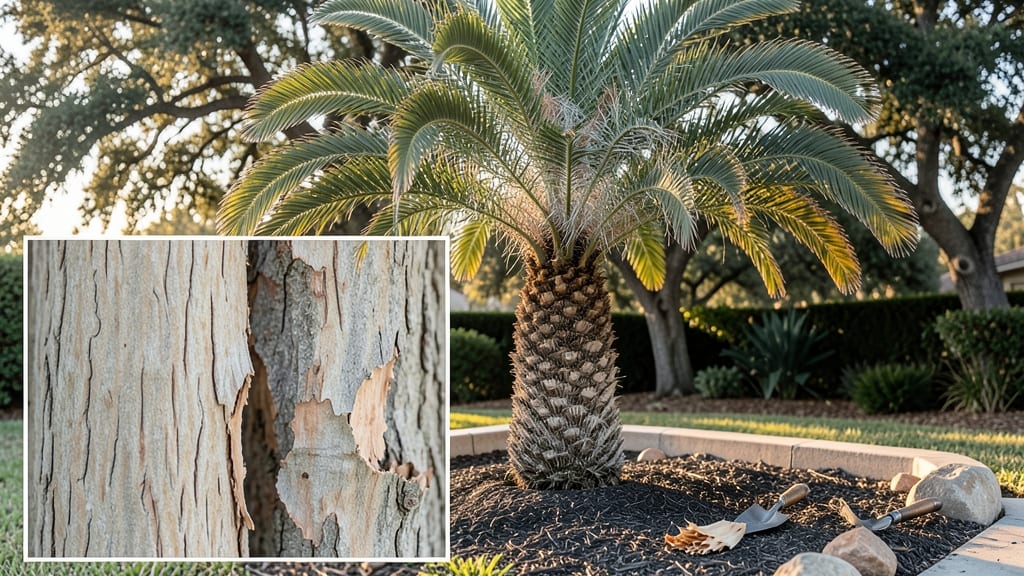
Your palm tree’s bark falling off isn’t just cosmetic—it’s a cry for help. 🌴 I’ve seen healthy palms turn into sad, leafless sticks when homeowners ignore the warning signs, but the good news is most cases fix with 3 simple pruning tricks and a little TLC.
First, rule out the usual suspects: overwatering (soggy roots = rot), underwatering (thirsty roots = stress), or pests like weevils chewing through the trunk. Check for holes, sawdust-like frass, or sticky scale insects—those mean trouble.
If the bark’s peeling is uneven with dark spots, it could be fungal infection from poor drainage.
Here’s where the fixes get easy: prune dead fronds (never more than ⅓ at once), apply systemic fungicide if needed, and mulch to keep roots cool. A balanced fertilizer in spring gives your tree the boost it needs to regrow that protective bark.
Most palms bounce back in 3-6 months with consistent care.
This works for indoor palms (like parlor palms) too—just adjust watering and light. The key is acting fast before the problem spreads deeper. Let’s get your tree back to its tropical glory!
Root Causes Of Bark Shedding
When your palm tree’s bark starts peeling like sunburnt skin, it’s rarely a random act of nature—it’s a cry for help. Understanding the why behind this issue is the first step to saving your tree.
Below, we break down the most common culprits, from environmental stressors to hidden pests, with science-backed explanations and actionable insights.
Palm trees thrive in stable climates, but sudden swings—whether scorching heat or freezing cold—can trigger bark shedding as a survival mechanism. Here’s how it happens:
- Heat Stress: When temperatures soar above 90°F (32°C), the outer bark layer can dry out and crack, exposing the inner tissue. This is especially true for species like the Phoenix dactylifera (date palm), which is sensitive to dehydration.
- Cold Damage: A hard frost (below 28°F / -2°C) can cause cellular damage in the bark, leading to peeling as the tree sheds compromised tissue. Young palms are far more vulnerable.
- Sunburn: Intense afternoon sun on a tree unaccustomed to it (e.g., newly planted palms) can scorch the bark, making it brittle and prone to flaking.
💡 Pro Tip: If your tree is in a microclimate with erratic temps (e.g., near pavement or in a wind tunnel), consider mulching the root zone to regulate soil temperature and providing afternoon shade during heatwaves.
Water is the lifeblood of your palm, but imbalances can turn its bark into confetti. Here’s the science:
- Overwatering: Soggy soil leads to root rot (caused by Phytophthora fungi), which disrupts nutrient flow to the bark. The tree sheds bark to isolate infected areas, but this weakens its structure.
- Underwatering: Chronic drought forces the tree to prioritize root survival over bark maintenance. The outer layer dries out, cracks, and peels away like a sunbaked snake’s skin.
- Salt Buildup: If you’re using tap water or live in a coastal area, excess salts in the soil can burn the bark’s outer cells, causing peeling. This is common in Washingtonia filifera (California fan palm).
🎯 Actionable Fix:
- Check soil moisture 2 inches deep—if it’s damp, hold off on watering. Use a moisture meter for accuracy.
- Flush the soil with rainwater or distilled water (if salt is the issue) to leach out excess minerals.
- For sandy soil (which drains too fast), add organic compost to improve water retention.
Not all bark shedding is environmental—some tiny (or not-so-tiny) invaders are to blame. Here’s what’s likely gnawing on your palm:
| Pest/Disease | How It Causes Peeling | Tell-Tale Signs |
|---|---|---|
| Palm Weevil Larvae (Rhynchophorus spp.) | Larvae burrow into the trunk, feeding on vascular tissue. The tree’s immune response “walls off” the area by shedding bark. | Holes in the trunk, sawdust-like frass, wilting fronds (even with wet soil). |
| Scale Insects (e.g., Aspidiotus spp.) | These sap-suckers weaken the bark by draining nutrients. Infested areas turn yellow/brown and peel as the tree tries to expel them. | Sticky residue (honeydew), white/crusty bumps on bark, ants (they farm scale insects). |
| Fungal Infections (e.g., Ganoderma butt rot) | Fungi like Ganoderma decay the trunk from within, causing the bark to split and peel as structural integrity fails. | Shelf-like fungal growth at the base, black/brown streaks under bark, hollow-sounding trunk when tapped. |
🔥 Emergency Response:
- For weevils: Inject permethrin-based insecticide into the trunk (follow label instructions). Act fast—this pest can kill a palm in weeks.
- For scale: Blast off infestations with a hose (100 PSI) or apply neem oil (repeat every 2 weeks).
- For fungus: Prune infected bark below the damage and treat with copper fungicide. Replace severely compromised trees—fungal rot spreads.
Just like us, palms need the right diet to maintain healthy skin. When soil lacks key nutrients, the bark suffers:
- Potassium Deficiency: Potassium (_K_) helps regulate water balance in plant cells. Without it, bark becomes thin and prone to cracking. Look for yellowing fronds with brown edges—a classic sign.
- Magnesium Deficiency: Magnesium (Mg) is crucial for chlorophyll. A lack of it causes interveinal chlorosis (yellowing between leaf veins) and weakens bark resilience.
- Compacted or Alkaline Soil: Palms hate soil with a pH above 7.0 or high clay content. Roots struggle to absorb nutrients, leading to bark degradation.
🌡️ Soil Test & Fix:
- Test your soil’s pH and nutrient levels with a home kit or send a sample to a lab.
- Amend soil with sulfur (to lower pH) or Epsom salt (for magnesium).
- Top-dress with slow-release palm fertilizer (high in potassium and magnesium) twice a year (spring/fall).
Now that you know the why, the next step is the how. Stay tuned for our pruning fixes to revive your palm’s bark and prevent future peeling!
Revive Your Tree Naturally
If your palm tree’s bark is peeling or falling off, don’t panic—it’s often fixable with the right care. Below, we’ve mapped out practical solutions for the most common causes, along with preventive tips to keep your tree healthy. Follow these steps to restore your palm’s natural beauty and strength.
If yellowing fronds or slow growth accompany the bark issues, your palm may be starving for essential nutrients. Here’s how to correct it:
🔥 Step 1: Test the Soil
Before adding fertilizers, check if the soil lacks key nutrients. Use a soil test kit (available at garden centers) to identify deficiencies in nitrogen (N), phosphorus (P), or potassium (K).
🍳 Step 2: Apply the Right Fertilizer
Palm trees thrive with a balanced, slow-release fertilizer (look for a 6-6-6 or 8-3-9 ratio). For immediate results:
- For nitrogen deficiency: Use a fish emulsion or blood meal (high in N).
- For phosphorus (root/palm health): Try bone meal or a superphosphate blend.
- For potassium (strength & disease resistance): Opt for greensand or potassium sulfate.
👨🍳 Step 3: Feed Correctly
Apply fertilizer every 4–6 weeks during growing seasons (spring–fall). Avoid overdoing it—too much can burn roots. Pro tip: Water the soil well before and after applying to help absorption.
🌡️ Prevention Tip
Mulch around the base with organic matter (like compost or pine bark) to retain moisture and slowly release nutrients. Replenish mulch annually.
If the bark is peeling due to excessive sun exposure, your palm needs shade and hydration adjustments.
🔥 Step 1: Provide Temporary Shade
If newly planted, use shade cloth (30–50%) for the first few months. For mature trees, consider partial shade (e.g., planting near other trees or using a lightweight shade sail).
💡 Step 2: Deep Watering Schedule
Palms need 1–1.5 inches of water per week, especially in hot climates. Water deeply at the base (not just surface-level) to encourage strong root growth. Pro tip: Water in the early morning to reduce evaporation.
🎯 Step 3: Protect with Anti-Transpirants
Apply a wax-based anti-transpirant spray (like Wilt-Pruf) to the fronds to create a protective barrier against sun damage. Reapply every 2–4 weeks during peak sun.
✨ Prevention Tip
Choose sun-tolerant palm varieties (like Mediterranean fan palms) if you live in a hot, dry climate. Avoid planting palms in full afternoon sun without acclimation.
If insects (like palm weevils) or fungal infections are causing bark to peel, act fast with targeted treatments.
🔪 Step 1: Identify the Culprit
Check for:
- Palm weevils: Look for sawdust-like frass at the base or holes in the trunk.
- Fungal infections (e.g., Ganoderma butt rot): Spot black, shelf-like growths at the base.
- Scale insects: White, cottony clusters on fronds or trunk.
🛡️ Step 2: Apply Targeted Treatments
For pests: Use systemic insecticides (like imidacloprid) or neem oil spray for organic control. For fungal issues, apply a copper-based fungicide (follow label instructions).
🚰 Step 3: Prune Infested Areas
Remove dead or heavily damaged fronds with sterilized pruners (clean with rubbing alcohol). For trunk issues, consult an arborist—some diseases (like Ganoderma) may require professional removal to save the tree.
🌱 Prevention Tip
Keep your palm well-hydrated and fertilized to boost its natural defenses. Inspect trees monthly for early signs of pests or disease.
Sudden climate changes (like frost, wind, or salt exposure) can shock a palm into shedding bark. Here’s how to recover:
🌡️ Step 1: Adjust Watering
If your area had freezing temps, reduce watering until new growth appears. For salt exposure (common near coasts), flush the soil with fresh water to remove buildup.
💨 Step 2: Wind & Salt Protection
If your palm is near the coast, mulch heavily and apply salt-tolerant fertilizer (like gypsum). For wind damage, stake young palms or plant them in a sheltered spot.
🔄 Step 3: Gradual Acclimation
If you moved a palm to a new climate, harden it off over 2–3 weeks by slowly exposing it to the new conditions.
🌿 Prevention Tip
Choose native or adapted palm species for your climate. For example, California fan palms thrive in coastal areas, while Mexican fan palms handle heat better.
With these fixes, your palm should regain its strength and stop shedding bark within a few months. Stay consistent with care, and your tree will bounce back—healthy and lush!
Frequently asked questions
Is it normal for palm trees to lose bark naturally?
Palm trees do shed some bark as they grow, but it should be gradual and not expose the trunk. Healthy bark peeling usually happens in thin layers during seasonal changes. If you're seeing large patches falling off or the trunk looking damaged, that's a sign of stress or disease needing attention.
How can I tell if my palm tree's bark peeling is from pests or disease?
Look for these clues: Holes in the trunk or sawdust-like frass near the base suggests palm weevils. Sticky residue or white bumps mean scale insects. For fungal issues, check for black shelf-like growths at the base or dark streaks under the bark. Always inspect the trunk and fronds carefully.
Can I save a palm tree if the bark is completely gone in some areas?
Yes, but act quickly! If the damage is superficial, apply copper fungicide and mulch heavily to protect roots. For deep damage, consult an arborist about trunk injections or protective wraps. With proper care, many palms recover within 3-6 months, but severe cases may need professional treatment.
Will pruning help stop bark from falling off?
Pruning alone won't fix the root cause, but it helps! Remove dead or yellow fronds to reduce stress on the tree. Focus on cleaning up the base and improving airflow. Combine pruning with proper watering, fertilizing, and pest control for best results. Think of it as first aid while you address the underlying issue.
How often should I inspect my palm tree for bark problems?
Check your palm every 4-6 weeks during growing seasons (spring-fall). Look for early signs like discoloration, holes, or unusual peeling. In winter, monthly inspections are fine. Regular checks help catch issues before they become serious, giving your palm the best chance to recover.