
Pruning
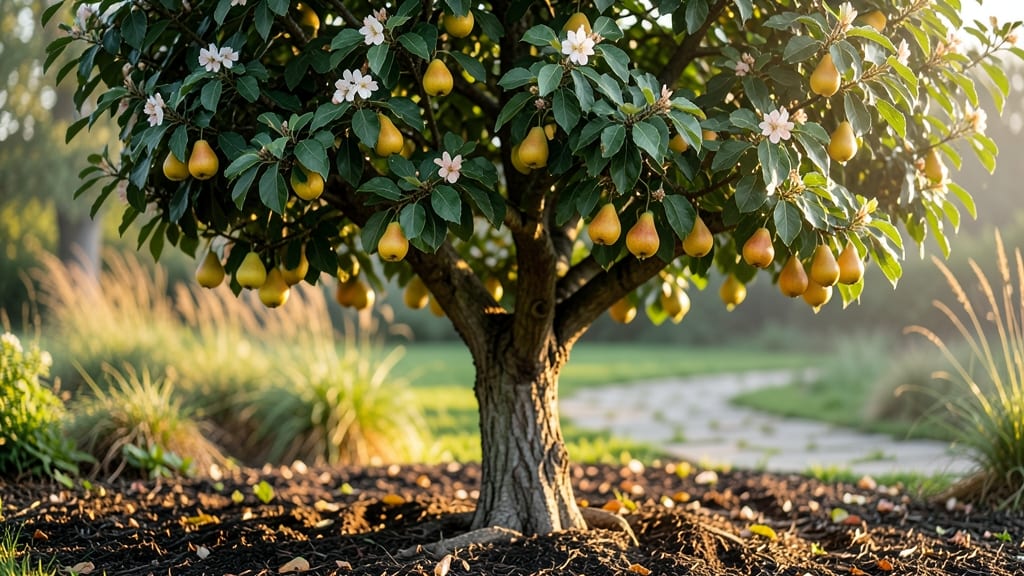
Strategic oriental pear tree care turns your oriental pear tree into a fruit-bearing powerhouse—and the secret is timing. 🌿 I’ve watched my own tree go from a scraggly sapling to a loaded branch in just three years, all because I learned when (and how) to prune.
The key isn’t just cutting branches—it’s shaping the tree’s future while it’s still dormant.
You’ll need sharp pruners, a ladder, and a clear winter day when the tree’s bare. Focus on removing dead wood first, then thin out crowded branches to let light reach the center. Three cuts per branch—just above an outward-facing bud—keeps the tree open and productive.
Skip the heavy-handed approach; oriental pears respond best to gradual shaping over time.
The payoff? By late spring, you’ll see fresh green leaves pushing from every pruned spot, and by harvest season, those branches will be heavy with sweet, juicy fruit. The tree stays compact enough for small yards but still produces 50+ pears per season with proper care.
Even better, the wood becomes stronger each year, resisting storms and pests better than unpruned trees.
Works in zones 5-9, whether you’re dealing with a young sapling or a mature tree needing rejuvenation. Here’s how to keep it thriving year after year—no guesswork, just results.
📚 In This Guide
- What you need
- Instructions
- Tips and common mistakes
- Wrapping up and next steps
What you need
- ● Pruning shears: Bypass pruners (sharp, 6-8 inch blades) for small branches.
- ● Loppers: 12-16 inch bypass loppers for medium-sized branches (thickest cut: 1.5 inches).
- ● Pruning saw: Curved-tooth saw for branches thicker than 2 inches.
- ● Rubbing alcohol (70% or higher): 1 small bottle (for sterilizing tools).
- ○ Pruning sealant (optional but helpful): 1 small tube (for sealing large cuts).
- ● Work gloves: Heavy-duty, cut-resistant gloves (1 pair).
- ● Ladder or step stool: Sturdy, tall enough to reach the tree’s canopy safely.
- ● Disposable bags or bucket: For collecting pruned branches.
- ● Tree pruning spray: 1 bottle (for disinfecting tools between cuts).
- ● Marking spray (paint): 1 small can (to mark branches for removal).
- ● Knee pads or cushion: For comfort during ground-level trimming.
- ● Safety goggles: To protect eyes from debris.
- ● Tree growth regulator (if needed): Follow label instructions for application.
Instructions for pruning and maintaining your Oriental pear tree
Here's how to keep your tree thriving through every season with simple, effective techniques.
✂️ Step 1: Prune for Structure in Late Winter
Wait until the tree is fully dormant, typically in late February or early March before buds swell. This timing prevents disease spread and encourages strong new growth. I always start by removing any dead, broken, or crossing branches first—these compete with healthy branches and create entry points for pests.
Use sharp bypass pruners to make clean cuts just outside the branch collar (the swollen area where the branch meets the trunk). Avoid cutting flush with the trunk or leaving stubs—both invite rot and weaken the tree. For larger branches over ½ inch thick, use a pruning saw and seal the cut with pruning paint only if the branch is over 2 inches thick (smaller cuts heal naturally).
☀️ Step 2: Thin the Canopy for Light and Airflow
After the tree flowers but before fruit sets (around mid-April), focus on thinning the canopy. Remove branches that grow inward or rub against others—these create wounds and reduce fruit quality. I aim to open the center of the tree so sunlight reaches all branches, which improves fruit color and ripening.
Look for branches that grow straight up from the main scaffold—these often produce fewer fruits and cast shade. Cut these back to a strong outward-facing lateral branch. Never remove more than 25% of the canopy in one season, or you'll shock the tree. You'll notice new shoots emerge from the sides of remaining branches within 4-6 weeks—these are your tree's way of filling in the gaps.
🌿 Step 3: Summer Maintenance to Encourage Fruit Production
During June and July, remove any suckers (shoots growing from the base or trunk) and water deeply once a week if rainfall is less than 1 inch. Suckers drain energy from the tree, so I pull them out by hand when they're small—larger ones require pruning shears. Thin out some of the fruit clusters if they're too dense, leaving 6-8 inches between fruits on each branch. This ensures larger, higher-quality pears.
Watch for signs of stress like yellowing leaves or stunted growth—these often mean the tree needs more nutrients. Apply a balanced 10-10-10 fertilizer in early June if your soil is poor, but avoid heavy feeding if the tree looks healthy. Oriental pears are sensitive to over-fertilization, which can lead to excessive vegetative growth at the expense of fruit.
⏰ Step 4: Prepare for Winter Dormancy
In late October, give the tree one final light pruning to remove any dead or diseased wood that might harbor pests over winter. Avoid heavy pruning now—the tree needs to harden off gradually. Rake up and dispose of fallen leaves to reduce disease risk, especially if your tree had any signs of fire blight last season.
Apply 2-3 inches of mulch around the base, keeping it 6 inches away from the trunk to prevent rot. I use wood chips because they break down slowly and improve soil structure over time. Water deeply before the first hard frost to ensure the roots have enough moisture to survive winter. Oriental pears are generally cold-hardy, but young trees benefit from wrapping the trunk with tree guard to protect against sunscald in late winter.
Tips & tricks for perfect Oriental pear tree care
These simple strategies will help you maintain a healthy, productive tree without the guesswork.
Timing is Everything: The late February to early March window for winter pruning is critical—this timing prevents disease spread while the tree is fully dormant. I've learned the hard way that pruning too early can expose fresh cuts to late winter frost, while waiting too long risks waking up pests. Check your local frost dates to pinpoint the exact moment when buds are still tightly closed but the tree is no longer frozen solid.
Branch Selection Strategy: When thinning the canopy in mid-April, prioritize branches that grow inward or upward—these are the ones creating shade and competition. I use the "third branch rule": if a branch is the third one growing from the same spot, it's likely a weak water sprout that should be removed. This approach opens up the center while maintaining the tree's natural shape, which is key for fruit production.
Summer Maintenance Insight: The 6-8 inch spacing between fruit clusters in June and July might seem arbitrary, but it's based on the tree's ability to support fruit weight. I measure from the base of one pear to the next along the branch—this spacing prevents overcrowding, which leads to smaller, misshapen fruits. If you notice fruits touching, thin them immediately to redirect the tree's energy to fewer, higher-quality pears.
Winter Preparation Detail: That 6-inch gap between mulch and trunk in late October isn't just about aesthetics—it prevents moisture buildup that can cause rot. I always use wood chips because they break down slowly, improving soil structure over time. For young trees, I add an extra 1-2 inches of mulch during their first two winters to help establish strong root systems before they enter dormancy.
Pro Tips for Oriental Pear Tree Care
- These simple strategies will help you maintain a healthy, productive tree without the guesswork.
- Timing is Everything: The late February to early March window for winter pruning is critical—this timing prevents disease spread while the tree is fully dormant.
- Branch Selection Strategy: When thinning the canopy in mid-April, prioritize branches that grow inward or upward—these are the ones creating shade and competition.
Frequently asked questions
Got questions about keeping your Oriental pear tree thriving?
Here are some of the most common concerns—plus expert-backed answers to help you prune with confidence!
When is the best time to prune an Oriental pear tree?
Prune your Oriental pear tree during late winter or early spring (before buds swell) to avoid disease spread. Summer pruning is possible, but focus on light shaping—never remove more than 25% of the canopy at once. Avoid fall pruning, as wounds heal slower in cooler weather.
Why are my Oriental pear tree leaves turning yellow?
Yellow leaves often signal overwatering, nutrient deficiency, or fungal issues. Check soil moisture (it should be evenly damp, not soggy) and test for pests like aphids. If yellowing persists, amend soil with iron or zinc supplements or adjust pruning to improve airflow.
Can I prune my Oriental pear tree in winter?
Winter pruning is risky—dormant trees are vulnerable to bacterial canker if cut in freezing temps. If you must prune in winter, do so on mild days (above 40°F) with sterilized tools. Prioritize removing dead wood over heavy shaping.
What’s the difference between Oriental pear and Asian pear trees?
While both are Pyrus species, Oriental pears (e.g., Pyrus pyrifolia) thrive in warmer climates and need less chilling hours than Asian pears. Pruning techniques are similar, but Oriental pears bear fruit on older wood, so avoid heavy summer cuts that remove fruiting branches.
How often should I prune my Oriental pear tree?
Aim for annual light pruning in early spring to maintain shape and remove suckers. For established trees, every 2–3 years of structured pruning (focused on scaffold branches) suffices. Always prune just after harvest if summer thinning is needed.
Wrapping up and next steps
Caring for your Oriental pear tree doesn’t have to be overwhelming—just strategic! With the right tools, timing, and techniques, you’ll keep your tree thriving year-round. Remember, pruning in late winter or early spring sets the stage for vibrant blooms and bountiful fruit, while regular maintenance prevents disease and pests. 🌿
Now that you’re armed with expert tips, grab those pruners and give your tree the TLC it deserves. Watch it flourish with confidence—your green thumb is ready for action! 🌟