
Pests and Diseases
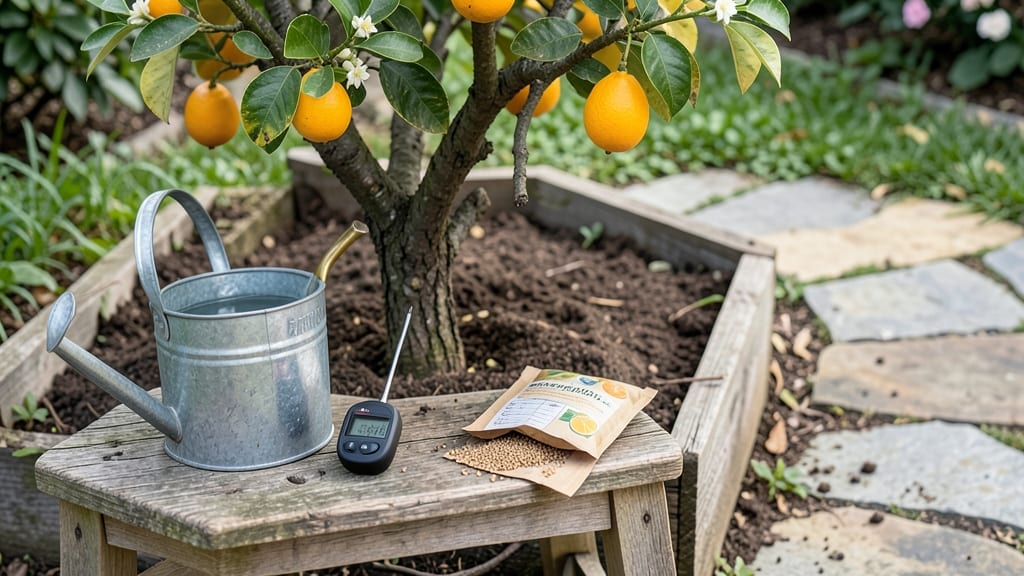
Your mandarin tree’s yellow leaves could signal a fungal blight—the copper spray fix works when you spot dark spots or sticky residue on branches. 🌿 I’ve seen this turnaround in just two weeks with the right treatment, and it’s easier than you’d think.
The key is identifying whether it’s fungal (like citrus blight) or something else, because the wrong fix makes things worse.
Start by checking the undersides of leaves for fungal spores or webbing from pests—those are dead giveaways. Overwatering or poor drainage often hides beneath the surface, too, so test your soil moisture before spraying anything.
Copper fungicide is your best bet for blight, but if it’s scale insects clogging the leaves, neem oil does the trick instead.
Once you’ve ruled out pests and adjusted watering, a weekly copper spray for 3-4 weeks stops the spread and restores that glossy green. You’ll notice new growth within days, and the tree’s overall health bounces back faster than you’d expect.
The secret? Consistency—skip a treatment, and the fungus comes roaring back.
Prevention is simpler than you’d think: prune for airflow, water at the base (not overhead), and inspect leaves monthly. My trees stay blight-free now, and the citrus scent in summer is worth the effort. Let’s get your mandarin back to its best.
Root Causes Of Fading Foliage
Yellowing leaves on your mandarin tree can be a distress signal, but understanding the why behind it is the first step to revival. 🌿🍊 Let’s break down the most common culprits—each with a distinct fingerprint—and how they hijack your tree’s health.
When your mandarin tree’s leaves turn yellow, it’s often a cry for help from its roots. Nutrient deficiencies—particularly in nitrogen, iron, or magnesium—are the most frequent triggers. Here’s how they manifest and what they steal from your tree:
- 📊 Nitrogen Deficiency (Yellowing Between Veins) Nitrogen is the backbone of chlorophyll, the pigment that gives leaves their green hue. Without enough, older leaves lose their color first, often turning pale yellow or straw-like while younger leaves stay green.
This is your tree’s way of prioritizing growth over maintenance. Actionable Fix: Apply a balanced fertilizer (10-10-10 or 20-20-20) in early spring or use composted manure for a slow-release boost.
- 🌡️ Iron Chlorosis (Yellow Leaves with Green Veins) Iron is essential, but mandarin trees (especially those in alkaline or calcareous soils) struggle to absorb it. This causes interveinal chlorosis—leaves turn yellow while veins remain green.
Young leaves are often the first to show symptoms. Actionable Fix: Test your soil’s pH (ideal: 6.0–7.0). If too high, amend with chelated iron or sulfur to lower pH. For quick relief, use iron sulfate or EDDHA iron sprays.
- 💀 Magnesium Deficiency (Yellow Edges & Spots) Magnesium is the MVP of chlorophyll production. A deficiency causes yellowing between veins, starting on older leaves and spreading inward.
Severe cases may show brown or dead patches. Actionable Fix: Apply Epsom salt (magnesium sulfate)—dissolve 1 tbsp per gallon of water and spray foliage or water the soil. Repeat every 2–4 weeks.
Mandarin trees hate wet feet. While they need consistent moisture, overwatering or compacted soil suffocates roots, cutting off nutrient and oxygen flow.
Symptoms include: - Yellowing leaves with a mushy texture (especially on lower branches). - Wilting despite wet soil (a classic sign of root rot). - Slow growth or leaf drop as the tree struggles to breathe.
Why It Happens:
- Fungal infections (like Phytophthora or Pythium) thrive in soggy soil, attacking roots and blocking nutrient uptake.
- Root asphyxiation—when roots can’t access oxygen, they release ethylene gas, triggering leaf yellowing as a stress response.
Actionable Fix: ✅ Check soil moisture—stick your finger 2 inches deep; if damp, wait before watering. ✅ Improve drainage—amend soil with perlite, sand, or compost to create air pockets. ✅ Raise the tree—if planted in a depression, mound soil around the base to prevent water pooling.
Fungal blights and diseases are mandarin trees’ worst nightmares, and yellowing leaves are often their calling card. Two of the most destructive offenders:
- 🍄 Citrus Canker (Xanthomonas citri) This bacterial infection (often mistaken for fungal) causes oily, yellow spots that turn brown with water-soaked edges.
Leaves may drop prematurely, and cankers (sunken lesions) form on branches. Actionable Fix: Prune infected branches 1 inch below the canker and sterilize tools with 70% alcohol or bleach. Apply copper fungicide (like copper hydroxide) every 7–14 days during outbreaks.
- 🍂 Alternaria Leaf Spot (Alternaria alternata) Dark, target-like spots with yellow halos appear on leaves, which eventually turn yellow and crispy.
Humid conditions (70%+ moisture) fuel this fungus. Actionable Fix: - Prune and dispose of infected leaves. - Space plants for airflow (fungi love crowded, damp foliage). - Spray copper fungicide at first sign of spots, repeating every 2 weeks.
Tiny pests like spider mites, aphids, or scale insects feed on leaf sap, disrupting nutrient flow and causing yellowing, stippling, or curled leaves. Their damage weakens the tree, making it vulnerable to secondary infections.
- 🕷️ Spider Mites These microscopic pests suck cell sap, causing yellow stipples (tiny white/yellow dots) that expand into larger yellow patches.
Severe infestations lead to bronzing or leaf drop. Actionable Fix: Blast off mites with a strong spray of water, then apply neem oil or horticultural oil (repeat every 5–7 days).
- 🐜 Aphids & Scale Aphids cluster on new growth, excreting sticky honeydew that attracts sooty mold (a black fungus).
Scale insects form brown, crusty bumps on stems/leaves, stunting growth. Actionable Fix: - Knock off pests with a soapy water spray (1 tsp mild soap per quart of water). - Introduce beneficial insects (ladybugs or lacewings). - Apply systemic insecticide (like imidacloprid) for severe infestations.
Mandarin trees are tropical at heart but can’t handle extreme conditions without protesting. Yellow leaves often signal:
- 🌞 Sunburn or Heat Stress Sudden exposure to intense sunlight (like after moving the tree) causes yellowing with brown, crispy edges. Older leaves are most vulnerable. Fix: Gradually acclimate trees to full sun (a process called hardening off). Provide afternoon shade in scorching climates.
- ❄️ Cold Damage Mandarin trees (especially cold-sensitive varieties like ‘Satsuma’) suffer chlorosis after frost. Leaves may turn yellow, brown, or black with ragged edges. Fix: Plant in microclimates (near walls or slopes that trap heat). Use frost cloth for young trees or mulch heavily in winter.
- 💨 Windburn Strong, dry winds strip moisture from leaves, causing yellowing and curling, especially on exposed branches. Fix: Plant windbreaks (like bamboo or evergreen hedges) or stake young trees to reduce stress.
Not all yellow leaves are a cause for alarm! Mandarin trees shed older leaves as part of their natural cycle.
How to tell it’s normal: - Yellowing starts at the base of the tree and moves upward. - Leaves drop easily when gently tugged. - New growth remains vibrant green.
When to Worry: If more than 20% of leaves yellow at once or new leaves are affected, dig deeper—it’s likely a deficiency, pest, or disease.
Quick Fixes for Fading Foliage
Yellowing leaves on your mandarin tree can feel like a slow-motion disaster—until you act! The good news? Most causes have simple, effective solutions. Below, we’ve mapped out practical fixes for each common trigger, plus prevention tips to keep your tree lush and green.
Let’s get your citrus queen back in fighting shape! 🌿✨
Fix: Drainage is everything for mandarin trees. Yellow leaves from soggy roots need immediate attention.
- 🔥 Step 1: Check the Soil Stick your finger 2–3 inches deep into the soil. If it’s damp (not just moist), your tree is drowning. Mandarin trees prefer well-draining soil—think sandy loam with a pH of 6.0–7.0.
- 👨🍳 Step 2: Adjust Watering - Water deeply but infrequently: Soak the root zone until water drains out the bottom, then wait until the top 1–2 inches are dry before watering again. - Avoid overhead watering: Wet leaves invite fungal diseases (like our nemesis, fungal blight).
Water at the base instead. - Use a moisture meter if you’re unsure—it’s a game-changer for citrus lovers!
- 🔪 Step 3: Improve Drainage (If Needed) If your tree sits in a pot or a heavy clay soil, amend the soil with:
- Perlite or coarse sand (20–30% of the mix)
- Compost (for nutrients, not just drainage)
- Orchid bark (for extra aeration) For in-ground trees, consider raising the planting mound slightly to encourage runoff.
💡 Pro Tip: If roots are already waterlogged, prune any severely yellowed leaves (but not more than 1/3 of the canopy at once) to reduce stress on the tree.
Fix: Yellow leaves can scream for nutrients—here’s how to diagnose and feed your tree.
| Symptom | Likely Deficiency | Solution |
|---|---|---|
| Yellow between veins | Iron (Chlorosis) | Apply chelated iron (like Iron Chelate) to soil or spray on leaves. Repeat every 2–3 months. |
| Pale green/yellow overall | Nitrogen | Feed with a balanced citrus fertilizer (high in nitrogen, like 6-6-6) in early spring. |
| Yellow with dark green veins | Zinc or Magnesium | Use Epsom salt (1 tbsp/gallon of water, sprayed on leaves) or a zinc sulfate soil drench. |
- 🌡️ Soil Test First! Before guessing, test your soil’s pH and nutrient levels (local extension offices often offer cheap kits). Citrus trees hate alkaline soil—if pH is above 7.0, add elemental sulfur to lower it gradually.
- 🍎 Organic Boosts
- Compost tea (rich in micronutrients)
- Fish emulsion (for nitrogen)
- Worm castings (gentle, nutrient-packed)
✨ Prevention: Top-dress with compost annually and mulch with straw or wood chips to retain moisture and nutrients.
Fix: If yellow leaves are paired with black spots, oily patches, or wilting, fungal blight or bacteria are likely culprits. Act fast!
- 🔥 Step 1: Prune Infected Areas
- Cut off yellowed or spotted leaves with sterilized pruners (wipe with rubbing alcohol between cuts).
- Remove fallen leaves from the ground to prevent spores from spreading.
- 🍳 Step 2: Copper Spray Treatment The #1 defense against fungal blight is copper fungicide (like Copper Sulfate or Copper Hydroxide).
- Mix: 1 tbsp copper fungicide per gallon of water.
- Spray: Coat both sides of leaves and the trunk, focusing on new growth.
- Frequency: Apply every 7–14 days until the problem clears, then monthly as prevention.
- 🌿 Step 3: Improve Airflow & Hygiene
- Thin out dense branches to allow sunlight and air circulation.
- Avoid wetting leaves when watering (use drip irrigation or soaker hoses).
- Clean up debris regularly—fungi love hiding in old leaves!
💡 Pro Tip: For bacterial infections (like citrus canker), copper won’t work—switch to a streptomycin-based spray (follow label instructions carefully).
Fix: Tiny pests can drain your tree’s vitality, causing yellowing. Here’s how to evict them!
- 🔪 Step 1: Identify the Pest
- Scale insects: Look for brown bumps on stems/leaves.
- Spider mites: Check for fine webbing on undersides of leaves.
- Aphids: Tiny green/black clusters on new growth.
- 🍳 Step 2: Blast Them Off - Neem oil spray: Mix 1 tsp neem oil + 1 tsp mild soap + 1 quart water.
Spray every 5–7 days until pests vanish. - Horticultural oil: Effective for scale and mites (apply when temps are above 50°F). - Water blast: For aphids, spray leaves with a strong stream of water to knock them off.
- 🌡️ Step 3: Attract Beneficial Bugs
- Ladybugs, lacewings, and parasitic wasps eat pests naturally. Invite them with:
- Dill, fennel, or marigolds planted nearby.
- Avoid pesticides that harm them!
- Ladybugs, lacewings, and parasitic wasps eat pests naturally. Invite them with:
🎯 Prevention: Inspect your tree weekly during warm months. Early detection = easier battles!
Fix: If yellowing is only on one side (often the south/west exposure), your tree might be sunburned or wind-scored.
- 🌿 Step 1: Provide Shade
- Use lightweight shade cloth (30–50% coverage) for newly planted trees or those in hot, dry climates.
- Mature trees: Prune to open the canopy for even sunlight distribution.
- 💨 Step 2: Wind Protection
- Burlap screens or windbreaks can shield young trees.
- Stake tall trees if they’re flopping in storms.
- 🌡️ Step 3: Recovery Care
- Deep water the tree to reduce stress.
- Avoid fertilizing until new growth appears (stressed trees can’t handle extra nutrients).
💡 Pro Tip: Mulch heavily (2–3 inches) to protect roots from temperature swings.
🎯 Final Reminder: Most yellow leaf issues are fixable with patience and consistency. Start with the most likely cause, act quickly, and monitor your tree’s response. If problems persist after 4–6 weeks, consult a local arborist or extension service—they’ve seen it all! 🌱🔍
Frequently asked questions
Why do mandarin tree leaves turn yellow first on older branches?
This is normal nutrient redistribution! Mandarin trees prioritize new growth, so older leaves yellow when nutrients like nitrogen or magnesium get "recycled" to younger leaves. If new leaves also yellow, check for deficiencies or pests.
Can I use coffee grounds to fix yellow leaves on my mandarin tree?
Yes, but with caution! Coffee grounds are acidic and can help with iron chlorosis (yellow leaves with green veins) by lowering soil pH. Mix 1 cup per tree into topsoil, but avoid overdoing it—too much acidity harms roots. Test soil first!
How often should I spray copper fungicide for fungal blight?
Start with weekly sprays for 3-4 weeks during outbreaks, then switch to monthly prevention once leaves recover. Always spray in the early morning for best coverage. Stop if rain is forecast within 24 hours.
Are yellow leaves contagious between citrus trees?
Not the yellowing itself, but fungal diseases (like Alternaria) or pests (like scale) can spread easily. Quarantine affected trees immediately and clean tools between uses. Remove fallen leaves to prevent spore spread.
What's the fastest way to tell if my mandarin tree has root rot?
Gently scrape the soil surface—healthy roots are white or light tan. Rotten roots smell foul and turn mushy brown/black. If you see this, stop watering immediately and improve drainage.