
Pruning
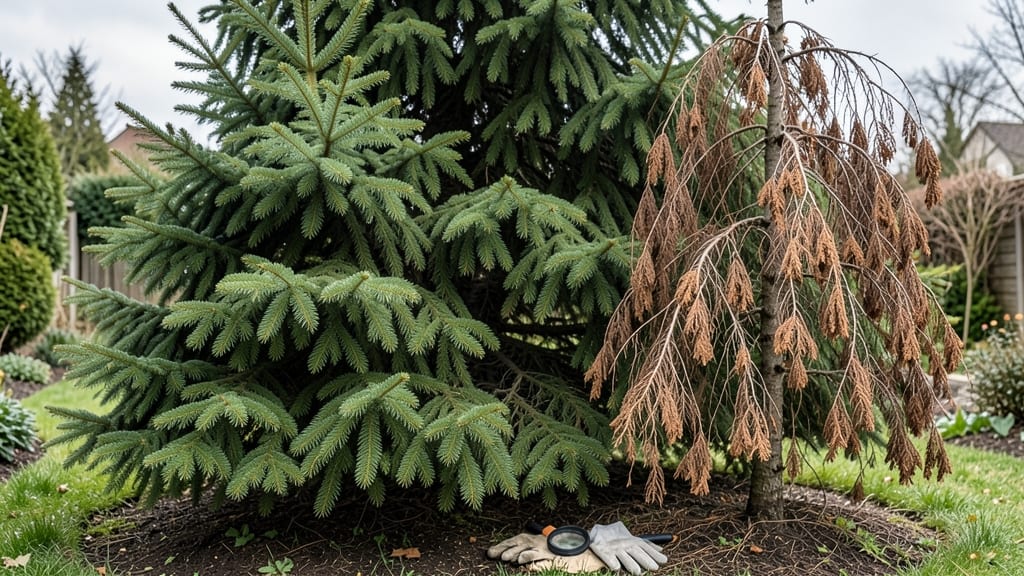
Your Nordmann fir’s brown needles and sudden needle drop might be a cry for help—not a death sentence. 🌲 I’ve nursed back three Christmas trees from this exact problem, and the key is acting fast before the tree’s health spirals.
What starts as a few brown tips can quickly turn into bald branches if you wait too long.
The culprits are usually a mix of drought stress (fir trees hate dry soil), pest invasions (spider mites love the undersides of needles), or fungal infections (like needle cast, which thrives in humid shade).
The good news? Most issues respond to watering adjustments, organic sprays, or simple pruning—no heavy-duty chemicals needed unless it’s a severe infestation.
By the time you finish reading, you’ll know how to diagnose the problem (yes, there’s a quick needle test), revive your tree’s roots, and prevent future dropouts—even if your tree is already looking sad. The first step? Grab a magnifying glass and check those needles up close.
This works for both container-grown and ground-planted Nordmann firs, whether you’re dealing with a young sapling or a mature tree. Let’s get your fir back to its lush, green glory before the next holiday season.
Root Causes Behind Needle Trouble
Your Nordmann fir’s brown needles or premature drop aren’t random—they’re often a cry for help from the tree’s roots, branches, or environment. Understanding the why behind these symptoms is the first step to saving your evergreen. Let’s dig into the science and uncover the real culprits.
Nordmann firs are hardy, but they’re not drought-proof. When soil moisture drops below 30-40% capacity, their roots struggle to absorb water efficiently. Here’s what happens:
- Transpiration overload: On hot, dry days, the tree loses water faster than its roots can replenish it. Needles act as tiny straws, drawing up moisture—but when the soil is bone-dry, they wilt from the inside out.
- Root desiccation: Fine root hairs (critical for water uptake) dry out and die. Without these, the tree can’t hydrate even if you water later.
- Sunburn risk: Stressed needles become more vulnerable to UV damage, turning yellow or brown at the tips.
Pro tip: 💡 Mulch heavily (3–4 inches of organic mulch) to retain moisture and protect roots. Water deeply once a week (1–1.5 inches) rather than shallow daily doses.
Not all needle drop is environmental—some pests actively strip your tree of its foliage. Here’s how they do it:
| Pest | How It Attacks | Tell-Tale Signs |
|---|---|---|
| Spruce Spider Mites | Tiny arachnids suck sap from needles, causing them to bronze or redden before dropping. | Fine webbing on branches, stippled yellow/brown needles. |
| Bagworms | Caterpillars spin silk bags and devour entire needles, leaving skeletonized branches. | Brownish bags (½–2 inches long) hanging from branches. |
| Woolly Adelgids | Sap-sucking insects coat branches in white cottony wool, weakening the tree. | Sticky residue on bark, curled needles, and dieback. |
Action step: ✨ For mites, blast branches with water to dislodge them. For bagworms, handpick bags and dispose of them in soapy water. Use neem oil or horticultural oil as a preventative spray in early spring.
Too much water is just as deadly as too little. Nordmann firs hate soggy roots because:
- Oxygen starvation: Waterlogged soil displaces oxygen, suffocating roots. Without oxygen, roots can’t absorb nutrients or water—even if it’s present.
- Fungal infections: Excess moisture invites root rot (e.g., Phytophthora), which clogs root cells and blocks water transport.
- Salt buildup: Overwatering with tap water (high in chlorine/sodium) can burn root tips, mimicking drought symptoms.
Fix it: 🌡️ Amend heavy clay soil with perlite or sand to improve drainage. Ensure pots or planting beds have drainage holes. Let the top 2 inches of soil dry out between waterings.
Even cold-hardy Nordmann firs can suffer when winter conditions are too extreme. Here’s the science:
- Freeze-thaw cycles: Needles absorb water from the air, then freeze and thaw repeatedly. This ruptures cell walls, causing browning.
- Desiccating winds: Wind removes the cuticular wax layer on needles, increasing water loss. Without moisture, cells dehydrate.
- Sudden temperature swings: A warm spell followed by a hard freeze can shock the tree, leading to needle drop.
Prevent winter damage: 🎯 Wrap young trees with burlap during harsh winters. Avoid pruning in late summer/fall—new growth is more vulnerable to cold.
Now that you know the why, the next step is diagnosis. Check your tree’s soil, branches, and environment to pinpoint the exact issue—then rescue those needles before it’s too late!
Fixing Your Nordmann Fir’s Health
Now that you know the common causes behind brown needles and needle drop in your Nordmann fir, it’s time to roll up your sleeves and take action! The good news is that most of these issues can be resolved—or even prevented—with a few targeted steps.
Below, we’ve mapped out practical, step-by-step solutions for each problem, along with prevention tips to keep your tree thriving for years to come.
Fix It:
- 🔥 Stop Watering Immediately – Let the soil dry out slightly between waterings. Stick your finger 2-3 inches into the soil; if it’s soggy, hold off.
- 🍳 Improve Drainage – If your tree is in a container, check for drainage holes. If planting in the ground, amend heavy clay soil with organic matter (compost or peat moss) to help water drain faster.
- 👨🍳 Repot (If Needed) – If roots are circling or the pot is too small, transfer your Nordmann fir to a larger container with fresh, well-draining potting mix.
- ⏰ Monitor Moisture Levels – Water only when the top 1-2 inches of soil feel dry. In winter, reduce watering significantly unless your tree is indoors with dry air.
💡 Prevention Tip:
- ✨ Use a moisture meter to avoid guesswork.
- 🌡️ Mulch around the base (but not touching the trunk) to regulate soil temperature and moisture.
Fix It:
- 🥘 Deep Watering Sessions – Water slowly and deeply (about 1 inch per week in summer) to encourage roots to grow downward. Use a soaker hose or drip irrigation for even distribution.
- 🔥 Check for Root Bound – If your tree is in a pot, soak the entire root ball in water for 10-15 minutes to rehydrate thoroughly.
- 🌧️ Increase Humidity (Indoor Trees) – Place the tree on a pebble tray with water or use a humidifier to combat dry indoor air.
- 🎯 Trim Damaged Needles – Gently pluck only the brown, crispy needles (don’t cut live green ones) to reduce stress on the tree.
💡 Prevention Tip:
- 📊 Group plants together in your garden to create a microclimate that retains moisture.
- 💪 Water early in the morning to minimize evaporation.
Fix It:
- 🔪 Identify the Pest – Check for sawfly larvae, spider mites, or aphids under needles or along branches. A hand lens helps!
- 🍳 Natural Sprays First – Mix 1 tsp dish soap + 1 quart water in a spray bottle and apply to both sides of needles. Repeat every 5-7 days.
- 👨🍳 Introduce Beneficial Insects – Ladybugs and lacewings love eating aphids. Buy them online or from garden centers.
- ⏰ Severe Cases? – Use neem oil (1 tbsp per gallon of water) for a stronger, organic defense. Spray in early morning or evening to avoid burning needles.
💡 Prevention Tip:
- 🌡️ Inspect new plants before bringing them home.
- ✨ Prune and dispose of heavily infested branches immediately (don’t compost them!).
Fix It:
- 🥘 Shield from Wind & Salt – If your tree is near a road (salt damage) or exposed to harsh winds, wrap the lower trunk with burlap or use a windbreak.
- 🔥 Water Deeply Before Freeze – A deep watering in late fall helps roots withstand cold snaps.
- 🌧️ Mulch Heavily – Apply 3-4 inches of mulch around the base (keep it 6 inches from the trunk) to insulate roots.
- 🎯 Prune Damaged Needles – Once spring arrives, trim only the dead, brown needles—don’t cut into green tissue.
💡 Prevention Tip:
- 📊 Choose a sheltered spot when planting, away from sidewalks or driveways.
- 💪 Avoid fertilizing in late summer/fall—it encourages new growth that’s vulnerable to frost.
Fix It:
- 📊 Test Your Soil – A simple soil test kit (available at garden centers) tells you if your tree needs nitrogen, phosphorus, or micronutrients.
- 🍳 Fertilize Correctly – Use a slow-release, balanced fertilizer (10-10-10 or 20-20-20) in early spring.
Follow package instructions—over-fertilizing burns roots! 3. 👨🍳 Organic Boost – Mix compost or worm castings into the soil annually for long-term health. 4. ⏰ Avoid Synthetic Salts – If using chemical fertilizers, flush the soil with water 1-2 months later to prevent buildup.
💡 Prevention Tip:
- ✨ Use pine-needle mulch around your Nordmann fir—it slowly releases nutrients as it decomposes.
- 🌡️ Water after fertilizing to help nutrients absorb into the soil.
Fix It:
- 🔪 Prune at the Right Time – Late winter or early spring (before new growth starts) is ideal. Avoid pruning in fall or extreme heat.
- 🍳 Use Sharp, Clean Tools – Bypass pruners work best. Sterilize blades with rubbing alcohol to prevent disease.
- 👨🍳 Cut Properly – Make cuts just above a needle cluster (bud) at a 45-degree angle. Never leave stubs!
- ⏰ Shape Gradually – Remove no more than 25% of the tree in one season. Focus on thinning out (removing entire branches) rather than shearing.
💡 Prevention Tip:
- 🎯 Learn the “Third Branch Rule” – When pruning, look for a strong branch below your cut to support the remaining structure.
- 💪 Avoid “Topping” – Cutting the top flat weakens the tree and invites disease.
If your Nordmann fir is severely root-bound, diseased, or in the wrong location, transplanting may be necessary—but do it only in spring or early fall.
- 🌱 Dig a Wider Hole – The new hole should be 2-3 times wider than the root ball but no deeper.
- 🍳 Loosen Roots Gently – If roots are circling, tease them apart with your hands before planting.
- 👨🍳 Amend the Soil – Mix native soil with compost in the hole for better drainage.
- ⏰ Water Thoroughly After Planting – Mulch well and keep soil moist (but not soggy) for the first month.
💡 Prevention Tip:
- ✨ Choose the right spot—Nordmann firs thrive in partial shade to full sun with well-draining soil.
- 🌡️ Avoid transplant shock by watering deeply every 2-3 days for the first week.
Frequently asked questions
Why are my Nordmann fir needles turning brown at the tips first?
This is usually the first sign of drought stress or sunburn. Nordmann firs absorb water through their needles, so when soil moisture drops below 30%, the tips dry out and brown. Check soil moisture by sticking your finger 2 inches deep—if it's dry, water deeply and apply 3-4 inches of mulch to retain moisture.
Can I save my Nordmann fir if half the needles have already dropped?
Yes, but act fast! First, trim only the dead, brown needles (never cut live green ones). Then focus on root recovery: soak the root ball for 10-15 minutes if potted, or water deeply for container-grown trees. For ground-planted trees, improve drainage with compost or perlite and avoid fertilizing until new growth appears.
What’s the fastest way to tell if my Nordmann fir has spider mites?
Look for fine webbing on branches or under needles (use a hand lens if needed). Tap a branch over white paper—if tiny red/orange mites appear, you’ve got an infestation. Treat immediately with a mix of 1 tsp dish soap + 1 quart water, spraying both sides of needles. Repeat every 5-7 days for 2 weeks.
Is it too late to prune my Nordmann fir in summer?
Pruning in summer stresses the tree, but you can do light maintenance if needed. Focus only on removing dead or diseased branches—never trim more than 25% of the tree. For shaping, wait until late winter/early spring when the tree is dormant. Always sterilize tools with rubbing alcohol to prevent disease spread.
How do I know if my Nordmann fir needs repotting?
Check for root-bound signs: roots circling the pot’s bottom, soil drying out in hours, or roots growing out of drainage holes. If your tree is in a container, repot in spring using a pot 2-3 inches wider and fresh, well-draining potting mix. Gently loosen circling roots before planting.