
Trees
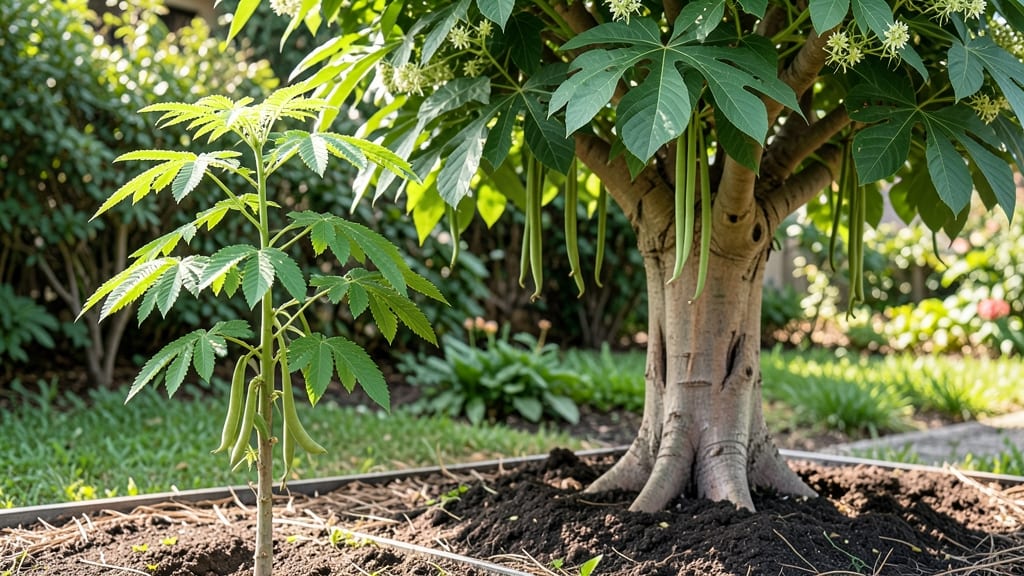
Mastering moringa tree identification starts with those signature fern-like leaves and the powdery-white seed pods that feel like velvet. 🌿 I’ve spent years tracking this tree in tropical climates, and the first thing that catches your eye is how its leaves fan out like delicate lace—each one compound with 5-11 leaflets that shimmer in sunlight.
The bark is smooth and pale gray, but it’s the seed pods that give it away: long, slender, and covered in a fine, velvety coating that’s unlike anything else in the wild.
The real game-changer is how it grows—moringa trees bolt straight up to 10-40 feet in just a few years, with a single trunk and branches that spread wide only near the top. Young trees have a slightly hairy stem, while mature ones develop a rougher texture.
If you’re in warmer climates like Florida or Hawaii, you might spot them near abandoned lots or along roadsides, but they’re also sold at specialty nurseries under names like "drumstick tree" or "horseradish tree."
Here’s the trick to verifying it: snap a photo of the leaves and pods and compare it to botanical databases like iNaturalist or the USDA Plants Database.
The leaf shape alone rules out look-alikes like mulberry or silk cotton trees—moringa’s leaflets are always paired opposite each other along the stem, never alternating. Once you confirm it, you’re holding one of the most nutrient-dense trees on Earth, ready to grow in your own backyard.
Regional variations are minimal, but trees in drier climates tend to grow slower and develop thicker bark. If you’re sourcing seeds or saplings, always buy from reputable suppliers—they’ll provide verified cuttings to avoid misidentification.
That first glimpse of those velvety pods is all the confirmation you need to start cultivating your own.
Mistakes in Moringa Tree Identification
Identifying a moringa tree can sometimes be tricky, especially if you’re unfamiliar with its key traits. Misidentification often happens due to a mix of natural variations, environmental factors, and human error.
Understanding these common pitfalls helps you avoid confusion and ensures you’re working with the right plant. Here’s why mistakes occur—and how to steer clear of them.
The most frequent error? Mixing moringa with other fast-growing, leafy trees that share superficial similarities. Moringa oleifera, the most common species, has distinctive features, but its close relatives or unrelated plants can throw you off.
- Similar Trees: Some trees, like Leucaena leucocephala (lead tree) or Albizia species, have compound leaves that might resemble moringa’s fern-like foliage at first glance. However, moringa leaves are pinnate with 3–11 pairs of leaflets, while these alternatives often have more rounded or differently arranged leaves.
- Seed Pods vs. Beans: Moringa’s seed pods are velvety, elongated, and triangular, resembling a drumstick. Other leguminous trees (like Parkinsonia) have flat, papery pods or bean-like structures. Ignoring this detail can lead to misidentification.
- Bark and Branching: Moringa’s bark is grayish-brown and smooth when young, becoming slightly rougher with age. Trees like Acacia or Eucalyptus have very different bark textures or peeling patterns.
Actionable Tip: Always cross-reference three key traits—leaf shape, seed pods, and bark—to confirm your identification. A quick photo comparison with a trusted guide (like this USDA database) can save time and frustration.
Moringa trees go through dramatic changes as they mature, and these shifts can make identification harder if you’re not paying attention. Seedlings, young trees, and mature specimens look entirely different.
| Stage | Leaf Shape | Seed Pods | Height |
|---|---|---|---|
| Seedling (0–6 months) | Small, simple leaves (not yet compound) | None (too young) | Up to 1–2 feet |
| Juvenile (6 months–2 years) | Developing pinnate leaves (3–7 leaflets) | May appear but are underdeveloped | 3–10 feet |
| Mature (2+ years) | Full 7–11 leaflet pairs, velvety texture | Long, drumstick-shaped pods (12–24 inches) | 20–30 feet (or pruned smaller) |
Why It Matters: A young moringa might look like a completely different plant until it matures. If you’re identifying a tree in a nursery or garden, ask about its age—or wait a few months to see if the leaves and pods develop.
Drought, poor soil, or extreme temperatures can cause moringa trees to change shape, size, or even leaf color, making them harder to recognize. Stress responses can mimic other tree species or even signal disease.
- Leaf Discoloration: Underwatering or nutrient deficiency (like nitrogen or magnesium) can turn moringa leaves yellow or purple. This might make them resemble stressed hibiscus or guava trees.
- Stunted Growth: Poor soil or compacted roots can prevent moringa from reaching its full height, leading to confusion with dwarf varieties or other small trees.
- Pod Abnormalities: If a moringa isn’t pollinated (due to lack of bees or isolation), it may produce smaller, deformed pods that don’t match the classic "drumstick" shape.
Actionable Tip: Check the root zone and soil conditions—healthy moringa thrives in well-draining, slightly acidic soil (pH 6.0–7.5). If the tree looks off, consider adjusting watering or fertilizing (use a balanced 10-10-10 NPK mix) to see if it rebounds.
Even experienced gardeners can misidentify moringa if they focus on just one feature (like leaves or height) instead of the full picture. Here’s how to avoid this:
- Ignoring the Seed Pods: Many people rely solely on leaf shape, but moringa’s distinctive pods are the most foolproof ID trait. Without them, you might mistake it for a neem or mango sapling.
- Assuming All Moringa Looks the Same: There are 13 moringa species, but Moringa oleifera and Moringa peregrina are the most common. Peregrina has thicker, waxier leaves and grows in drier climates.
- Relying on Photos Alone: A 2D image can’t capture texture, scent (moringa leaves have a mild, earthy aroma when crushed), or growth habit. Always observe the real plant.
Pro Tip: Use the "Three-Trait Rule" for confirmation:
- ✅ Leaves: Pinnate with 3–11 leaflet pairs, velvety texture.
- ✅ Pods: Long, triangular, and fuzzy (when mature).
- ✅ Bark/Trunk: Smooth gray-brown, often with a slight zigzag pattern.
Quick Fixes for Moringa Tree ID Confusion
Mistakenly identifying a moringa tree can lead to missed benefits—or even accidental pruning of the wrong plant! 🌱 The good news? With a few simple steps, you can confidently distinguish a moringa tree from look-alikes like drumstick trees or other tropical species.
Below are practical solutions tailored to common challenges, along with prevention tips to keep your identification skills sharp.
If you’re struggling to tell moringa leaves apart from others, focus on these key details:
🍃 Compare Leaf Structure
- Moringa leaves are ferns-like, with 7–13 leaflets arranged in pairs along a central stem. Each leaflet is oval with serrated edges and a slightly pointed tip.
- Drumstick (Mucuna) leaves are broader, heart-shaped, and grow in three large leaflets (not paired).
- Neem leaves are longer, narrower, and smooth-edged, with a distinctive bitter smell when crushed.
Fix: Use a magnifying glass to inspect the edges and arrangement. Snap a photo and compare it side-by-side with reference images online.
🌡️ Check the Texture
- Moringa leaves have a soft, velvety texture on the underside (a dead giveaway!).
- Prevention Tip: Run your fingers over the leaves—if they feel fuzzy, it’s likely moringa. 💡
If your tree isn’t flowering yet or the seed pods are hidden, rely on these alternative methods:
🌱 Examine the Bark and Branches
- Moringa bark is grayish-brown, rough, and peels in thin strips.
- Young branches are thin and green, while mature ones develop a slightly zigzag pattern.
- Fix: Scratch the bark gently—if it’s fibrous and exfoliates easily, it’s a strong moringa clue.
🌿 Look for Early Flowers
- Moringa flowers are small, fragrant, and white, appearing in clustered spikes before seed pods form.
- Prevention Tip: If you spot these flowers, mark the tree immediately to avoid confusion later. ✨
Young moringa trees (under 2 years) may not yet bear seed pods. Here’s how to verify:
🌱 Root and Leaf Analysis
- Dig a small sample (1–2 inches deep) near the base—moringa roots are thin, fibrous, and white.
- Crush a leaf—moringa has a mild, slightly sweet aroma (unlike neem’s sharp bitterness).
- Fix: If unsure, take a leaf sample to a local agricultural extension office for testing.
📊 Cross-Reference with Growth Habits
- Moringa grows fast (up to 10 feet/year) in tropical climates and thrives in poor soil.
- Prevention Tip: Keep a growth journal—note height, leaf density, and seasonal changes to track development. 📊
Even experienced gardeners mix up moringa with these trees. Steer clear of these pitfalls:
| Mistake | Why It Happens | How to Avoid |
|---|---|---|
| Confusing with drumstick | Similar seed pods but larger and harder. | Check leaf arrangement—moringa is paired leaflets. |
| Mixing with neem | Both have compound leaves but neem is bitter. | Taste-test a leaf (if safe)—moringa is mild. |
| Overlooking young trees | Seed pods take 1–2 years to appear. | Focus on leaf texture and bark first. |
Pro Tip: If you’re still unsure, post photos in gardening forums like Gardeners.com or r/permaculture—the community can help confirm in minutes! 🌍
With these fixes, you’ll never second-guess a moringa tree again. The key is observing details (leaves, bark, flowers) and eliminating look-alikes one by one. Happy identifying! 🌿🔍
Frequently asked questions
What’s the quickest way to confirm if a tree is moringa?
Check for three key traits: velvety seed pods (the classic drumstick shape), paired leaflets (7–11 pairs), and smooth gray bark. If all three match, it’s almost certainly moringa. For extra confirmation, crush a leaf—moringa has a mild, slightly sweet aroma.
Can I identify moringa from just the leaves?
Not reliably! While moringa leaves are distinctive (fern-like with paired leaflets), many trees have compound leaves. Always look for seed pods or bark texture too. A young moringa might resemble neem or mulberry until it matures—pods are the foolproof ID trait.
How do I tell moringa apart from drumstick trees?
Drumstick trees (like Mucuna) have broader, heart-shaped leaves in three leaflets, while moringa has 7–11 paired leaflets arranged like a feather. Also, moringa pods are velvety and triangular—drumstick pods are harder and more rounded.
What should I do if I think I’ve misidentified my tree?
Post photos in gardening forums (like r/permaculture) or visit a local agricultural extension office. Bring a sample of leaves, pods, or bark for expert verification. Never assume—moringa’s nutritional value makes accurate ID critical!
Why do some moringa trees look different in photos vs. real life?
Photos often miss texture details (like velvety leaves or fuzzy pods) and growth stages. Young trees lack pods, while mature ones may have thicker bark. Always observe the real plant—lighting and angles in photos can distort key traits.