
Pruning
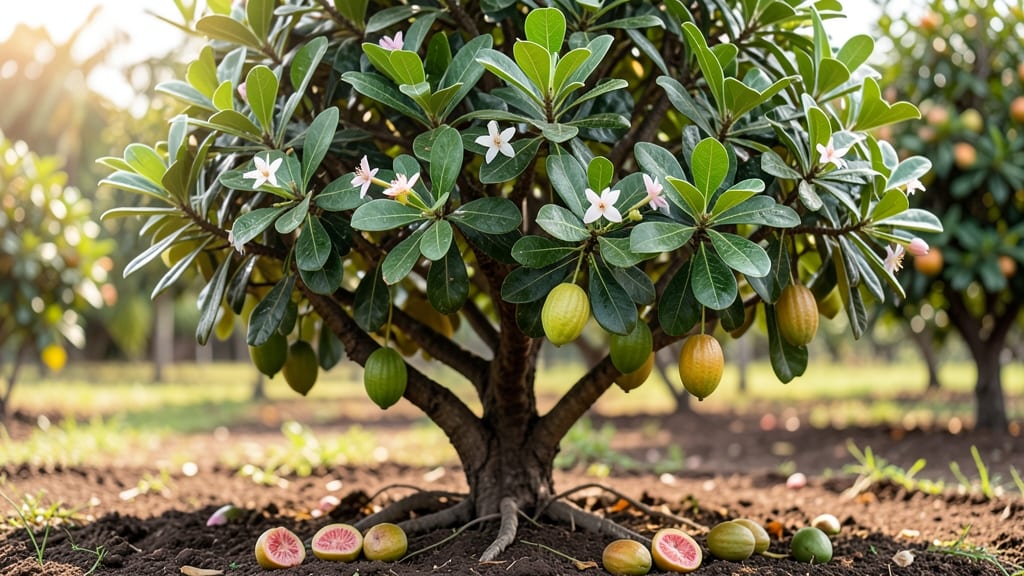
Growing guava trees in Arizona thrives with heat-tolerant varieties like 'Ruby Supreme' or 'Strawberry Guava,' which produce fruit continuously when planted in full sun with well-draining soil. Annual pruning enhances shape, boosts yields, and protects against frost damage.
These tropical fruit trees are perfect for Arizona's climate because they handle 100°F+ temperatures without stress. 🌵 The 'Ruby Supreme' variety, for example, delivers sweet, pink-fleshed fruit year-round, while 'Strawberry Guava' offers a tangier flavor with higher acidity.
Unlike other tropical trees, guavas don't need winter dormancy—they keep growing and producing as long as you maintain proper care.
The key to success lies in pruning at the right time. I recommend trimming in late winter or early spring before new growth begins. This helps remove any weak branches that might freeze in rare cold snaps while encouraging stronger fruit production.
Always use sterilized pruners to prevent disease spread, and never cut more than one-third of the tree's foliage at once.
💡 In This Article
- Best Guava Varieties for Arizona’s Climate
- Step-by-Step Arizona Guava Tree Pruning Guide
Best guava varieties for Arizona’s climate
Arizona’s relentless sun and dry heat make it an ideal home for guava trees, but not all varieties handle the conditions equally. The 'Ruby Supreme' variety stands out because its thick, waxy skin protects against water loss while maintaining vibrant pink flesh that’s sweeter than most tropical fruits.
This variety can handle temperatures up to 115°F without wilting, a critical advantage during Arizona’s summer months when other tropical trees struggle.
The 'Strawberry Guava' offers a different advantage—its smaller size (4-6 inches in diameter) makes it perfect for container growing in urban areas, while its higher acidity (pH 3.5-4.0) gives it a tangy kick that pairs well with spicy dishes.
Both varieties produce fruit continuously, unlike citrus trees that have seasonal flushes. What’s fascinating is how their root systems develop—guavas have deep taproots that reach 6-8 feet underground, helping them access moisture during droughts.
When comparing guavas to other tropical trees like mangoes or lychees, you’ll notice guavas require far less water once established. A mature guava tree needs only 1-2 inches of water per week during dry spells, while mangoes often demand weekly irrigation.
This drought tolerance is thanks to their small, leathery leaves that reduce evaporation. The trade-off? Guavas are less cold-hardy—temperatures below 28°F can damage young trees, which is why Arizona’s rare frost events demand protective measures.
For those considering other varieties, 'White Kwa' guava offers milder sweetness but lacks the heat tolerance of 'Ruby Supreme.' The key difference lies in their growth habits—'Ruby Supreme' grows upright (20-30 feet tall) while 'Strawberry Guava' stays compact (8-12 feet), making it ideal for smaller yards.
Both varieties flower year-round, but fruit production peaks in late spring and fall when temperatures average 75-90°F.
What most gardeners don’t realize is how guava trees benefit from Arizona’s long growing season. Unlike temperate fruits that need winter dormancy, guavas keep producing as long as they receive consistent care.
The secret to their success in the desert lies in their ability to photosynthesize efficiently under intense sunlight—something citrus trees struggle with due to their thinner leaves. 🌵
If you’re choosing between varieties, consider your space and flavor preferences: 'Ruby Supreme' for sweet, pink-fleshed fruit in larger areas, or 'Strawberry Guava' for tangy, easy-to-harvest fruit in containers. Both will reward you with harvests that outperform most tropical fruits in Arizona’s climate.