
Pruning
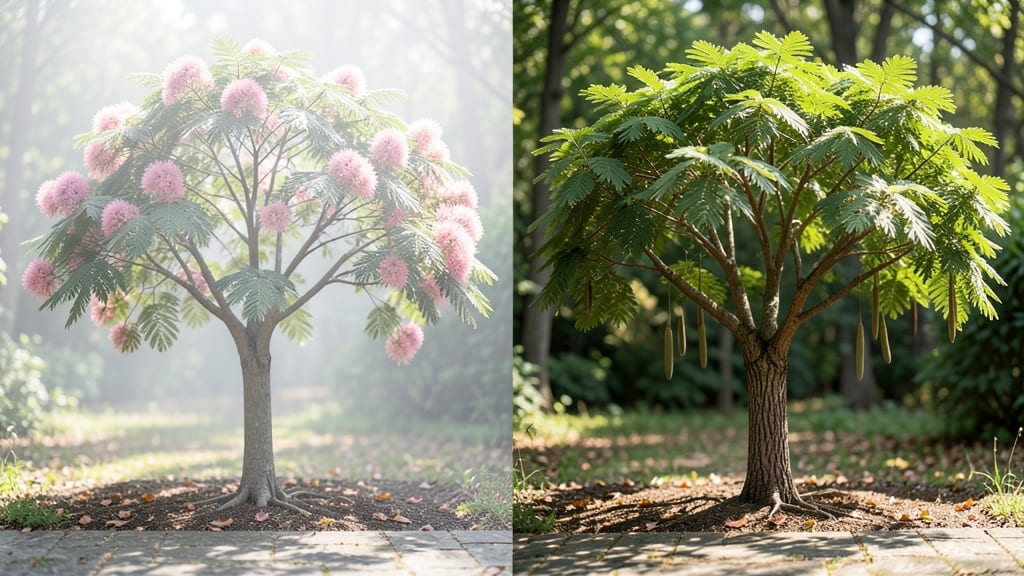
Choosing between a mimosa tree vs the tree of heaven can make or break your privacy screen—both grow fast, but their care needs and ecological impacts couldn’t be more different.
The mimosa tree (Albizia julibrissin) and tree of heaven (Ailanthus altissima) both deliver quick shade, but their long-term effects vary wildly.
I’ve planted both, and while the mimosa brings delicate pink blooms, the tree of heaven is a tough, invasive force that can take over if left unchecked.
Mimosa trees thrive in well-drained soil and full sun, with a growth rate of 3-5 feet per year—perfect for quick shade or a living fence. They’re low-maintenance once established, though their feathery leaves mean they drop litter in fall.
Tree of heaven, on the other hand, tolerates poor soil, drought, and even urban pollution, growing 4-6 feet annually—but it spreads aggressively through suckers and seeds, choking out native plants.
If you want a fragrant, ornamental tree that stays contained, the mimosa wins. But if you need a hardy, fast-growing screen in tough conditions and don’t mind the invasive risks, tree of heaven delivers—just be ready for constant pruning and monitoring.
Both have pros and cons, so let’s break down which one fits your yard’s needs.
The mimosa’s delicate blooms and slower spread make it ideal for landscaped areas, while the tree of heaven’s toughness suits neglected or high-traffic spaces. Neither is perfect, but knowing their quirks helps you pick the right fast-growing screen for your goals.
The first product explained
If you're looking for a fast-growing, natural privacy screen that adds beauty and value to your property, the Mimosa Tree (Albizia julibrissin) is a fantastic choice! 🌿✨ Known for its delicate, pink fern-like flowers and airy foliage, this tree isn’t just stunning—it’s also a powerhouse when it comes to growth and adaptability.
Here’s everything you need to know about this showstopper:
🌱 Key Specs & Features
- Growth Rate: Moderate to fast (12–24 inches per year under ideal conditions).
- Mature Height: 20–35 feet (with a spread of 25–40 feet—perfect for wide privacy screens!).
- Sunlight Needs: Full sun to partial shade (thrives in USDA Zones 6–9).
- Soil Tolerance: Adaptable to various soil types, including clay and sandy soils.
- Seasonal Interest:
- Spring: Showy pink blooms that attract pollinators.
- Summer: Light, feathery foliage that filters sunlight beautifully.
- Fall: Golden-yellow leaves before dropping.
- Maintenance: Low-maintenance but benefits from pruning to shape and encourage denser growth.
🎯 Target Users
The Mimosa Tree is ideal for:
- Homeowners seeking quick, natural privacy without invasive roots (unlike some competitors!).
- Landscapers and gardeners who love textured, low-maintenance plants with seasonal color.
- Urban or suburban properties where space is limited but a bold statement is desired.
- Wildlife enthusiasts—its flowers attract bees, butterflies, and birds!
💰 Price Point & Availability
Pricing varies based on size and supplier, but here’s a general range:
| Size | Price Range (USD) | Best For |
|---|---|---|
| 1–3 ft (container-grown) | $40–$80 | Small yards, new plantings, or DIY landscapers. |
| 4–6 ft (field-grown) | $80–$150 | Established privacy screens or larger properties. |
| Balanced B&B (Bare Root) | $50–$120 | Budget-friendly option for spring planting. |
Pro Tip: 💡 Buy from local nurseries for healthier, regionally adapted trees—and check for sales in early spring or fall!
The second product explained
Meet the Tree of Heaven (Ailanthus altissima) 🌳✨—the fast-growing, hard-to-kill powerhouse that’s stealing the spotlight from the mimosa tree in privacy screen battles! If you’re after a quick, dense barrier that thrives in tough conditions, this invasive (but useful!) tree might be your match.
📏 Specs & Features
This tree is a growth machine, shooting up 3–5 feet per year in ideal conditions. Here’s what sets it apart:
- Height: 40–60 feet at maturity (but can be pruned shorter for privacy screens).
- Spread: 30–50 feet wide, creating a natural, unbroken wall when planted in rows.
- Growth Rate: One of the fastest-growing trees in North America—perfect for instant privacy.
- Hardiness: Thrives in USDA Zones 4–9, tolerating urban pollution, poor soil, and drought once established.
- Foliage: Compound leaves (10–16 leaflets) with a distinctive, slightly toxic scent (which deters some pests).
- Flowers/Fruit: Produces small, greenish flowers in summer, followed by winged seed pods (hence its invasive reputation!).
🎯 Who’s It For?
This tree is a go-to for:
- Homeowners needing fast privacy (think: noisy streets, unsightly neighbors, or construction zones).
- Urban gardeners with limited space or poor soil—it’s a survivor!
- Those who want low-maintenance landscaping (though watch for aggressive spread—more on that below!).
- Pruning enthusiasts who enjoy structural shaping (it responds well to trimming!).
💰 Price Point
Costs vary by size and supplier, but here’s a general range:
| Size | Price Range |
|---|---|
| 1–3 gallon (young tree) | $20–$50 |
| 7–15 gallon (privacy screen starter) | $50–$150 |
| 25+ gallon (mature tree) | $150–$300+ |
Pro Tip: 💡 Buy multiple smaller trees for a denser, faster-growing screen than a single large specimen!
Warning: While the Tree of Heaven is fantastic for privacy, it’s highly invasive in many regions. Check local regulations before planting—some states consider it a noxious weed!
Head-to-head comparison
🌿 Growth Speed & Maturity
The race to privacy starts with how fast these trees grow! If you're looking for quick results, the Tree of Heaven (Ailanthus altissima) is the clear winner.
It can shoot up 3 to 5 feet per year under ideal conditions, reaching 50 to 70 feet tall in just 10-15 years.
Meanwhile, the Mimosa tree (Albizia julibrissin) grows at a more modest 2 to 3 feet annually, typically maxing out around 25 to 35 feet in the same timeframe. Need a fast hedge? The Tree of Heaven will have you covered in no time! 🚀
🌳 Privacy & Density
When it comes to blocking out noise, wind, and nosy neighbors, density is key! The Mimosa tree takes the crown here with its lush, feathery foliage that creates a dense canopy when mature. Its fuzzy pink blooms add a pop of color while maintaining thick coverage.
The Tree of Heaven, on the other hand, has thin, compound leaves that don’t provide as much natural privacy—though its rapid growth can help fill in gaps faster. If you prioritize year-round privacy with a pretty aesthetic, the Mimosa is your best bet. 🌺
🌱 Low-Maintenance & Hardiness
Let’s talk survivor trees—because not every plant thrives in every climate! The Tree of Heaven is a tough cookie: it tolerates poor soil, drought, and urban pollution, making it perfect for high-stress environments. It’s also disease-resistant and pest-resistant (mostly—more on that later!).
The Mimosa tree, while hardy, prefers well-draining soil and full sun and can be slightly pickier about its conditions. Both are low-maintenance once established, but if you’re in a harsh climate or tough spot, the Tree of Heaven is the underdog champ. 🏆
🐛 Pests & Diseases
No tree is completely pest-proof, but these two have very different struggles. The Tree of Heaven is loved by some pests, particularly spotted lanternflies and bagworms, which can defoliate it quickly. It’s also highly invasive in many regions, spreading aggressively via root suckers.
The Mimosa tree, while not pest-free, is less attractive to insects and rarely invasive. However, it can suffer from powdery mildew or leaf spot in humid conditions. If you’re in an area with aggressive pests, the Mimosa might be the safer choice. ⚠️
💰 Cost & Planting
Your wallet will thank you for knowing the upfront costs! A Tree of Heaven sapling typically costs $20 to $50, while a Mimosa tree runs $30 to $80 depending on size and nursery.
However, the Tree of Heaven’s rapid growth can save you money in the long run—you won’t need to buy as many plants to fill a space quickly. The Mimosa, with its slower growth, might require more initial plants for dense coverage.
Plus, if you’re in a regulated area, check local laws—the Tree of Heaven is banned or restricted in many states due to its invasiveness. 💸
✂️ Pruning & Shape
Both trees are prunable, but their natural shapes and response to trimming differ. The Tree of Heaven has a pyramidal shape when young but can become irregular and leggy if not pruned.
It responds well to hard pruning and can be shaped into a hedge or screen with regular trims. The Mimosa tree, with its rounder canopy, is easier to maintain as a privacy screen—its delicate branches may require gentler pruning to avoid damage.
If you’re new to pruning, the Mimosa might be the more forgiving option. 🌿
🌍 Invasiveness & Eco-Impact
This is where the Tree of Heaven gets a big red flag. It’s classified as invasive in 33 U.S. states and can outcompete native plants, disrupting ecosystems. The Mimosa tree, while not perfect, is less aggressive and more adaptable to local ecosystems.
If you’re an eco-conscious gardener, the Mimosa is the clear winner—unless you’re in a controlled environment where invasiveness isn’t a concern. 🌎
🌸 Aesthetic & Seasonal Interest
Let’s talk curb appeal! The Mimosa tree is the showstopper with its pink, pom-pom-like flowers in spring and golden fall foliage. It’s a garden favorite for its romantic, almost tropical vibe.
The Tree of Heaven, meanwhile, has greenish-brown leaves that turn yellow in fall but lack the wow factor. If you want a tree that doubles as a decorative piece, the Mimosa wins—no contest. 🌺✨
🏡 Best Uses for Privacy Screens
Need a quick privacy fix? Here’s where each tree shines:
- Tree of Heaven: Ideal for urban areas, industrial zones, or places with poor soil. Great for fast-growing windbreaks or temporary privacy (though it may need replacement long-term due to invasiveness).
- Mimosa Tree: Perfect for landscaping, garden borders, or areas where aesthetics matter. Its dense foliage and flowers make it a year-round beauty for residential properties.
If you’re renting or need a short-term solution, the Tree of Heaven’s speed might win. For a long-term, low-maintenance, pretty screen, the Mimosa is the smart pick. 🏡🌿
Which one should you choose?
So, which fast-growing privacy screen champion deserves a spot in your yard? The answer depends on your priorities—whether it’s aesthetics, low-maintenance living, or ecological impact. Let’s break it down to help you make the final call! 🌿✨
🌳 Pick the Mimosa Tree if...
- You love fragrance and color: Mimosa trees burst with golden blooms and a sweet, intoxicating scent in spring—perfect for sensory lovers! 🌼
- You want a classic, timeless look: Their airy, fern-like foliage and elegant branches add charm to any landscape.
- You’re okay with seasonal changes: Mimosa trees shed leaves in winter, offering a natural seasonal transition.
- You prioritize pollinators: Bees and butterflies adore mimosa flowers, making it a beekeeper’s or eco-friendly gardener’s dream.
🌲 Pick the Tree of Heaven if...
- You need fast privacy ASAP: It’s the speed demon of the two, reaching maturity in just a few years—ideal for quick screening. ⚡
- You’re in a tough climate: Drought-resistant and adaptable, it thrives where other trees might struggle.
- You don’t mind minimal upkeep: It’s low-maintenance and handles neglect like a champ (though watch for invasive tendencies!).
- You’re in an urban or small space: Its compact growth habit makes it a great fit for tight yards or city lots.
⚠️ Proceed with Caution If...
- Allergies are a concern: Mimosa pollen can trigger sneezing fits in sensitive folks. Tree of Heaven’s sap might irritate some skin.
- You hate mess: Both trees drop debris (mimosa’s flowers, Tree of Heaven’s seeds), so plan for cleanup.
- Invasiveness is a red flag: Tree of Heaven is notorious for spreading aggressively—consider it only if you’re prepared to control it.
Final Tip: If you’re torn, why not plant both? Use mimosa trees as a fragrant, ornamental border and Tree of Heaven as a fast-growing backdrop. Just keep an eye on that Tree of Heaven—it’s a champion grower but can be a bit of a bully in the garden! 🌱💪