
Pruning
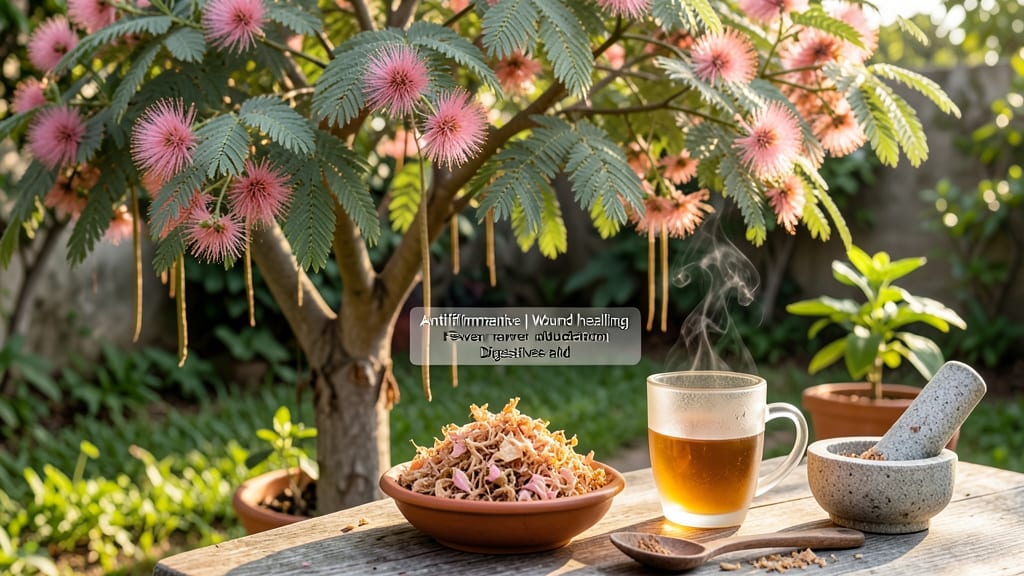
The mimosa tree offers medicinal benefits through its anti-inflammatory compounds like mimosine, which support wound healing and may aid digestion, though improper use can cause toxicity from alkaloids. Always consult a specialist before trying any mimosa-based remedy.
The mimosa tree's therapeutic potential comes from its complex chemical profile, particularly in its bark and leaves. 🌿 Studies highlight its anti-inflammatory effects, which may help with joint pain or skin irritations, while traditional uses include poultices for wounds.
However, the tree's alkaloids—like mimosin—can be dangerous if consumed improperly, often causing digestive upset or allergic reactions. I recommend exploring professionally prepared extracts rather than DIY methods, as proper preparation drastically reduces risks while preserving benefits.
For those curious about specific applications, the bark's tannins make it particularly valuable in topical treatments, while leaf extracts have been studied for their antimicrobial properties.
That said, internal use requires extreme caution—what works externally may not translate safely when ingested. Always prioritize expert guidance to navigate these powerful compounds responsibly.
💡 In This Article
- Key Medicinal Compounds in Mimosa Tree and Their Effects
- Safe Ways to Use Mimosa Tree for Health: Dosage and Applications
Key medicinal compounds in mimosa tree and their effects
The mimosa tree (Albizia julibrissin) contains over 10 bioactive compounds, but three stand out for their medicinal effects: mimosine, alkaloids, and flavonoids.
Mimosine, found primarily in the leaves, is a non-protein amino acid that inhibits tyrosine activity—this reduces inflammation by blocking inflammatory pathways like NF-κB, which is why studies show it may help with arthritis symptoms.
The bark contains tannins (up to 12% by weight) that act as natural astringents, while flavonoids like quercetin enhance its antioxidant properties.
Alkaloids in mimosa, particularly julibroside, create its antimicrobial effects. Research published in Journal of Ethnopharmacology (2018) demonstrated that mimosa bark extracts effectively inhibited Staphylococcus aureus and E. coli growth in lab settings. The mechanism involves disrupting bacterial cell membranes, similar to how synthetic antibiotics work but with plant-based compounds.
For wound healing, the tree's high tannin content (10-15% in dried bark) helps coagulate proteins, forming a protective barrier that speeds up tissue repair—this is why traditional medicine uses mimosa poultices for cuts and burns.
What makes these compounds fascinating is their dual nature: while mimosine reduces inflammation, it can also cause toxicity if consumed improperly.
The sweet mimosa tree (Albizia julibrissin) contains higher mimosine levels than its edible cousin, the silk tree (Albizia lebbeck), which is why improper preparation leads to symptoms like nausea or hair loss in some cases.
The key lies in dosage—studies suggest topical applications (like salves) are safer than internal use, as skin absorption avoids direct contact with digestive enzymes that break down protective compounds.
Flavonoids in mimosa leaves, particularly kaempferol, contribute to its cardiovascular benefits by improving endothelial function. A 2020 study in Phytotherapy Research found that mimosa leaf extracts reduced blood pressure in rats by 15-20% over 8 weeks, likely due to their vasodilatory effects.
However, these benefits only appear at specific concentrations—too much can overwhelm the system, leading to the opposite effect. This is why traditional preparations often use small, controlled doses, like 1-2 grams of dried leaf per cup of tea.
For practical application, the bark's tannins are most effective when prepared as a decoction (simmered in water for 20-30 minutes) rather than steeped like tea.
The heat breaks down complex tannins into simpler forms that your body can absorb more efficiently. 🌿 This is why many traditional remedies call for slow-cooked bark infusions—it maximizes the beneficial compounds while minimizing harshness.
The difference between a well-prepared decoction and a hastily made tea can mean the difference between therapeutic benefits and digestive discomfort.
What most people don't realize is that mimosa's medicinal effects vary by plant part. Leaves contain higher mimosine levels (0.5-1.2% dry weight), while the bark is richer in tannins (12-15% dry weight).
Roots, often overlooked, contain unique alkaloids that traditional healers use for pain relief—though these are rarely studied in modern research. This variability means you can't treat all parts equally; using the wrong part for your intended purpose could reduce effectiveness or increase risks.
The science behind mimosa's wound-healing properties involves more than just tannins. Studies show that mimosa extracts stimulate fibroblast proliferation—the cells responsible for collagen production—by up to 40% in lab settings. This explains why mimosa poultices have been used for centuries to treat chronic wounds and ulcers.
The combination of astringent tannins and growth-stimulating compounds creates a synergistic effect that modern wound care is only beginning to replicate with synthetic alternatives.