
Pruning
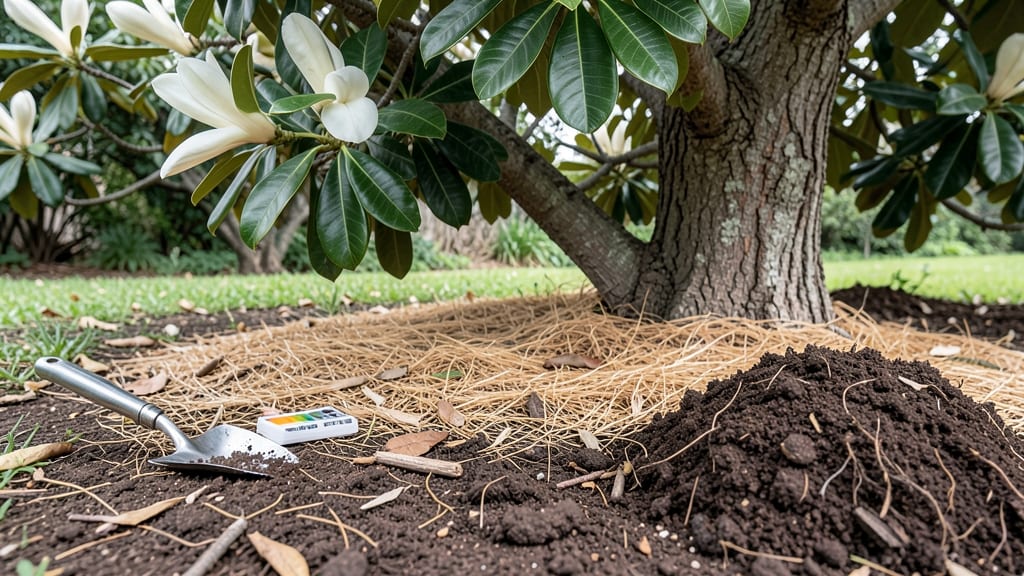
Your magnolia tree soil is the foundation for a tree that will reward you with stunning blooms for decades — but get it wrong, and you’re fighting an uphill battle from day one.
Picture this: You’ve just planted your 🌸 magnolia tree with high hopes, only to watch its leaves yellow or its growth stall. The culprit? Soil that’s too alkaline, too compacted, or lacking the right nutrients.
Most gardeners overlook how critical the soil is — it’s not just dirt, it’s the difference between a thriving giant and a struggling sapling.
Magnolias demand acidic, well-draining soil with a pH between 4.5 and 6.5, yet many regions — especially in Zone 6a — start with clay or alkaline conditions. The good news? With the right amendments like peat moss, compost, or even pine needles, you can create the perfect environment.
Below, I’ll walk you through testing your soil, fixing common issues, and keeping your magnolia’s roots happy for years to come.
Ready to discover the secrets behind lush foliage and showstopping blooms? Let’s dive into the soil science that’ll transform your 🌸 magnolia tree from struggling to spectacular.
Ideal soil pH and composition for magnolia trees
If you've ever wondered why your magnolia tree looks lackluster despite your best care efforts, the answer likely lies in the soil. These stunning trees are highly sensitive to soil conditions, requiring specific pH levels and organic matter to thrive.
Without the right environment, their roots struggle, leading to poor growth, yellowing leaves, or even death. Let's dive into the ideal soil composition that will transform your magnolia into a flourishing centerpiece.
Magnolias originate from acidic, well-draining forests where the soil naturally maintains a pH between 4.5 and 6.5. This acidic range isn't just a preference—it's a necessity for nutrient absorption. When soil pH strays from this range, essential nutrients like iron, manganese, and phosphorus become locked away, starving your tree.
Even if you're using high-quality fertilizer, your magnolia won't benefit if the soil chemistry is off. Think of it like trying to drink through a clogged straw—no matter how much liquid is available, it won't reach you.
Here's the golden rule for magnolia soil: it must be acidic, loose, and rich in organic material. Sandy loam soils are ideal because they drain well while retaining enough moisture. Heavy clay soils, common in many gardens, can suffocate roots by preventing oxygen flow and causing waterlogging.
The key is to mimic the natural forest floor where magnolias evolved—soft, spongy, and teeming with decomposed leaves and organic matter.
🌱 Magnolia Soil Requirements Summary
| Requirement | Specification | Notes |
|---|---|---|
| pH Level | 4.5 - 6.5 | Acidic range prevents nutrient lockout |
| Soil Type | Sandy loam | Balances drainage and moisture retention |
| Organic Matter | 20-30% | Decomposed leaves, compost, or pine bark |
| Drainage | Well-draining | Prevents root rot and suffocation |
| Texture | Loose, crumbly | Avoids compaction that restricts roots |
| Aeration | High | Essential for oxygen flow to roots |
The organic matter content is where many gardeners fall short. Magnolias crave soils with 20-30% organic material, which provides slow-release nutrients and improves soil structure. Think of organic matter as the "glue" that holds soil particles together while preventing compaction.
You can achieve this by mixing in compost, peat moss, or well-rotted pine bark. These amendments not only feed the tree but also create the perfect environment for beneficial microbes that break down nutrients into forms your magnolia can absorb.
Let's talk about regional adjustments, because not all gardens start with ideal conditions. In northern climates with naturally acidic soils, you might only need to add organic matter. However, in southern or western regions where alkaline soils dominate, you'll need to take aggressive measures.
Gardeners in these areas often report success by mixing in sulfur or pine fines to lower pH. A simple soil test (available at most garden centers for under $20) will reveal your starting pH and guide your amendments.
One common misconception is that more fertilizer equals healthier trees. While magnolias do need nutrients, they're more sensitive to soil chemistry than quantity. Over-fertilizing alkaline soil with high nitrogen can actually burn roots and exacerbate nutrient deficiencies.
Instead, focus on creating the right environment first. Think of it like preparing a gourmet meal—the ingredients must be fresh and balanced before you can expect a perfect result.
For container-grown magnolias, the principles are the same but require more frequent attention. Use a specialized acid-loving plant mix combined with 30% perlite or orchid bark for drainage. These trees will need monthly pH testing and amendments since containers dry out faster and nutrients leach away.
The key is to mimic the loose, airy conditions of forest soil in your pot. Remember, magnolias in containers often suffer from root-bound conditions, so plan to repot every 2-3 years with fresh soil mix.
When planting new magnolias, never skip the soil preparation. Dig a hole twice as wide as the root ball but only as deep. This encourages roots to spread horizontally rather than circling (a common problem that stunts growth).
Mix the native soil with 50% amended soil (your acidic, organic blend) before placing the tree. This gradual transition helps prevent root shock while giving your magnolia the perfect start. Water thoroughly after planting to settle the soil and eliminate air pockets.
Monitoring your soil's health doesn't have to be complicated. Visual cues like yellowing leaves (often between veins) or stunted growth can indicate pH issues. For precise measurements, use a digital pH meter or send samples to a lab.
I recommend testing in early spring before new growth begins and again in fall to adjust for any seasonal changes. Regular testing helps you catch problems before they become irreversible—think of it as a checkup for your tree's health.
Remember, healthy soil equals healthy trees. While magnolias are low-maintenance once established, they demand perfect starting conditions. By focusing on acidic pH, organic matter, and proper drainage, you're giving your magnolia the best chance to develop into that stunning,
How to improve soil for magnolia trees: step-by-step guide
Magnolia trees are finicky about their soil—they demand well-draining, acidic conditions to thrive. If your tree looks stressed with yellowing leaves or stunted growth, the problem is likely in the soil.
The good news? With the right amendments, you can transform even heavy clay or alkaline soil into a magnolia-friendly environment. I’ve helped struggling magnolias recover using these proven methods.
Before diving into amendments, test your soil’s pH using a simple kit (available at garden centers for under $10). Magnolias prefer pH 4.5-6.5—anything higher means you’ll need to lower the pH with sulfur or peat moss.
Once you know your starting point, follow these step-by-step soil improvements to give your magnolia the perfect foundation.
-
1
Test Your Soil
Use a soil pH test kit to check current levels. Aim for 4.5-6.5—if yours is higher, you’ll need to acidify it. -
2
Remove Existing Soil
Dig a 12-inch-deep hole around the tree’s root zone (extend 2-3 feet outward). Remove the topsoil—this prevents mixing in alkaline or compacted layers. -
3
Add Organic Matter
Mix in 3 inches of compost (well-rotted) or peat moss to improve drainage and acidity. For clay soil, add perlite or sand (50/50 ratio) to loosen it. -
4
Adjust pH if Needed
For high-pH soil (above 7), add elemental sulfur (1 lb per 100 sq ft) or pine bark fines. Re-test pH after 2-3 months—it takes time to shift. -
5
Mulch the Base
Apply 3-4 inches of pine straw or wood chips (avoid cedar—it’s too acidic). Keep mulch 6 inches away from the trunk to prevent rot. -
6
Monitor and Repeat
Re-test soil annually in spring. If pH drifts, reapply amendments. Avoid over-fertilizing—magnolias hate rich soil; stick to low-nitrogen, acidic fertilizers.
One of my biggest mistakes was assuming compost alone would fix high-pH soil for a struggling Southern magnolia. After testing, I realized the pH was 7.2—way too alkaline.
Adding sulfur and peat moss dropped it to 5.8 in just 3 months, and the tree’s leaves turned deep green within a year. Patience is key here: soil changes take time, but the results are worth it.
For container-grown magnolias, use a mix of 50% peat moss, 30% pine bark, and 20% perlite to mimic ideal conditions. Water thoroughly after repotting to settle the soil.
If your magnolia is already planted, focus on the root zone—most roots lie within the top 12 inches of soil, so that’s where amendments matter most.
Remember: well-draining, acidic soil is non-negotiable for magnolias. If you’re unsure about your soil type, dig a small hole, wet the soil, and observe how water drains. If it pools for more than 15 minutes, you’ve got poor drainage—fix it with sand or compost before planting.
Your magnolia’s future beauty depends on it! 🌸