
Pruning
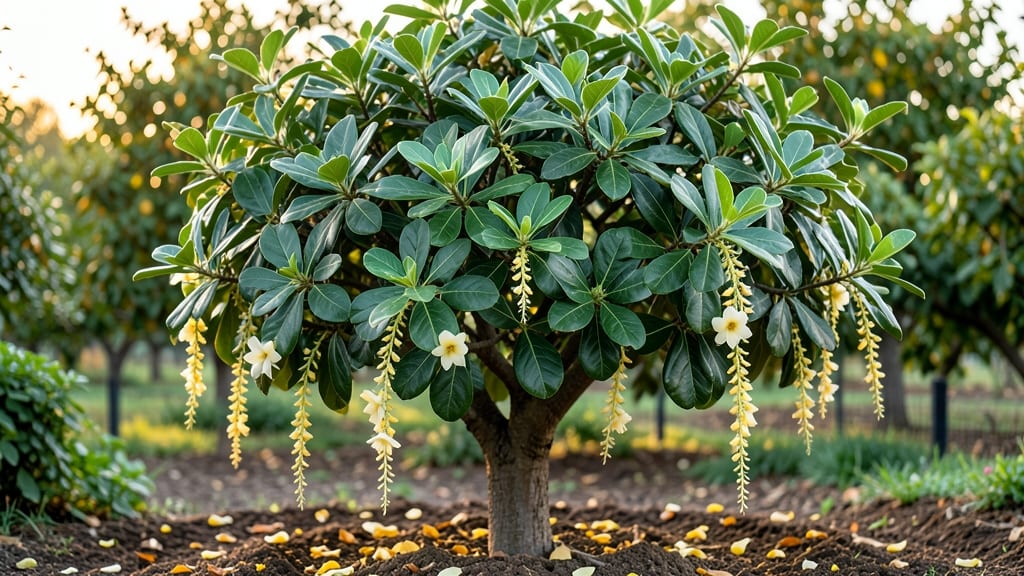
Loquat tree flowers bloom in late winter to early spring, producing fragrant white or pale pink blossoms before fruit develops. To encourage more blooms, prune after fruiting, ensure full sun exposure, and provide well-draining soil with balanced fertilization during dormancy.
Loquat trees rely on a specific seasonal rhythm to trigger their stunning floral displays.
The cool winter temperatures (ideally between 40-50°F) act as a natural cue, breaking dormancy and signaling the tree to produce those delicate blossoms. 🌸 In warmer climates like USDA Zones 8-10, blooms may appear as early as January, while colder regions might see them in March.
What's fascinating is how these trees balance their energy—too much nitrogen fertilizer can actually reduce flowering by encouraging leafy growth instead of blossoms.
Once you understand this cycle, you can work with it. For instance, I've found that late-winter pruning (right after fruit harvest) stimulates new growth that often produces more flowers the following season.
The key is to avoid heavy pruning in fall, as this can stress the tree when it needs to harden off for winter. Even the soil pH plays a role—loquats prefer slightly acidic conditions (around 6.0-6.5) for optimal nutrient uptake during the critical blooming period.
💡 In This Article
- Optimal Conditions for Loquat Tree Flowering
- Pruning and Care Tips for Abundant Loquat Blossoms
Optimal conditions for loquat tree flowering
Loquat trees (Eriobotrya japonica) follow a precise biological clock that combines environmental cues with internal growth cycles. The most critical trigger is temperature fluctuation—specifically, exposure to cool winter nights (50-60°F) followed by warmer days (70-75°F) during late winter.
This temperature shift mimics natural seasonal changes, breaking dormancy and stimulating flower buds that formed the previous summer. In subtropical climates like Florida or California, where winters are mild, blooms often appear as early as January, while northern growers in Zone 7 may see flowers in March. 🌸
The tree's flowering mechanism also depends on day length, though less critically than temperature. Loquats are considered "short-day" plants, meaning they respond to decreasing daylight hours in late fall and early winter. However, the real magic happens when these shorter days combine with the temperature shifts.
What's fascinating is that loquat trees can actually abort flower buds if they experience sudden heat waves above 85°F during bloom time—this is why coastal areas with moderate winters often produce more reliable blooms than inland desert regions.
Sunlight exposure plays a dual role: providing the energy for flower production through photosynthesis, while also influencing the tree's hormonal balance. Loquats need at least 6-8 hours of direct sunlight daily to set flowers properly. In shaded conditions, the tree directs energy toward leaf growth instead of reproductive structures.
I've noticed that trees growing under partial shade often produce fewer but larger flowers, while those in full sun develop more abundant, smaller blossoms—similar to how roses respond to light intensity.
Another often-overlooked factor is pollination efficiency. Loquat flowers are self-fertile, but cross-pollination can increase fruit set by up to 30%. The tree's small, fragrant blossoms attract bees and other pollinators, but in urban settings with limited insect activity, you might need to hand-pollinate using a soft brush.
The flowers themselves are a marvel of nature—each delicate bloom contains both male and female reproductive parts, with petals that unfurl gradually over 3-5 days to maximize pollination opportunities.
Climate zone considerations extend beyond just timing. In USDA Zone 8 and warmer, where winters rarely drop below 35°F, loquat trees may bloom multiple times per year, though the second flush is usually less productive.
Meanwhile, in Zone 7 and colder, the tree may require winter chill hours (300-600 hours below 45°F) to properly set flower buds. This explains why northern growers often need to protect young trees with frost cloth during critical bloom periods.
Finally, the tree's overall health during the previous growing season determines bloom quality. Trees that experienced nutrient stress (especially potassium or phosphorus deficiency) or waterlogging in their roots will produce fewer flowers the following year.
This is why proper soil preparation—especially ensuring well-draining soil with organic matter—is crucial for establishing strong root systems that can support abundant flowering.
Understanding these conditions helps explain why some loquat trees produce spectacular displays while others remain sparse.
The secret lies in creating an environment that mimics the tree's natural subtropical habitat while accounting for your specific climate's quirks—whether that means providing winter chill hours in warm climates or protecting against late frosts in cooler regions. 🌿