
Pruning
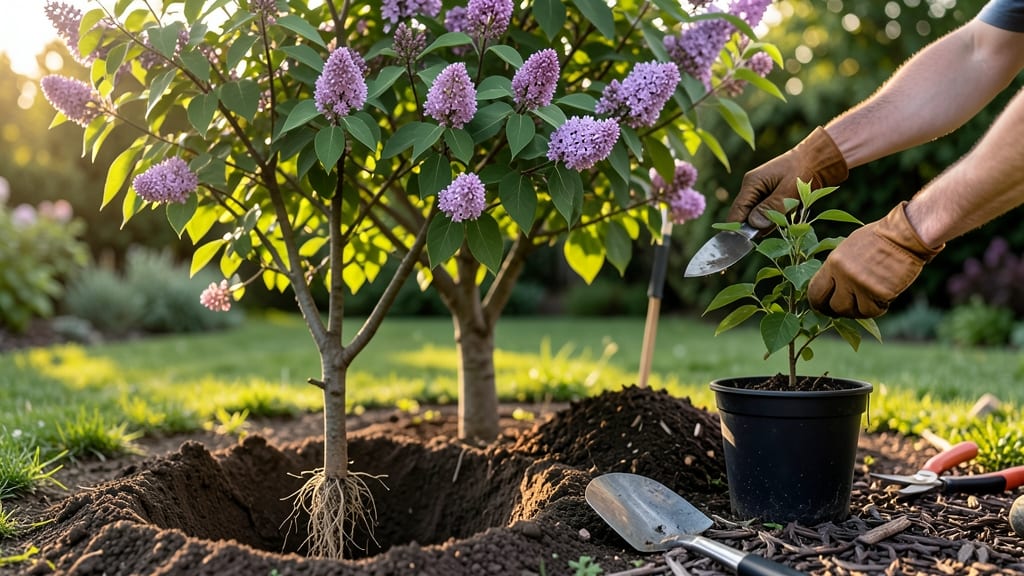
Replanting a lilac tree can turn a struggling plant into a fragrant, blooming centerpiece again. 🌸 The key is timing—late fall or early spring when the tree is dormant but roots are active.
I've revived several lilacs using this method, and the difference in growth is dramatic within just a few seasons.
Start by choosing a spot with full sun and well-draining soil—lilacs hate soggy roots. Dig a hole twice as wide as the root ball but no deeper, then loosen the roots gently if they're circling. Amend the native soil with compost for better moisture retention and nutrient uptake.
After replanting, water deeply to settle the soil and eliminate air pockets. Mulch around the base (but not touching the trunk) to retain moisture and regulate soil temperature. Your lilac will show signs of recovery within 4-6 weeks with proper care.
Common mistakes include over-pruning after transplanting or planting too deep—both stress the tree. Skip heavy pruning for the first year to let it focus on root establishment. With patience, your lilac will reward you with years of fragrant blooms.
📚 In This Guide
- What you need
- Instructions
- Tips and common mistakes
- Wrapping up and next steps
What you need
- ● Healthy lilac tree: Choose a potted or bare-root specimen (3–5 years old for best results). Ensure roots are intact and free of rot.
- ● Shovel or spade: A sharp, medium-sized (18–24") digging tool for precise hole excavation.
- ● Garden gloves: Heavy-duty nitrile or leather gloves to protect against thorns and soil.
- ● Pruning shears: Bypass pruners (sterilized with rubbing alcohol) for trimming damaged branches.
- ● Well-draining soil: Mix 50% native soil + 50% compost (or a lilac-specific potting mix if repotting).
- ● Organic mulch: 2–3 inches of wood chips or straw to retain moisture and suppress weeds.
- ● Watering can or hose: With a gentle spray nozzle for post-planting hydration.
- ○ Staking supplies (optional but helpful): 3 bamboo stakes (6–8 ft tall)
- ● Soft landscape fabric or rubber tree ties
- ● Root stimulator: A mycorrhizal fungus powder or seaweed extract to boost root growth.
- ● Slow-release fertilizer: 10-10-10 NPK ratio (sprinkle lightly around the base post-planting).
- ● Tree collar protector: A plastic or metal guard to shield the trunk from lawnmower damage.
- ● Soil pH tester: Lilacs thrive in alkaline soil (pH 6.5–7.5)—adjust with lime if needed.
Step-by-Step guide for lilac tree replanting
Reviving a lilac after transplanting is all about minimizing root shock and giving it the right conditions to thrive.
🪴 Step 1: Prepare the New Planting Site
Choose a location with full sun exposure (6-8 hours daily) and well-draining soil—lilacs despise soggy roots. Test your soil first: dig a 12-inch deep hole and check for water pooling. If drainage is poor, amend with 3-4 inches of compost or organic matter mixed into the native soil.
Dig the hole twice as wide as the root ball but only as deep as the root system. The top of the root ball should sit 1-2 inches above ground level—burying it too deep suffocates the plant. Loosen the sides of the hole with a shovel to encourage root spread into surrounding soil.
🌱 Step 2: Carefully Remove and Prepare the Lilac
Water the lilac 24 hours before transplanting to reduce stress. Gently dig around the root ball, working a shovel 6-8 inches away from the trunk and angling it downward to avoid cutting roots. Lift the entire root mass while supporting the trunk—lilacs are heavy when wet.
Inspect the roots immediately after removal. Trim any broken or circling roots with clean pruners, but avoid excessive pruning. Wrap the root ball in burlap or a tarp if replanting won't happen within 30 minutes—this prevents roots from drying out. Never let the root ball dry completely during the process.
☀️ Step 3: Plant with Proper Spacing and Support
Position the lilac in the center of the hole, ensuring the trunk remains straight. Fill around the root ball with native soil, tamping lightly every 2 inches to eliminate air pockets. Water thoroughly until moisture reaches 6 inches deep—you'll know it's enough when water pools slightly at the surface.
Add a 2-inch layer of mulch (wood chips or bark) around the base, keeping it 3 inches away from the trunk to prevent rot. Stake the tree only if necessary—lilacs have strong root systems that stabilize quickly. If staking, use two stakes on opposite sides and tie loosely with flexible material to avoid trunk damage.
💧 Step 4: Establish a Post-Transplant Care Routine
Water deeply every 3-4 days for the first month, then taper to once weekly once new growth appears. Lilacs need 1-1.5 inches of water per week, but avoid overhead watering—direct streams at the root zone. You'll see recovery when fresh leaves emerge within 4-6 weeks.
Hold off on pruning until spring—transplanting is stressful enough without additional trauma. Focus instead on keeping the soil consistently moist but never waterlogged. Fertilizer isn't needed immediately; wait until next spring to apply a balanced 10-10-10 formula at half strength.
✂️ Step 5: Monitor for Stress Signs and Adjust
Watch for wilting or yellowing leaves in the first few weeks—this is normal as the tree adjusts. If leaves crisp at the edges, you're overwatering; if they droop but stay green, the tree needs more moisture. Lilacs rarely bloom the first year after transplanting, but strong new growth signals success.
After 6 months, assess the tree's health. Prune any dead branches in late winter, but avoid heavy pruning—lilacs flower on old wood. If the tree struggles, consider a mycorrhizal fungal treatment** to boost root health, especially in compacted or poor soils.
Tips & tricks for stress-free lilac tree replanting
Lilacs are tough but need the right touch during replanting—here’s how to avoid common mistakes and set your tree up for success.
Soil Prep Secret: In Step 1, when testing your 12-inch deep hole, look for signs of compaction—if the soil feels hard when pressed, it’s time to amend. I’ve seen lilacs fail in heavy clay because the roots couldn’t breathe. Mix that 3-4 inches of compost right into the native soil, not just on top. Think of it like giving your tree a breath of fresh air before it even gets planted.
Root Handling Technique: The 24-hour pre-watering in Step 2 is crucial, but don’t overdo it—soaking the soil turns the root ball into a brick. Aim for moist but not soggy. When lifting, use a wheelbarrow to transport the root ball if your garden is large; dragging it risks tearing roots. And here’s a pro move: if you’re replanting in hot weather, wrap the root ball in damp burlap and keep it in shade until planting.
Watering Wisdom: After planting, that 6-inch deep watering in Step 3 should feel like a gentle rain—no gushing! Use a hose with a slow setting or a watering can to avoid displacing soil. The goal is to saturate without creating a mud pit. I’ve seen new transplants fail because people thought “more water = better,” but lilacs hate soggy feet. Check soil moisture by sticking your finger 2 inches down—it should feel damp but not wet.
Mulch Matters: That 2-inch layer of mulch in Step 3 isn’t just decoration—it’s insulation. Keep it 3 inches away from the trunk to prevent rot, but don’t skimp. In winter, mulch acts like a blanket, and in summer, it keeps roots cool. For extra protection, top with a 1-inch layer of straw in winter to shield against freezing temperatures. Just remember: mulch should look like a donut, not a volcano around your lilac.
Pro Tips for Lilac Tree Replant
- Lilacs are tough but need the right touch during replanting—here’s how to avoid common mistakes and set your tree up ...
- Soil Prep Secret: In Step 1, when testing your 12-inch deep hole, look for signs of compaction—if the soil feels hard...
- Root Handling Technique: The 24-hour pre-watering in Step 2 is crucial, but don’t overdo it—soaking the soil turns th...
Frequently asked questions
Got questions about replanting your lilac tree?
Here are some of the most common concerns—and their solutions—to help you revive your roots with confidence.
When is the best time to replant a lilac tree?
Replant lilacs in early spring or fall (March–April or September–October) when temperatures are mild. Avoid extreme heat or frost, which stress the tree. If replanting in summer, water deeply daily and provide shade to reduce transplant shock.
How do I know if my lilac tree needs replanting?
Watch for yellowing leaves, stunted growth, or dry soil around the roots. Dig gently to check for root-bound or circumferential girdling (roots circling the trunk). If roots are crowded or the soil is compacted, replanting is likely needed.
Can I replant a lilac tree in the same spot?
While possible, avoid replanting in the exact same hole—soil depletion or disease may persist. Instead, dig 1–2 feet deeper and 2–3 feet wider than the original hole. Amend the soil with compost for better drainage and nutrients.
How often should I water after replanting?
Water deeply every 2–3 days for the first 2 weeks, then taper to once a week (or more in drought). Keep soil moist but not soggy—lilacs hate waterlogged roots. Mulch around the base (but not the trunk) to retain moisture.
Will replanting affect next year’s blooms?
Replanting may delay blooms by 1–2 years as the tree recovers, but proper care ensures long-term health. Prune after flowering (late spring/early summer) to encourage new growth. Patience pays off—healthy lilacs bloom abundantly for decades!
Troubleshooting: My lilac leaves are wilting after replanting!
Wilting often signals transplant shock or root damage. Trim any broken roots, ensure the hole isn’t too deep, and water thoroughly. If wilting persists, check for pests (aphids, borers) or fungus—treat with neem oil or fungicide if needed.
Wrapping up and next steps
Replanting your lilac tree doesn’t have to be a daunting task—with the right tools, timing, and care, you can revive its roots and enjoy year-round blooms for seasons to come! 🌸 Whether you’re addressing transplant shock, poor soil, or simply upgrading its home, following these steps ensures a healthier, happier plant.
Now that you’re equipped with the know-how, roll up your sleeves and give your lilac the fresh start it deserves.
Ready to take the next step? Mark your calendar for early spring or fall—when the weather is mild—and get planting! Your lilac will thank you with vibrant flowers and lush foliage. Happy replanting! 🌱