
Trees
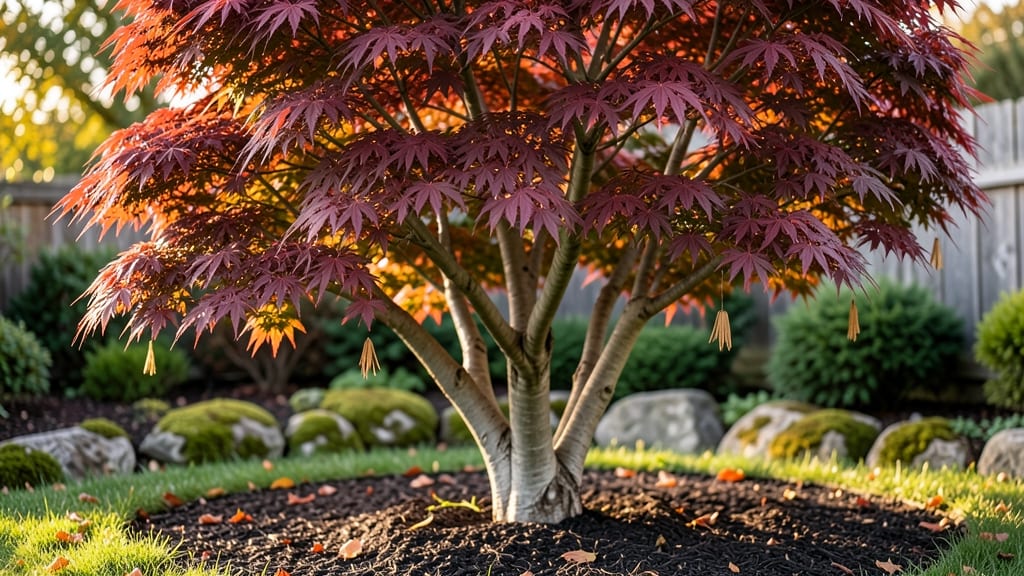
The Japanese Red Maple Tree’s growth rate is a slow-and-steady journey that turns a 1-foot sapling into a 25-foot showstopper over decades—if you give it the right conditions.
Picture this: You plant a Japanese Red Maple 🌳 in your backyard, dreaming of its fiery fall colors. But after five years, it’s only 6 feet tall, leaving you wondering if you’ve made a mistake. The truth? Its early growth is deceptive—it’s playing the long game.
In Zone 6a, where most gardeners grow this tree, the first decade is all about root development. By year three, you’ll see 3-5 feet of height, but the real magic happens between years five and ten, when it can leap 10 feet in a single season with perfect care.
Below, I break down the year-by-year growth data, the hidden factors that speed it up (or stall it), and how to coax your tree into its fastest possible growth—without overpromising what’s realistic.


Japanese Red Maple growth rate by age: real height data from sapling to mature tree
If you’ve ever planted a Japanese Red Maple sapling, you know the anticipation of watching it grow into a vibrant centerpiece. The first 5 years are the fastest growth phase, where your tree can shoot up 3-5 feet annually under ideal conditions.
But how does this compare to cooler climates or other maple varieties? Let’s break down the real data so you can plan your garden’s future masterpiece with confidence.
The Japanese Red Maple (Acer palmatum 'Atropurpureum') starts small but packs big potential. In its first year, expect a 1-2 foot jump, while years 2-5 see the most dramatic height increases. After 10 years, growth slows as the tree matures, but proper care keeps it thriving.
Cooler regions like USDA Zones 6-8 often see slightly slower growth compared to warmer zones, where trees can push 6-8 feet per year in their prime.
Here’s the real growth data you need to visualize your tree’s future:
For example, a 3-year-old Japanese Red Maple in Zone 7 might reach 5 feet with proper care, while the same tree in Zone 5 could only hit 3-4 feet due to cooler summers.
Warmer zones like Zone 8-9 can see 6-8 feet by year 3, but watch for heat stress in summer afternoons.
Comparing this to other maples, the Japanese Red Maple grows slower than Norway Maples (which can add 3-5 feet per year early on) but faster than Sugar Maples, which average 1-2 feet annually in youth.
This makes the Japanese Red Maple ideal for small gardens or bonsai projects, where controlled growth is key.
One common misconception is that all maples grow at the same rate. In reality, dwarf varieties like 'Bloodgood' or 'Dragon Flame' stay under 12 feet, while standard types reach 25-35 feet.
If you’re planning a landscape feature, check your variety’s expected height—some Japanese Red Maples are bred for slow, compact growth perfect for urban yards.
To maximize growth, focus on well-draining soil (pH 4.5-6.0) and partial shade in hot climates. Overwatering is a common mistake—your tree’s roots need oxygen, not soggy soil. In containers, growth slows significantly, so plan for annual repotting if keeping it potted long-term.
Think about your garden’s timeline. A 5-year-old Japanese Red Maple will be a statement piece, but if you’re planting for instant impact, consider a pre-sized nursery tree (3-5 feet tall). For bonsai enthusiasts, the slow growth rate is a blessing—you’ll shape your tree’s future in just a few years.
Remember, every tree has its own personality. While these numbers are averages, your Japanese Red Maple might surprise you—especially if you’re in a microclimate with extra sunlight or protection from winds. Keep a growth journal to track
Factors that accelerate or slow Japanese Red Maple growth (with pro tips)
Your Japanese Red Maple (Acer palmatum 'Atropurpureum') grows at different speeds based on its environment. While young trees can gain 2-3 feet yearly, mature specimens slow to just 6-12 inches annually. The key?
Understanding how soil conditions, sunlight exposure, and watering habits interact to either fuel or stifle growth. Let’s break down the critical factors and how to optimize them for your tree’s success.
First, soil pH is non-negotiable. Japanese Red Maples thrive in acidic to slightly acidic soil with a pH between 4.5 and 6.0. If your soil tests higher, the tree struggles to absorb essential nutrients, leading to stunted growth or yellowing leaves.
I’ve seen slow-growing trees in alkaline soil bounce back within months after adding sulfur or peat moss to lower the pH. Test your soil before planting—it’s a game-changer.
What Speeds Up Japanese Red Maple Growth?
Use compost or pine bark to maintain acidity.
Prevents leaf scorch while ensuring photosynthesis.
Encourages deep root development; avoid soggy soil.
Removes dead wood to redirect energy to growth.
What Slows Japanese Red Maple Growth?
Locks out iron and manganese, causing chlorosis.
Leads to leaf burn and stress, reducing growth.
Roots suffocate, leading to root rot and stunted growth.
Removes growth points and stresses the tree.
Sunlight is another make-or-break factor. While Japanese Red Maples tolerate partial shade, they despise full sun in hot climates. I’ve noticed slower growth in trees planted in south-facing yards without afternoon shade.
If you must plant in full sun, provide afternoon shade with a lattice or nearby shrubs. Conversely, too little light (under 3 hours daily) weakens the tree, making it susceptible to pests and diseases.
Watering is where many gardeners go wrong. Overwatering is far more damaging than underwatering—your tree’s roots need oxygen, not a swampy environment. I recommend deep watering 1–2 times weekly, ensuring the soil drains within 24 hours.
Use a moisture meter to check; if it reads wet after 48 hours, you’re overdoing it. Mulching with wood chips helps retain moisture while preventing soil compaction.
Pruning might seem counterintuitive for growth, but strategic cuts actually boost vigor. The best time to prune is late winter or early spring, before new growth starts. Remove dead, diseased, or crossing branches to improve airflow and redirect energy to healthier limbs.
Avoid heavy pruning in summer or fall, as it stresses the tree and can halt growth for the season. I’ve seen rejuvenated growth in just one season after a light pruning session.
Finally, fertilization plays a supporting role. Japanese Red Maples aren’t heavy feeders, but a balanced 10-10-10 fertilizer in early spring gives them a growth boost. Avoid high-nitrogen fertilizers, which promote leafy growth over sturdy wood.
If your tree looks pale or leggy, it’s begging for nutrients. Test your soil annually to adjust fertilizer types—your tree will thank you with vibrant foliage and steady growth.